My Socialist Hall of Fame
During this chaotic era of vile rhetoric and manipulative tactics from our so-called bourgeois leaders, I am invigorated by the opportunity to reflect on Socialists, Revolutionaries, Philosophers, Guerrilla Leaders, Partisans, and Critical Theory titans, champions, and martyrs who paved the way for us—my own audacious “Socialism’s Hall of Fame.” These are my heroes and fore-bearers. Not all are perfect, or even fully admirable, but all contributed in some way to our future–either as icons to emulate, or as warnings to avoid in the future.
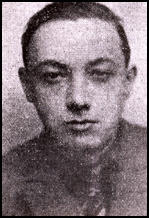
Rudolf Klement (1908–1938) occupies a distinctive, if often overlooked, place in the history of the revolutionary socialist movement of the twentieth century. A German communist who became one of Leon Trotsky’s closest collaborators during the turbulent years of political exile in the 1930s, Klement devoted his brief life to the defense of Marxist internationalism against the twin threats of fascism and Stalinism. His disappearance and murder in 1938, almost certainly at the hands of Soviet agents, symbolized the broader campaign of repression directed against the international Trotskyist movement during the era of the Great Purges. Though he left behind no major theoretical works, Klement’s organizational contributions and political loyalty made him an indispensable figure in the struggle to establish the Fourth International.
Early Life and Political Formation
Rudolf Klement was born in Hamburg, Germany, in 1908. Little is known about his early family background, a reflection both of his relatively obscure status during his lifetime and the destruction of many records associated with anti Stalinist socialist movements. He came of age during the political instability of the Weimar Republic, a period marked by economic crisis, class conflict, and ideological polarization.
Like many politically conscious young Germans of his generation, Klement was drawn toward revolutionary socialism. He initially became involved with the Communist Party of Germany (Kommunistische Partei Deutschlands, or KPD), which was then one of the largest communist parties outside the Soviet Union. However, the growing bureaucratization of the Communist International under Joseph Stalin and the suppression of internal party democracy led many young militants to seek alternatives. Klement eventually aligned himself with the Left Opposition, the international current led by Leon Trotsky that sought to defend what it viewed as the authentic traditions of Bolshevism against Stalinist degeneration.
His intellectual abilities, linguistic skills, and administrative competence soon distinguished him within the movement. By the early 1930s, he had become deeply involved in the work of the International Left Opposition, a network of revolutionary socialists operating under conditions of severe political repression.
Collaboration with Trotsky
Klement’s most significant political work began after Adolf Hitler’s rise to power in 1933. The Nazi seizure of power destroyed the German workers’ movement and forced many socialists and communists into exile. Klement joined the growing circle of émigré revolutionaries who gathered around Trotsky during his years of displacement.
Operating under various pseudonyms, including “Adolphe,” Klement became one of Trotsky’s trusted secretaries and political assistants. His duties extended far beyond clerical work. He maintained correspondence with opposition groups across Europe, coordinated organizational activities, prepared political documents, and assisted in the publication of Trotskyist literature.
This period represented a decisive stage in the development of international Trotskyism. Following the failure of the Communist International to prevent Hitler’s victory, Trotsky concluded that the Comintern had become irredeemably subordinated to Stalinist interests. He therefore advocated the creation of a new revolutionary international organization. Klement became one of the principal organizers of this effort.
Working from France and other European centers of exile, he helped maintain communication among scattered revolutionary groups facing repression from fascist governments, democratic states suspicious of radical politics, and Soviet intelligence services. His organizational labor provided much of the practical infrastructure necessary for the movement’s survival.
Role in the Founding of the Fourth International
By the mid 1930s, Klement had become central to preparations for the founding conference of the Fourth International. Trotsky relied heavily upon him to coordinate discussions among affiliated organizations and to draft organizational materials.
One of Klement’s most important contributions was his involvement in the preparation and circulation of documents that culminated in the adoption of The Death Agony of Capitalism and the Tasks of the Fourth International, commonly known as The Transitional Program. Although Trotsky authored the document, Klement played a substantial role in managing its dissemination and in organizing the congress that would formally establish the new International.
The work was extraordinarily dangerous. Soviet intelligence agencies, acting under directives from Stalin’s regime, had launched an extensive campaign against Trotsky and his supporters. Assassinations, kidnappings, infiltrations, and political provocations became common features of the international struggle between Stalinism and the Trotskyist opposition.
Several of Trotsky’s secretaries and associates were murdered during this period. Klement was acutely aware of these dangers but continued his work despite the escalating risks.
Disappearance and Assassination
On 12 July 1938, shortly before the scheduled founding conference of the Fourth International, Rudolf Klement disappeared in Paris. His disappearance immediately aroused suspicion among Trotskyists, who feared Soviet involvement.
Days later, a portion of his body was discovered in the Seine River. His head was never recovered. The brutal nature of the murder bore the hallmarks of Soviet secret police operations directed against opponents of Stalin’s regime. Although definitive documentary proof remained unavailable for many years, evidence that emerged after the opening of Soviet archives strongly reinforced the conclusion that the assassination was carried out by agents connected to the NKVD.
The timing of the murder was particularly significant. Klement had been entrusted with sensitive documents relating to the founding congress of the Fourth International. Shortly after his disappearance, some of these materials surfaced in hostile publications, suggesting that his captors had seized movement records during the operation.
Despite the assassination, the founding conference of the Fourth International proceeded in September 1938. Participants regarded the gathering as both a political milestone and a tribute to Klement’s sacrifice. Trotsky himself treated Klement’s death as further evidence of Stalinism’s transformation into a counterrevolutionary force willing to employ systematic terror against socialist opponents.
Historical Significance and Legacy
Rudolf Klement’s historical importance lies less in theoretical innovation than in his role as an organizer and political cadre. Revolutionary movements often depend upon individuals whose labor remains largely invisible: secretaries, editors, coordinators, and administrators who transform political ideas into functioning organizations. Klement exemplified this type of revolutionary activist.
His life also illuminates the transnational character of the anti Stalinist socialist opposition during the interwar years. Exiled from Germany, working across several countries, and collaborating with activists from numerous national traditions, Klement embodied the internationalist aspirations of Trotskyism.
Historians of the revolutionary left frequently view his murder as part of the broader campaign that claimed the lives of numerous Trotskyist leaders during the late 1930s. Alongside figures such as Erwin Wolf, Ignace Reiss, and later Leon Trotsky himself, Klement became a symbol of resistance to political repression within the communist movement.
Although overshadowed by more famous contemporaries, his dedication helped ensure the survival of an oppositional Marxist tradition at a moment when both fascism and Stalinism appeared ascendant. His death at the age of thirty deprived the movement of one of its most capable young organizers and stands as a stark reminder of the lethal political struggles that shaped the international left during the twentieth century.
Bibliography
Broué, Pierre. The History of the Bolshevik Party (CP) of the Soviet Union. Chicago: Haymarket Books, 2005.
Broué, Pierre. The German Revolution, 1917–1923. Chicago: Haymarket Books, 2006.
Deutscher, Isaac. The Prophet Outcast: Trotsky, 1929–1940. London: Oxford University Press, 1963.
North, David. In Defense of Leon Trotsky. Detroit: Mehring Books, 2010.
Patenaude, Bertrand M. Trotsky: Downfall of a Revolutionary. New York: HarperCollins, 2009.
Service, Robert. Trotsky: A Biography. Cambridge, MA: Harvard University Press, 2009.
Trotsky, Leon. Writings of Leon Trotsky, 1937–1938. New York: Pathfinder Press, 1976.
Van Heijenoort, Jean. With Trotsky in Exile: From Prinkipo to Coyoacán. Cambridge, MA: Harvard University Press, 1978.
Wolf, Bertram D. Three Who Made a Revolution. New York: Dial Press, 1948.


Leave a Reply