My Socialist Hall of Fame
During this chaotic era of vile rhetoric and manipulative tactics from our so-called bourgeois leaders, I am invigorated by the opportunity to reflect on Socialists, Revolutionaries, Philosophers, Guerrilla Leaders, Partisans, and Critical Theory titans, champions, and martyrs who paved the way for us—my own audacious “Socialism’s Hall of Fame.” These are my heroes and fore-bearers. Not all are perfect, or even fully admirable, but all contributed in some way to our future–either as icons to emulate, or as warnings to avoid in the future.
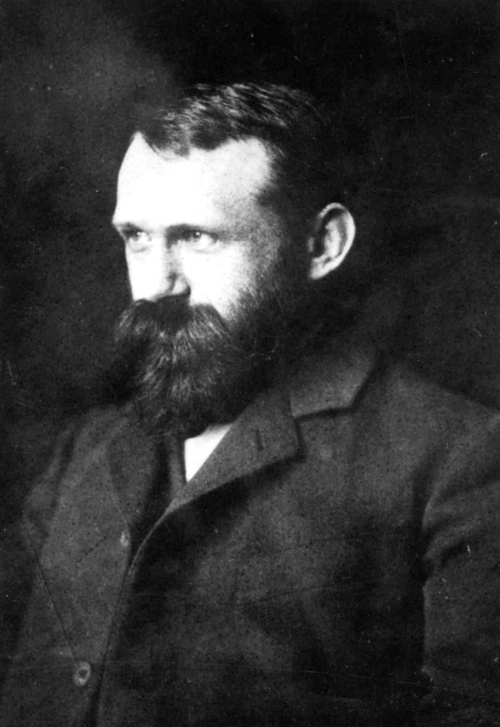
Julian Baltazar Marchlewski (1866–1925), often known by the party pseudonym Karski, occupies an important, though frequently overlooked, place in the history of European Marxism. A contemporary and close collaborator of Rosa Luxemburg, Leo Jogiches, Vladimir Lenin, and Felix Dzerzhinsky, Marchlewski belonged to the generation of revolutionaries who linked the workers’ movements of Poland, Germany, and Russia into a common international struggle. His political life spanned the final decades of the Russian Empire, the rise of German Social Democracy, the revolutionary upheavals of 1905 and 1917, and the formation of the Soviet state. Throughout these transformations, he remained committed to the principle that socialism could only be achieved through the self emancipation of the working class on an international scale.
Born on 17 May 1866 in Włocławek, then part of the Russian controlled Kingdom of Poland, Marchlewski came from a family of mixed Polish and German heritage. Unlike many later revolutionaries, he did not emerge from a tradition of political radicalism. As a student in Warsaw, however, he became involved with the underground Marxist organization known as Proletariat, one of the earliest socialist movements in Polish lands. The experience introduced him to the realities of industrial labor and the repression directed against workers’ organizations by the tsarist state.
In 1889, together with Adolf Warski and Bronisław Wesołowski, Marchlewski helped establish the Polish Workers’ Union. The organization concentrated on immediate economic struggles, including wages and working conditions, while promoting socialist consciousness among industrial workers. His activities soon attracted the attention of the authorities. Arrested during a wave of labor unrest in 1891, he spent a year imprisoned in Warsaw. Upon his release he emigrated to Switzerland, joining the community of political exiles that included many future leaders of European socialism.
The Zurich years proved decisive. There Marchlewski developed a lifelong political partnership with Rosa Luxemburg and Leo Jogiches. Together they founded the Social Democratic Party of the Kingdom of Poland (SDKP), later expanded into the Social Democratic Party of the Kingdom of Poland and Lithuania (SDKPiL). The organization rejected Polish nationalism and argued that the liberation of Polish workers could only occur through a broader international socialist revolution. This position distinguished the SDKPiL from the Polish Socialist Party, which linked socialism to the struggle for national independence. Marchlewski became one of the party’s principal organizers and publicists, helping shape its theoretical and strategic orientation.
After earning a doctorate from the University of Zurich in 1896, Marchlewski moved to Germany, where he entered the vibrant world of German Social Democracy. Working alongside Alexander Parvus, he edited the Sächsische Arbeiterzeitung, one of the most influential socialist newspapers of the period. The paper became a platform for revolutionary Marxist criticism of revisionist tendencies within the German Social Democratic Party. Marchlewski’s journalism combined economic analysis with sharp political polemic, reflecting his belief that Marxism was both a scientific method and a guide to revolutionary action. His editorial work helped establish connections between Polish, German, and Russian socialist circles.
The Russian Revolution of 1905 drew Marchlewski back to Poland. Like many revolutionaries of the period, he saw the uprising as the opening phase of a broader European revolution. He participated actively in party work, assisted efforts to acquire arms, and played a leading role in SDKPiL congresses. During these years he moved increasingly toward cooperation with Lenin and the Bolsheviks. At the Fifth Congress of the Russian Social Democratic Labour Party in 1907, he represented the SDKPiL and was elected as an alternate member of the party’s Central Committee. Although not a Bolshevik in the strict organizational sense, he shared Lenin’s conviction that revolutionary politics required disciplined leadership and uncompromising opposition to reformism.
The years preceding the First World War witnessed growing tensions within European Social Democracy. Marchlewski became deeply critical of what he regarded as the increasing moderation and bureaucratization of the German Social Democratic Party. Together with Luxemburg and Franz Mehring, he launched Sozialdemokratische Korrespondenz, a publication dedicated to defending revolutionary Marxism against revisionist currents. When war broke out in 1914, Marchlewski joined the antiwar minority within the socialist movement. He worked closely with Luxemburg, Karl Liebknecht, Clara Zetkin, and others who would later form the Spartacus League. Their opposition to the war reflected the conviction that workers had no interest in supporting imperialist conflict and should instead turn the crisis toward revolutionary ends.
Arrested by German authorities in 1916, Marchlewski spent much of the war in prison. His incarceration ended in 1918 through a prisoner exchange arranged after the Treaty of Brest Litovsk. Upon reaching Soviet Russia, he formally joined the Bolsheviks and entered the service of the revolutionary government. Although often overshadowed by more prominent figures, he became an important intermediary between the Soviet leadership and revolutionary movements abroad. Lenin valued both his political judgment and his extensive international experience.
Marchlewski played a significant role during the turbulent years following the Russian Revolution. In 1919 he participated in efforts to establish communist organizations in Germany and Poland. During the Polish Soviet War of 1920, he served as chairman of the Polish Provisional Revolutionary Committee in Białystok. Had the Red Army succeeded in advancing into central Poland, this body would likely have formed the nucleus of a Soviet aligned Polish government. The failure of the Soviet offensive, however, ended these ambitions and demonstrated the limits of revolutionary expansion through military means.
In the final years of his life, Marchlewski devoted increasing attention to education, economic theory, and international communist work. He became the first rector of the Communist University of the National Minorities of the West, an institution designed to train communist cadres from across Europe. His scholarly interests centered on agrarian questions, economic development, philosophy, and culture. Unlike some revolutionary leaders whose influence rested primarily on organizational authority, Marchlewski sought to combine theoretical inquiry with practical political work. His writings reveal a persistent concern with the relationship between class struggle, national identity, and socialist transformation.
Marchlewski died on 22 March 1925 near Nervi, Italy, while on vacation. His death removed one of the last surviving representatives of the generation that had forged Marxist politics in partitioned Poland during the late nineteenth century. Although his reputation never equaled that of Luxemburg or Lenin, his career illustrates the profoundly international character of revolutionary socialism before and after 1917. He served as organizer, journalist, theoretician, diplomat, and educator, moving across borders in pursuit of a political project that transcended national boundaries. His life remains a valuable lens through which to examine the interconnected histories of Polish socialism, German Social Democracy, and the early Communist International.
Bibliography
Davies, Norman. White Eagle, Red Star: The Polish Soviet War, 1919–20. London: Pimlico, 2003.
Lazitch, Branko M., and Milorad M. Drachkovitch. Biographical Dictionary of the Comintern. Stanford: Hoover Institution Press, 1973.
Marchlewski, Julian. Selected Works. Moscow: Progress Publishers, various editions.
Michta, Norbert. “The Marxism of Julian Marchlewski.” Dialectics and Humanism 4, no. 3 (1977): 95–112.
Nettl, J. P. Rosa Luxemburg. 2 vols. London: Oxford University Press, 1966.
Service, Robert. Comrades: A History of World Communism. Cambridge, MA: Harvard University Press, 2007.
Tych, Feliks. Rosa Luxemburg: A Life. London: Merlin Press, 1998.
Wandycz, Piotr S. The Lands of Partitioned Poland, 1795–1918. Seattle: University of Washington Press, 1974.


Leave a Reply