My Socialist Hall of Fame
During this chaotic era of vile rhetoric and manipulative tactics from our so-called bourgeois leaders, I am invigorated by the opportunity to reflect on Socialists, Revolutionaries, Philosophers, Guerrilla Leaders, Partisans, and Critical Theory titans, champions, and martyrs who paved the way for us—my own audacious “Socialism’s Hall of Fame.” These are my heroes and fore-bearers. Not all are perfect, or even fully admirable, but all contributed in some way to our future–either as icons to emulate, or as warnings to avoid in the future.
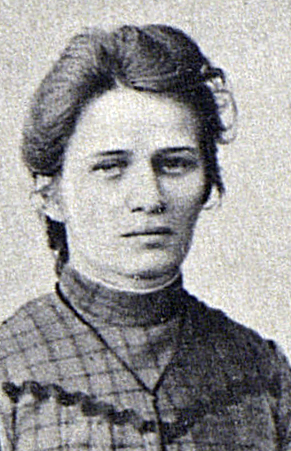
Lyubov Nikolaevna Radchenko occupies a modest yet revealing place in the history of the Russian revolutionary movement. Though overshadowed by the major figures of Bolshevism, her life illustrates the indispensable labor performed by organizers, educators, and underground activists whose efforts sustained the revolutionary underground during the final decades of the Russian Empire. Radchenko belonged to that generation of politically conscious women who entered radical politics through the intertwined experiences of industrialization, state repression, and the moral ferment of the intelligentsia in late imperial Russia. Her career demonstrates how revolutionary politics depended not only upon charismatic leaders but also upon disciplined cadres capable of maintaining clandestine networks under conditions of surveillance and arrest.
Born in the final decades of the nineteenth century, Radchenko came of age during a period of extraordinary social transformation. Russia’s rapid industrial expansion produced immense urban growth while simultaneously deepening class tensions. Factories in St. Petersburg, Moscow, and other industrial centers became breeding grounds for labor unrest and socialist agitation. Like many young radicals of her generation, Radchenko was drawn toward Marxism through educational circles and underground reading groups that circulated prohibited literature among workers and students. The writings of Georgi Plekhanov and later Vladimir Lenin profoundly shaped the intellectual climate in which she developed her political outlook.
Radchenko became involved with the Russian Social Democratic Labor Party during the years when the organization was fragmented by ideological disputes and police repression. The split between Bolsheviks and Mensheviks in 1903 forced activists throughout the empire to define their political loyalties with increasing clarity. Radchenko gravitated toward the Bolshevik faction, whose emphasis on centralized organization, discipline, and professional revolutionary activity appealed to militants operating under the dangerous realities of tsarist autocracy. Her work increasingly focused upon agitation among workers and the maintenance of underground communication networks.
Women in the revolutionary movement frequently occupied roles dismissed by contemporaries as auxiliary but which proved essential to organizational survival. Radchenko participated in distributing illegal newspapers, arranging safe apartments, transporting correspondence, and assisting imprisoned comrades and their families. These activities required extraordinary composure and political reliability. The Okhrana, the tsarist secret police, aggressively infiltrated socialist organizations, and discovery often meant imprisonment, exile, or internal banishment to Siberia. Revolutionary memoirs from the era repeatedly emphasize that women activists often attracted less suspicion from authorities, allowing them to perform critical courier and liaison work. Radchenko’s political career unfolded within this dangerous environment of conspiratorial politics and constant surveillance.
The Revolution of 1905 marked a decisive turning point for the Russian socialist movement and likely intensified Radchenko’s commitment to Bolshevik politics. The massacre known as Bloody Sunday shattered lingering faith in the paternal legitimacy of the monarchy and radicalized vast sectors of the urban working class. Strikes, soviets, peasant uprisings, and military mutinies transformed the empire into a landscape of political crisis. Although the revolution ultimately failed to overthrow the Romanov regime, it provided invaluable organizational experience for socialist activists. Bolsheviks learned to operate within mass movements while simultaneously preserving underground structures capable of surviving repression.
Following the defeat of the 1905 Revolution, the tsarist state unleashed renewed campaigns against radicals. Arrests, censorship, and executions forced many revolutionaries either underground or into emigration. Activists such as Radchenko endured years of uncertainty in which the movement struggled to preserve coherence amid factionalism and police infiltration. Yet this period also forged the hardened political culture that later enabled the Bolsheviks to survive the upheavals of the First World War and the revolutions of 1917. Commitment under repression became a defining moral ideal within Bolshevik political identity.
Radchenko’s historical significance lies partly in what her life reveals about women’s participation in revolutionary politics before 1917. Soviet historiography often celebrated female revolutionaries as symbols of proletarian emancipation, though many individual contributions remained obscured beneath the monumental narratives surrounding Lenin and the party leadership. Recent scholarship has sought to recover these lesser known figures in order to better understand the social composition and everyday functioning of the revolutionary underground. Women like Radchenko served not merely as supporters of male revolutionaries but as active political agents who shaped organizational culture, disseminated ideology, and sustained networks of solidarity.
The Bolshevik seizure of power in October 1917 transformed the status of former underground militants. Those who had spent years evading arrest suddenly became representatives of the ruling order. Yet the transition from revolutionary opposition to state authority was fraught with contradictions. The ideals of socialist liberation increasingly collided with the realities of civil war, economic collapse, and political centralization. For many veteran revolutionaries, including women who had entered politics with emancipatory aspirations, the revolutionary state demanded sacrifices that blurred the boundary between liberation and coercion.
Although Radchenko never achieved the historical prominence of figures such as Alexandra Kollontai or Nadezhda Krupskaya, her life remains historically valuable precisely because it reflects the experiences of ordinary Bolshevik militants. Historians of revolutionary movements increasingly emphasize that political transformations are not made solely by great individuals. Rather, they emerge from dense networks of organizers, educators, printers, couriers, and labor agitators who collectively sustain political struggle over long periods of repression and uncertainty. Radchenko belonged to this world of disciplined revolutionary labor.
Her biography also illuminates the broader tragedy and complexity of the Russian revolutionary tradition. The revolutionary underground cultivated remarkable courage, solidarity, and intellectual seriousness among its participants. At the same time, the harsh conditions of clandestine struggle encouraged habits of secrecy, rigid discipline, and ideological intolerance that later shaped Soviet political culture. Radchenko’s generation carried both the aspirations and the contradictions of revolutionary Marxism into the twentieth century.
Today, Lyubov Radchenko survives more as a representative figure than as a widely studied historical personality. Yet her career offers historians a valuable lens through which to examine gender, political commitment, and underground activism in late imperial Russia. She stands among the many revolutionaries whose names seldom dominate textbooks but whose labor formed the hidden architecture of the Bolshevik movement. Like countless others who lived in the shadows of the underground, she helped construct the political machinery that ultimately overturned one of Europe’s oldest monarchies and reshaped the modern world.
Bibliography
Fitzpatrick, Sheila. The Russian Revolution. 4th ed., Oxford University Press, 2017.
Hillyar, Anna, and Jane McDermid. Revolutionary Women in Russia, 1870–1917: A Study in Collective Biography. Manchester University Press, 2000.
Kollontai, Alexandra. Selected Writings of Alexandra Kollontai. Edited by Alix Holt, Norton, 1977.
Krupskaia, Nadezhda. Memories of Lenin. International Publishers, 1970.
Lenin, Vladimir Ilyich. What Is To Be Done? Burning Questions of Our Movement. International Publishers, 1929.
McDermid, Jane, and Anna Hillyar. Midwives of the Revolution: Female Bolsheviks and Women Workers in 1917. Ohio University Press, 1999.
Pipes, Richard. The Russian Revolution. Vintage Books, 1991.
Service, Robert. Lenin: A Biography. Harvard University Press, 2000.
Smith, S. A. Russia in Revolution: An Empire in Crisis, 1890 to 1928. Oxford University Press, 2017.


Leave a comment