During this chaotic era of vile rhetoric and manipulative tactics from our so-called bourgeois leaders, I am invigorated by the opportunity to reflect on Socialists, Revolutionaries, Philosophers, Guerrilla Leaders, Partisans, and Critical Theory titans, champions, and martyrs who paved the way for us—my own audacious “Socialism’s Hall of Fame.” These are my heroes and fore-bearers. Not all are perfect, or even fully admirable, but all contributed in some way to our future–either as icons to emulate, or as warnings to avoid in the future.
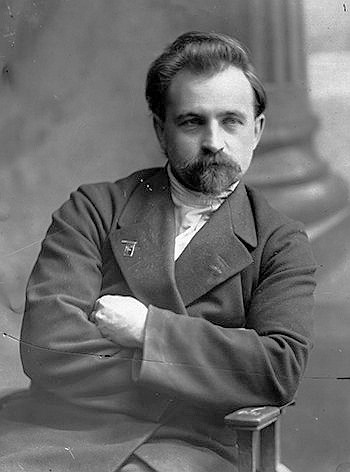
Yevgeny Alekseevich Preobrazhensky occupies a distinctive place in the intellectual and political history of the Russian Revolution. A Bolshevik militant of the pre-revolutionary underground, a senior participant in the consolidation of Soviet power, and among the most sophisticated Marxist economists produced by the early Soviet state, Preobrazhensky sought to theorize the unprecedented problem of socialist construction in a backward, peasant-majority society embedded within a hostile global capitalist system. His formulation of “primitive socialist accumulation” and his wider contributions to the political economy of the 1920s Soviet transition situate him alongside Lenin, Bukharin, Trotsky, and Rakovsky as one of the principal architects—and casualties—of revolutionary Marxism’s confrontation with state power, scarcity, and bureaucratic consolidation.
Early Life, Education, and Revolutionary Commitment
Preobrazhensky was born in 1886 in the Russian Empire. His youth coincided with the maturation of Russian Marxism and the rapid politicization of the intelligentsia and radicalized students under conditions of industrial expansion, mass poverty, and tsarist repression. By the early 1900s, Preobrazhensky entered revolutionary politics through the Russian Social Democratic Labor Party (RSDLP), soon aligning with the Bolshevik faction following its organizational and strategic break with Menshevism.
Like many Bolsheviks who would later constitute the “Old Guard,” Preobrazhensky’s early revolutionary life was structured by clandestine work, police surveillance, arrest, and exile. Yet unlike purely “practical” organizers, he also developed early as a party theorist, combining revolutionary discipline with an intellectual vocation—especially in Marxist economic theory—that would become the basis for his later prominence.
1917 and the Consolidation of Revolutionary Power
The revolutions of 1917 transformed the Bolshevik Party from underground opposition into governing authority. Preobrazhensky emerged as an important figure in the party apparatus, helping to navigate the shift from insurrectionary organization to state administration. In the aftermath of October, the Bolsheviks confronted the collapse of productive capacity, civil war, foreign intervention, and the urgent need to maintain working-class political power amid famine and disintegration.
During War Communism (1918–1921), Preobrazhensky supported the extreme centralization and requisitioning measures adopted under military and economic emergency. Yet the experience of these years also shaped his later theoretical commitments: he became increasingly concerned with the danger that survival measures could produce not merely temporary coercion but a structural deformation of proletarian rule, undermining the emancipatory content of socialist politics.
The ABC of Communism and Bolshevik Ideological Pedagogy
Preobrazhensky’s place in Bolshevik intellectual history is cemented early by his co-authorship, with Nikolai Bukharin, of The ABC of Communism (1919–1920), one of the most influential and widely circulated Bolshevik educational texts. Written during the Civil War, the work offered a systematic exposition of communist doctrine and Bolshevik programmatic aims. It was designed as a pedagogical weapon: not merely to “explain” communism but to constitute the ideological coherence of the emerging Soviet state and its ruling party.
ABC reflects a moment when the Bolshevik project still articulated itself as a universal emancipatory revolution: militant, internationalist, and confident in the historical movement toward socialism. The trajectory of both authors would later expose the profound instability of that early optimism: Bukharin’s “Right” NEP position and Preobrazhensky’s “Left” anti-market critique would become mutually antagonistic poles of Soviet political economy.
NEP and the Problem of Socialist Transition
The introduction of the New Economic Policy (NEP) in 1921 was an acknowledgment that War Communism had reached political and economic limits. NEP reintroduced market mechanisms, legalized limited private trade, stabilized currency and taxation, and restored a degree of peasant autonomy. For many Bolsheviks, this was a strategic retreat—necessary to preserve the workers’ state.
For Preobrazhensky, NEP became the critical historical problem: how could a proletarian state move toward socialism while tolerating commodity relations and private production? NEP generated not only stabilization but new social stratification, including kulak differentiation and the rise of commercial intermediaries (“NEPmen”). Preobrazhensky argued that without decisive state-led industrial accumulation, the Soviet economy could drift toward capitalist restoration—especially given its isolation from successful revolutions in the advanced West.
He therefore became a central figure in the debates over:
• the relative growth rates of industry and agriculture,
• the “scissors crisis” (industrial vs agricultural prices),
• the relationship between market incentives and socialist planning,
• the class consequences of NEP’s mixed economy.
Primitive Socialist Accumulation: The New Economics
Preobrazhensky’s major theoretical work, The New Economics (1926), was among the most ambitious attempts to construct a Marxist theory of the Soviet transitional formation. His argument begins from the recognition that a workers’ state in a poor agrarian country faced a harsh constraint: industrialization required accumulation, yet domestic surplus was primarily located in the peasantry. Therefore, the socialist state would need to transfer resources from the countryside to the industrial sector in order to build the material basis of socialism.
This transfer, he argued, constituted a form of “primitive socialist accumulation.” The term was deliberately provocative. Marx had described primitive accumulation as capitalism’s violent historical origin, built through expropriation and coercive transformation. Preobrazhensky analogized the Soviet case: socialist industrialization would likewise require a structurally significant extraction—though carried out by a workers’ state in the interests of socialized production.
Crucially, Preobrazhensky framed the Soviet transition as governed by competing “laws”:
• the law of value operating through market relations (especially in peasant commodity production),
• versus the planning impulse of the socialist sector, attempting conscious accumulation and coordination.
The Soviet economy, in his view, was a battleground between these two systems. Unless planning expanded and accumulation accelerated, the law of value would dominate, producing class forces hostile to socialism.
Political Alignments: The Left Opposition and Anti-Bureaucratic Critique
Preobrazhensky’s economic stance placed him increasingly close to Leon Trotsky and the Left Opposition, which emerged as a faction opposing Stalin’s consolidation and criticizing the bureaucratization of the party-state. While Preobrazhensky was not merely an economic technician, his political critique was inseparable from his economic theory: he believed that industrialization and planning could only succeed without catastrophic social costs if combined with workers’ democracy, transparency, and restored internal party debate.
The Left Opposition criticized:
• repression of intra-party democracy,
• the consolidation of bureaucratic privilege,
• the subordination of international revolution to “socialism in one country,”
• and the dangerous political concessions to kulak and market forces under NEP.
As Stalin defeated opposition currents, Preobrazhensky was expelled, pressured into recantation, and repeatedly marginalized. The narrowing of Soviet political life eliminated precisely the conditions needed for the kind of theoretical experimentation Preobrazhensky represented.
Ironies of Stalinist Appropriation and Historical Deformation
One of the sharpest historical ironies is that Stalin’s turn at the end of the 1920s toward rapid industrialization and forced collectivization appeared superficially to vindicate aspects of the Left’s warnings: NEP could not endure, and industrial accumulation would require drastic shifts. Yet Stalin’s method constituted not the realization but the negation of Preobrazhensky’s Marxist framework. What Preobrazhensky conceptualized as an economically necessary but politically dangerous extraction to be moderated by proletarian democracy was implemented under Stalin through:
• terror,
• administrative coercion,
• mass dispossession,
• and the consolidation of bureaucratic autocracy.
This ambiguity has generated long-standing debate. Critics argue that the conceptual schema of “primitive socialist accumulation” contributed to an intellectual climate in which violent extraction could be justified. Defenders counter that Preobrazhensky was explicit about the political dangers of coercion and insisted that planning required democratic accountability. What is indisputable is that Stalinism destroyed the revolutionary Marxist intellectual tradition within which such debates could occur.
Arrest, Purge, and Execution
Preobrazhensky’s fate was sealed during the Great Purge. As Stalin sought to eliminate remnants of Old Bolshevism and rewrite the revolutionary past, Preobrazhensky was arrested and executed in 1937. His death formed part of the annihilation of the generation that had made October—and of the most serious Marxist theoretical debate ever conducted within a revolutionary state.
Intellectual Legacy
Preobrazhensky’s legacy is enduring because he attempted to theorize socialism as a contradictory historical transition, not a moral ideal or administrative plan. His work remains vital to:
• Marxist debates on transitional economies,
• the relationship between planning and market mechanisms,
• the class dynamics of industrialization,
• and the problem of bureaucratic degeneration.
His biography encapsulates a wider tragedy: the Soviet revolutionary state generated a remarkable Marxist intelligentsia capable of confronting unprecedented historical problems—then destroyed that intelligentsia as a condition of bureaucratic stabilization.
Bibliography (Selected)
Primary Works (Preobrazhensky)
Preobrazhensky, Yevgeny A. The New Economics. 1926.
Bukharin, Nikolai, and Yevgeny A. Preobrazhensky. The ABC of Communism. 1919–1920. Trans. Eden and Cedar Paul. London: Penguin, 1969.
Preobrazhensky, Yevgeny A. The Crisis of Soviet Industrialization.
Secondary Sources
Carr, E. H. The Interregnum, 1923–1924. A History of Soviet Russia. London: Macmillan, 1954.
Carr, E. H. Socialism in One Country, 1924–1926. A History of Soviet Russia. London: Macmillan, 1958–1964.


Leave a Reply