Book Review
Peterson, John. Revolution and Counterrevolution in America: A Marxist Perspective. Wellred Books, 2026.
The book is an ambitious intervention into the historiography of the United States. Rather than presenting American history as the gradual unfolding of constitutional liberty or national exceptionalism, Peterson reconstructs the nation’s development through the Marxist conception of class struggle. The book argues that the decisive turning points in American history, namely the American Revolution, the Civil War, and Reconstruction, can only be understood as interconnected revolutionary processes shaped by the development of capitalism and the struggle between antagonistic social classes. In doing so, Peterson challenges both liberal celebratory narratives and conservative accounts that minimize the revolutionary character of these historical transformations.
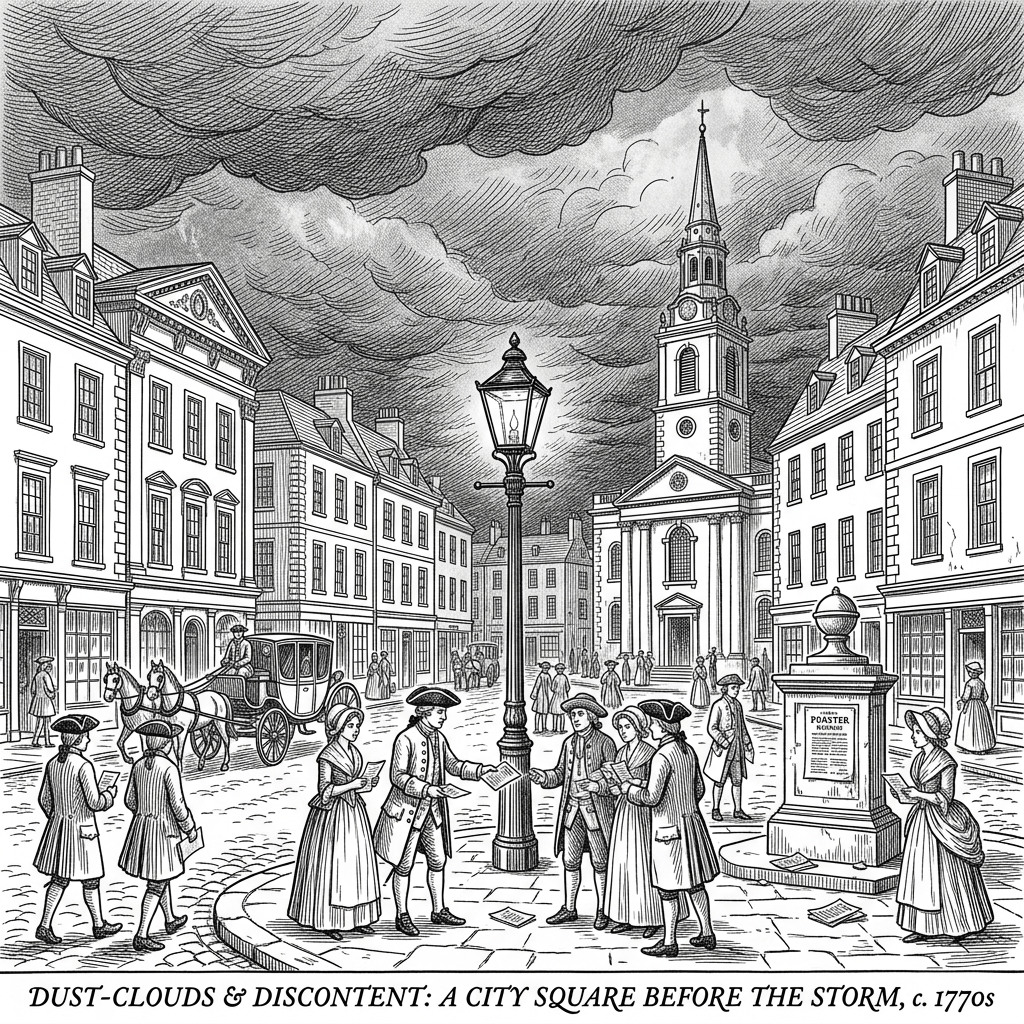
Peterson’s principal contribution lies in his consistent application of historical materialism. Rather than treating political institutions or prominent individuals as the primary engines of history, he situates them within broader economic developments. The American Revolution emerges not merely as a colonial rebellion against Britain but as a bourgeois revolution that removed the political constraints imposed by imperial rule and accelerated capitalist development. This interpretation echoes the analyses of Karl Marx and Frederick Engels while incorporating more recent scholarship on the social dimensions of revolutionary change. Peterson convincingly demonstrates that the victory of the colonial bourgeoisie created the conditions for unprecedented economic expansion, even as it preserved profound contradictions, most notably the institution of slavery.
The book’s discussion of slavery and the Civil War constitutes one of its strongest sections. Peterson rejects interpretations that reduce the conflict to constitutional disputes or sectional misunderstandings. Instead, he presents slavery as an economic system fundamentally incompatible with the expanding requirements of industrial capitalism. The Civil War is therefore interpreted as a Second American Revolution in which the destruction of the slave system became historically necessary for the continued development of American capitalism. This analysis effectively synthesizes Marx’s contemporary writings on the Civil War with modern historical research concerning the economic and political tensions that culminated in secession. Peterson’s emphasis on enslaved people as active historical agents rather than passive beneficiaries of emancipation further strengthens his argument by restoring class struggle to the center of the narrative.
Equally compelling is the treatment of Reconstruction. Peterson portrays Reconstruction not as a tragic failure of idealistic reform but as a revolutionary period in which formerly enslaved workers briefly exercised unprecedented political influence. The violent overthrow of Reconstruction governments is interpreted as a counterrevolution carried out through an alliance of the Southern planter class and Northern capitalists whose shared interest in political stability outweighed their commitment to racial equality. This framework illuminates the enduring relationship between race and class in American capitalism without reducing either phenomenon to the other. Reconstruction thus appears not as an unfortunate epilogue to the Civil War but as a decisive turning point whose defeat shaped the subsequent development of American capitalism and imperialism.
Methodologically, Peterson employs a dialectical approach that emphasizes contradiction, uneven development, and historical contingency. He avoids economic determinism by demonstrating how political leadership, mass mobilization, and revolutionary organization influence historical outcomes. While economic structures establish the framework within which historical actors operate, Peterson consistently argues that conscious human intervention determines whether revolutionary opportunities are realized or defeated. This balance between structural analysis and political agency distinguishes the work from more mechanical forms of Marxist historiography.
The book also serves an explicitly political purpose. Peterson does not conceal his conviction that historical study should inform contemporary revolutionary practice. Throughout the text, historical episodes are examined for the strategic lessons they offer regarding leadership, organization, and the relationship between democratic demands and socialist transformation. Some academic readers may regard this openly partisan orientation as limiting the book’s objectivity. Yet Peterson’s arguments remain grounded in historical evidence and theoretical consistency. His political conclusions emerge from, rather than substitute for, historical analysis.
There are moments when the narrative’s emphasis on class struggle leaves less room for competing interpretive frameworks concerning culture, religion, or regional identity. Nevertheless, Peterson’s purpose is not to produce an encyclopedic survey but to demonstrate the explanatory power of historical materialism. Judged by that standard, the work succeeds remarkably well.
Ultimately, Revolution and Counterrevolution in America stands as a significant contribution to contemporary Marxist historiography. Peterson successfully integrates rigorous historical scholarship with revolutionary theory, presenting American history as a succession of revolutionary crises whose outcomes shaped the evolution of capitalism and the modern state. The book challenges readers to reconsider familiar events through the lens of class conflict while illustrating how the victories and defeats of past generations continue to influence present political struggles. Whether one accepts Peterson’s conclusions or not, the work demands serious engagement from scholars interested in American history, political economy, and revolutionary theory.


Leave a Reply