My Socialist Hall of Fame
During this chaotic era of vile rhetoric and manipulative tactics from our so-called bourgeois leaders, I am invigorated by the opportunity to reflect on Socialists, Revolutionaries, Philosophers, Guerrilla Leaders, Partisans, and Critical Theory titans, champions, and martyrs who paved the way for us—my own audacious “Socialism’s Hall of Fame.” These are my heroes and fore-bearers. Not all are perfect, or even fully admirable, but all contributed in some way to our future–either as icons to emulate, or as warnings to avoid in the future.
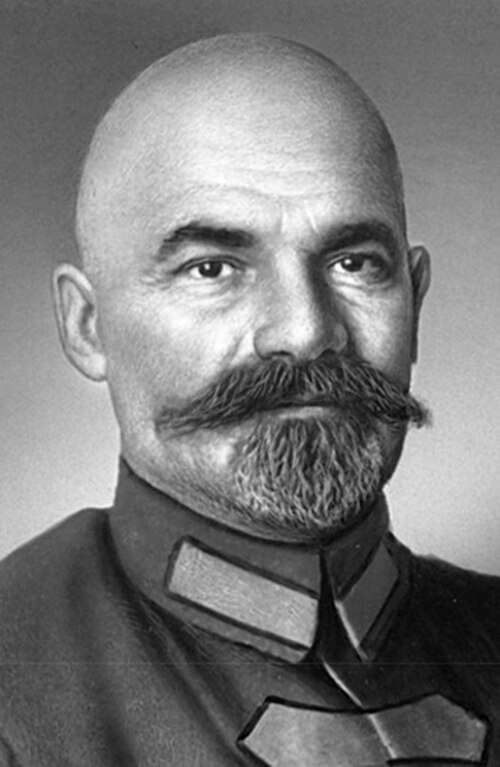
Nikolay Ivanovich Muralov (1877–1937) occupies an important, though often overlooked, position in the history of the Russian Revolution and the early Soviet state. A veteran Bolshevik, military commander, and administrator, Muralov embodied many of the characteristics associated with the generation of professional revolutionaries forged in the final decades of the Russian Empire. His career traced the trajectory of the Bolshevik movement itself, from underground agitation and repeated imprisonment under tsarism to leadership during the October Revolution and the Russian Civil War. Yet, like many of the Old Bolsheviks who retained political loyalties to Leon Trotsky and the Left Opposition, Muralov ultimately became a casualty of Joseph Stalin’s consolidation of power. His execution during the Great Purge illustrates both the destruction of the revolutionary generation and the transformation of the Soviet Union from a state led by competing revolutionary currents into a highly centralized bureaucratic dictatorship.
Born on December 6 (November 24, Old Style), 1877, in Taganrog, within the Don Host Region of the Russian Empire, Muralov came from a family whose traditions emphasized education, public service, and opposition to autocracy. His father was associated with progressive intellectual circles, and several members of the family later participated in revolutionary politics. Unlike many Bolshevik leaders who emerged directly from the urban industrial working class, Muralov received a substantial education before entering political life. He studied agriculture and developed expertise in agronomy, a profession that would remain significant throughout his career.
The rapid industrialization of late imperial Russia and the growing influence of Marxism among students and intellectuals drew Muralov toward revolutionary politics during the 1890s. He joined the Russian Social Democratic Labour Party shortly after its formation and became active in its Bolshevik faction following the party split in 1903. Like many early Bolsheviks, he combined political organization with practical work among workers while repeatedly facing arrest, imprisonment, and internal exile. These experiences strengthened his reputation as a disciplined revolutionary whose commitment remained unshaken despite continual repression by the tsarist state.
During the Revolution of 1905, Muralov emerged as an important organizer in Moscow, where armed workers mounted one of the most determined insurrections against the imperial government. Although the uprising was ultimately crushed, the experience profoundly influenced Bolshevik military thinking. Muralov’s participation established his credentials as both a capable organizer and an individual willing to engage directly in revolutionary combat. Following the defeat of the revolution, he endured further arrests and exile while continuing clandestine political work.
The collapse of the Romanov dynasty during the February Revolution of 1917 transformed Muralov from an underground activist into a public political figure. Returning immediately to revolutionary activity, he assumed important responsibilities within the Moscow Bolshevik organization. During the October Revolution, he played a significant role in securing Bolshevik control over Moscow, where fighting proved considerably more intense than in Petrograd. His organizational abilities and military competence won him the confidence of the new Soviet government.
Following the Bolshevik seizure of power, Muralov became one of the principal military leaders responsible for defending Soviet authority during the Russian Civil War. Closely associated with Leon Trotsky, People’s Commissar for Military and Naval Affairs, Muralov commanded forces on several fronts and participated in the difficult process of constructing the Red Army from the remnants of the old imperial military and newly mobilized workers and peasants. His leadership reflected the broader Bolshevik strategy of combining political reliability with military professionalism, frequently relying upon former imperial officers under the supervision of communist political commissars.
Muralov’s military service earned him widespread respect among fellow revolutionaries. Unlike several commanders whose authority rested primarily upon personal charisma, Muralov gained recognition for administrative competence, discipline, and technical knowledge. These qualities later made him an important figure in agricultural administration after the Civil War. His background as an agronomist enabled him to contribute to Soviet agricultural development during the difficult years of economic reconstruction under the New Economic Policy.
Politically, however, Muralov remained firmly aligned with Trotsky during the factional struggles that emerged after Vladimir Lenin’s illness and death. As disagreements intensified over industrialization, party democracy, and the growing bureaucratization of the Soviet state, Muralov joined the Left Opposition. Together with Trotsky, Yevgeny Preobrazhensky, Christian Rakovsky, Karl Radek, and other prominent Bolsheviks, he criticized what they regarded as the increasing concentration of power within the party apparatus under Stalin’s leadership.
The Left Opposition argued that the Soviet Union faced the danger of bureaucratic degeneration. They advocated greater workers’ democracy, accelerated industrialization, and a more internationalist revolutionary policy. Muralov consistently defended these positions despite increasing political isolation. His military prestige and revolutionary reputation lent credibility to the Opposition, making him particularly threatening to Stalin’s emerging leadership.
As Stalin consolidated authority during the late 1920s, Muralov experienced the gradual marginalization that characterized the fate of many Oppositionists. He was removed from influential positions, expelled from the Communist Party, and subjected to internal exile. Although he eventually made formal statements acknowledging party discipline, as many Oppositionists were compelled to do, Stalin’s leadership never fully trusted former supporters of Trotsky. Their revolutionary prestige and independent authority remained incompatible with the increasingly centralized political order.
The Great Purge of the 1930s transformed political marginalization into physical annihilation. Arrested by the NKVD in 1936, Muralov became one of the principal defendants in the Second Moscow Trial, officially known as the “Trial of the Anti Soviet Trotskyist Center,” held in January 1937. Alongside Yuri Piatakov, Karl Radek, and Grigory Sokolnikov, he was accused of participating in an elaborate conspiracy involving espionage, sabotage, terrorism, and collaboration with Nazi Germany and Imperial Japan.
Modern historical scholarship overwhelmingly regards these accusations as fabricated. Extensive documentary evidence released after Stalin’s death demonstrates that confessions presented during the Moscow Trials resulted from prolonged interrogation, psychological pressure, threats against family members, and, in many cases, physical torture. Muralov initially resisted confessing for an extended period, reportedly enduring months of imprisonment before finally signing statements prepared by investigators. His resistance distinguished him even among defendants whose coerced confessions became central to Stalin’s campaign against the Old Bolsheviks.
Convicted in January 1937, Muralov was executed shortly thereafter. His death formed part of a broader campaign that eliminated much of the revolutionary generation responsible for the October Revolution and the Civil War. Military commanders, party leaders, intellectuals, and administrators who had built the Soviet state during its formative years were systematically removed and replaced by officials whose authority depended upon loyalty to Stalin rather than revolutionary experience.
Following Stalin’s death in 1953 and Nikita Khrushchev’s subsequent denunciation of the cult of personality, Soviet authorities gradually reassessed many purge victims. Muralov was posthumously rehabilitated in 1986, with the Soviet Supreme Court overturning his conviction and acknowledging the absence of legitimate evidence supporting the charges. His rehabilitation reflected the broader recognition that the Moscow Trials represented judicial miscarriages orchestrated for political purposes rather than genuine criminal proceedings.
From a historiographical perspective, interpretations of Muralov have reflected wider debates concerning the nature of the Soviet Union under Stalin. Soviet accounts produced before Khrushchev generally portrayed him as a traitor whose revolutionary achievements had been overshadowed by alleged counterrevolutionary activity. Western Cold War historians often emphasized his victimization as evidence of totalitarian political practices. More recent scholarship, benefiting from archival access after the collapse of the Soviet Union, has presented a more nuanced portrait that situates Muralov within the political and ideological conflicts of the revolutionary generation.
Marxist historians associated with the Trotskyist tradition have regarded Muralov as one of the principled defenders of Leninist traditions against bureaucratic degeneration. Writers such as Isaac Deutscher and Pierre Broué have emphasized his unwavering commitment to revolutionary internationalism and workers’ democracy while portraying his execution as emblematic of Stalin’s destruction of the Bolshevik Party’s original leadership. Other scholars have placed greater emphasis on institutional developments, arguing that Muralov’s fate reflected the consolidation of a new bureaucratic elite rather than simply the elimination of personal rivals.
Nikolay Muralov’s historical significance lies not only in his military and administrative accomplishments but also in what his life reveals about the evolution of the Soviet state. His career encapsulates the transformation from clandestine revolutionary organization to victorious socialist revolution, from civil war mobilization to bureaucratic consolidation, and ultimately from revolutionary pluralism within the Bolshevik movement to authoritarian political monopoly. His execution marked the symbolic end of an entire revolutionary generation whose experiences had shaped the birth of Soviet power but whose independent political traditions proved incompatible with Stalin’s increasingly centralized regime.
Bibliography
Broué, Pierre. The German Revolution, 1917–1923. Translated by John Archer, Historical Materialism Book Series, Brill, 2005.
Deutscher, Isaac. The Prophet Unarmed: Trotsky, 1921–1929. Oxford University Press, 1959.
Getty, J. Arch, and Oleg V. Naumov. The Road to Terror: Stalin and the Self Destruction of the Bolsheviks, 1932–1939. Yale University Press, 1999.
Medvedev, Roy. Let History Judge: The Origins and Consequences of Stalinism. Revised and expanded edition, Columbia University Press, 1989.
Service, Robert. Trotsky: A Biography. Harvard University Press, 2009.
Thurston, Robert W. Life and Terror in Stalin’s Russia, 1934–1941. Yale University Press, 1996.
Trotsky, Leon. The Revolution Betrayed: What Is the Soviet Union and Where Is It Going? Pathfinder Press, 1972.


Leave a Reply