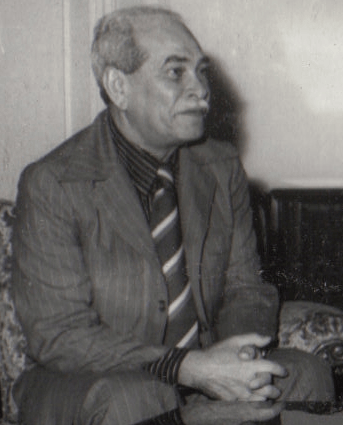
My Socialist Hall of Fame
During this chaotic era of vile rhetoric and manipulative tactics from our so-called bourgeois leaders, I am invigorated by the opportunity to reflect on Socialists, Revolutionaries, Philosophers, Guerrilla Leaders, Partisans, and Critical Theory titans, champions, and martyrs who paved the way for us—my own audacious “Socialism’s Hall of Fame.” These are my heroes and fore-bearers. Not all are perfect, or even fully admirable, but all contributed in some way to our future–either as icons to
Introduction
Blas Roca Calderío (1908–1987) occupies a central position in the history of Cuban communism and twentieth century Latin American Marxism. For more than five decades, he served as a political leader, theorist, journalist, parliamentarian, and constitutional advocate whose career spanned the dictatorship of Gerardo Machado, the upheavals of the 1930s, the Batista era, the Cuban Revolution, and the institutionalization of socialist governance after 1959. Although overshadowed internationally by figures such as Fidel Castro, Ernesto Che Guevara, and Raúl Castro, Roca was among the most important ideological architects of the Cuban revolutionary movement. His writings and political activities helped shape the Communist Party of Cuba and later contributed to the development of the revolutionary state’s constitutional and institutional foundations.
Roca’s significance lies not only in his political longevity but also in his role as a bridge between different generations of Cuban revolutionary struggle. He represented the continuity of Marxist organization from the interwar period through the Cold War and into the mature socialist state. His career illustrates the adaptation of Marxist theory to Cuban conditions and the complex relationship between communist parties and nationalist revolutionary movements in Latin America.
Early Life and Political Formation
Blas Roca was born Francisco Calderío López on July 24, 1908, in Manzanillo, Oriente Province, Cuba. He came from a modest working class background that profoundly influenced his political outlook. Economic necessity limited his formal education, and as a young man he worked in a variety of trades, including employment as a shoemaker. Like many future communist leaders throughout Latin America, his political education emerged less from university life than from direct engagement with labor and social struggles.
The social conditions of early twentieth century Cuba provided fertile ground for radicalization. Although Cuba had achieved formal independence from Spain in 1898, the island remained economically dependent upon the United States and dominated by large sugar interests. Vast inequalities characterized Cuban society, particularly in rural areas where seasonal unemployment and poverty were widespread.
During the 1920s, labor unrest and opposition to the increasingly authoritarian government of Gerardo Machado stimulated political activism across the island. It was within this context that Calderío became involved in the labor movement and encountered Marxist ideas. Upon joining the communist movement, he adopted the pseudonym “Blas Roca,” a name that would eventually eclipse his birth name and become synonymous with Cuban communism itself.
Rise within the Communist Movement
Roca joined the Communist Party of Cuba during a period when communist organizations throughout Latin America were seeking to establish durable connections with labor unions and peasant movements. His practical experience as a worker and organizer distinguished him from many intellectuals who approached Marxism primarily through academic study.
Throughout the 1930s, Cuba experienced extraordinary political turbulence. Machado’s dictatorship collapsed in 1933, leading to a succession of unstable governments and the emergence of Fulgencio Batista as a dominant political figure. The Communist Party attempted to navigate these shifting circumstances while expanding its influence among workers and trade unions.
Roca’s organizational abilities and political discipline facilitated his rapid rise through the party ranks. In 1934, at the age of twenty six, he became General Secretary of the Communist Party, a position he would hold for nearly three decades. His leadership coincided with a critical period in the international communist movement, when Communist International directives increasingly emphasized popular front alliances against fascism.
Under Roca’s leadership, the party sought broader coalitions with progressive and nationalist forces. This strategy reflected both international communist policy and the specific realities of Cuban politics. Roca argued that communist participation in broad democratic movements could strengthen working class influence while advancing anti imperialist objectives.
Marxist Theorist and Political Writer
Beyond his role as an organizer, Roca emerged as one of Cuba’s most important Marxist intellectuals. He authored numerous essays, pamphlets, speeches, and books that sought to interpret Marxism within the Cuban context.
Among his most influential works was Los Fundamentos del Socialismo en Cuba (“The Foundations of Socialism in Cuba”), which examined the historical and economic conditions necessary for socialist transformation. Roca consistently emphasized the importance of grounding revolutionary strategy in concrete social realities rather than abstract formulas. His approach reflected a broader tendency within Latin American Marxism to adapt European theoretical traditions to local circumstances.
Roca’s writings frequently addressed questions of national sovereignty, imperialism, agrarian reform, and class struggle. He argued that Cuba’s economic dependence on foreign capital, particularly American investment, constituted a major obstacle to social and national development. This analysis aligned with broader anti imperialist currents that would later become central to the Cuban Revolution.
As editor and contributor to communist newspapers and journals, Roca also played a crucial role in shaping political education within the Cuban left. His articles sought to make Marxist concepts accessible to workers and activists while maintaining theoretical rigor.
Relations with Batista and Political Controversy
One of the most controversial aspects of Roca’s career involved the Communist Party’s relationship with Fulgencio Batista during the late 1930s and early 1940s. Following the Popular Front strategy endorsed by the Communist International, Cuban communists cooperated with Batista during a period when he presented himself as a progressive reformer and ally of organized labor.
The Communist Party even adopted the name Popular Socialist Party (Partido Socialista Popular, PSP) during this era. Roca defended cooperation with Batista as a tactical necessity within the struggle against reactionary forces and fascism. The PSP achieved a degree of legal recognition and political influence unprecedented in its history.
Critics later argued that this alliance compromised communist principles and damaged the party’s revolutionary credibility. Supporters maintained that it reflected the complexities of Cuban politics and enabled the party to strengthen labor organizations and advance social reforms.
The controversy remains an important subject of scholarly debate because it highlights the tensions between revolutionary objectives and pragmatic political alliances. Roca’s defense of the policy illustrates his commitment to strategic flexibility within a Marxist framework.
The Cuban Revolution and Integration into the Revolutionary State
The triumph of Fidel Castro’s revolutionary movement in January 1959 fundamentally transformed Cuban politics. Initially, relations between Castro’s July 26 Movement and the PSP were marked by mutual caution. The PSP leadership, including Roca, had at times been skeptical of Castro’s guerrilla strategy, preferring more traditional forms of political organization.
However, the rapidly radicalizing revolution soon created opportunities for collaboration. As the revolutionary government pursued agrarian reform, nationalization, and confrontation with the United States, ideological differences between the two movements narrowed significantly.
Roca played an important role in facilitating the integration of the PSP into the emerging revolutionary political structure. His experience in organization, political education, and administration proved valuable during the consolidation of socialist institutions.
The eventual creation of the Communist Party of Cuba in 1965 united the principal revolutionary currents under a single political organization. Roca became a senior leader within the new party and remained an influential figure in shaping its ideological direction.
Constitutional Leadership and Later Years
During the 1970s, Roca’s contributions increasingly focused on institutional development. He served as president of the commission responsible for drafting the Cuban Constitution of 1976, one of the most significant legal documents in the history of the revolutionary state.
The constitution codified socialist principles, established the structure of government, and formalized the role of the Communist Party within Cuban society. Roca’s involvement reflected his longstanding interest in linking revolutionary transformation with durable political institutions.
His work on the constitution demonstrated an important aspect of his political philosophy. Unlike revolutionary leaders whose primary focus was insurrectionary struggle, Roca devoted considerable attention to the challenges of governance, law, and state building. He understood socialism not merely as a revolutionary event but as a long term process requiring stable institutions.
Throughout his later years, he continued to serve in various governmental and party capacities while contributing to political education and historical scholarship. He remained a respected elder statesman within the Cuban revolutionary leadership until his death on April 25, 1987.
Historical Legacy
Blas Roca’s legacy is multifaceted and occasionally contested. To supporters, he represents one of the principal builders of Cuban socialism, a disciplined revolutionary whose commitment to Marxism spanned more than half a century. His contributions to political organization, ideological development, and constitutional governance helped shape modern Cuba.
Historians have increasingly recognized his importance as a representative of an earlier generation of Cuban communists whose efforts laid important foundations for the revolutionary transformations of the post 1959 era. While Fidel Castro and Che Guevara often dominate popular narratives, figures such as Roca provided organizational continuity and theoretical depth.
Critics, however, have questioned aspects of his political record, particularly the Communist Party’s alliances during the Batista years and its adherence to Soviet influenced political models. These criticisms reflect broader debates concerning the history of twentieth century communism and the relationship between revolutionary ideals and state power.
Nevertheless, there is broad scholarly agreement that Roca was among the most influential Marxist leaders in Cuban history. His life illustrates the evolution of Latin American communism from a marginal political movement into a governing force capable of reshaping an entire society.
Conclusion
Blas Roca Calderío stands as one of the most significant figures in the history of Cuban Marxism. From his origins as a working class shoemaker in Oriente Province to his role as chief ideologue, party leader, constitutional architect, and revolutionary statesman, his career reflected the major political transformations of twentieth century Cuba.
His contributions extended beyond organizational leadership to encompass theoretical development, political education, and institutional construction. As a bridge between the early communist movement and the post revolutionary socialist state, Roca helped ensure continuity across dramatically different historical periods.
Although often overshadowed by more internationally famous revolutionary figures, his influence on Cuban political development was profound. Through his writings, leadership, and constitutional work, Blas Roca helped shape both the theory and practice of Cuban socialism, securing his place as one of the central architects of the island’s revolutionary tradition.
Bibliography
Azicri, Max. Cuba Today and Tomorrow: Reinventing Socialism. University Press of Florida, 2000.
Domínguez, Jorge I. Cuba: Order and Revolution. Harvard University Press, 1978.
Farber, Samuel. The Origins of the Cuban Revolution Reconsidered. University of North Carolina Press, 2006.
Gott, Richard. Cuba: A New History. Yale University Press, 2004.
Kapcia, Antoni. Cuba in Revolution: A History Since the Fifties. Reaktion Books, 2008.
Roca, Blas. Los Fundamentos del Socialismo en Cuba. Editorial de Ciencias Sociales, various editions.
Roca, Blas. La Revolución Socialista y el Partido Comunista de Cuba. Editora Política, Havana.
Thomas, Hugh. Cuba: The Pursuit of Freedom. Harper & Row, 1971.
Whitfield, Esther. Cuban Currency: The Dollar and Special Period Fiction. University of Minnesota Press, 2008.
Zanetti, Oscar. A Sugar and Railroads History of Cuba, 1837–1959. University of North Carolina Press, 1998.


Leave a Reply