My Socialist Hall of Fame
During this chaotic era of vile rhetoric and manipulative tactics from our so-called bourgeois leaders, I am invigorated by the opportunity to reflect on Socialists, Revolutionaries, Philosophers, Guerrilla Leaders, Partisans, and Critical Theory titans, champions, and martyrs who paved the way for us—my own audacious “Socialism’s Hall of Fame.” These are my heroes and fore-bearers. Not all are perfect, or even fully admirable, but all contributed in some way to our future–either as icons to emulate, or as warnings to avoid in the future.
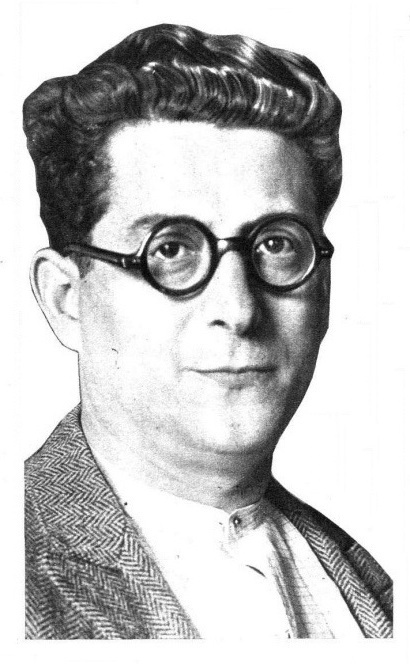
Andreu Nin i Pérez (1892–1937) occupies a singular place in the history of twentieth century revolutionary socialism. A Catalan teacher, journalist, trade unionist, Communist leader, and later anti-Stalinist Marxist, Nin’s political trajectory reflected many of the central conflicts of the international left during the interwar period. His life traced a path from Catalan republicanism and revolutionary syndicalism to Bolshevism, and ultimately to the dissident Marxist movement that challenged Joseph Stalin’s growing domination of the Communist International. His disappearance and murder during the Spanish Civil War became one of the most notorious examples of Stalinist repression outside the Soviet Union.
Born on February 4, 1892, in El Vendrell, Catalonia, Nin was raised in a modest family and trained as a schoolteacher. Like many politically conscious Catalans of his generation, he was initially drawn to republicanism and the movement for regional autonomy. The social upheavals that accompanied Spain’s uneven industrialization pushed him toward labor activism. During the 1910s he became involved with the Confederación Nacional del Trabajo (CNT), the powerful anarcho-syndicalist labor federation that dominated much of the Spanish workers’ movement.
Although influenced by anarchism, Nin increasingly gravitated toward Marxism. The Russian Revolution of 1917 profoundly affected him, as it did many European radicals. He viewed the Bolshevik seizure of power as evidence that a disciplined revolutionary party could successfully overthrow capitalism and establish workers’ rule. By the early 1920s he emerged as one of the leading advocates of Bolshevism within Spain’s labor movement.
In 1921 the CNT sent Nin to Soviet Russia as a delegate to the founding congress of the Red International of Labor Unions, commonly known as the Profintern. What was initially intended as a temporary mission became a decade long stay in the Soviet Union. During these years Nin became deeply integrated into the international communist movement. He worked within the Profintern apparatus, learned Russian, and developed close relationships with leading Bolsheviks.
Nin’s Soviet experience proved transformative. During the 1920s he became associated with Leon Trotsky and the Left Opposition, which criticized the bureaucratization of the Soviet state and Communist Party. Trotsky and his supporters argued that Stalin’s policies represented a departure from the democratic and internationalist principles of the October Revolution. Nin increasingly accepted this critique and emerged as one of the most important foreign supporters of the Opposition.
The consolidation of Stalin’s power made Nin’s position untenable. As oppositionists were expelled, exiled, and persecuted, Nin himself fell under suspicion. In 1930 Soviet authorities expelled him from the USSR. Returning to Spain after nearly a decade abroad, he entered a political landscape transformed by the collapse of the dictatorship of Miguel Primo de Rivera and the approaching fall of the monarchy.
The establishment of the Second Spanish Republic in 1931 opened new opportunities for revolutionary politics. Nin became one of the principal leaders of the Spanish Communist Left, an organization aligned with Trotsky’s International Left Opposition. Despite his admiration for Trotsky, significant disagreements emerged between the two men. Trotsky advocated the construction of a disciplined revolutionary party rooted in orthodox Bolshevik principles. Nin favored broader alliances with other revolutionary currents and sought greater flexibility in organizational strategy.
These differences culminated in 1935 when Nin helped merge the Communist Left with the Workers and Peasants Bloc led by Joaquín Maurín. The resulting organization, the Workers’ Party of Marxist Unification (Partido Obrero de Unificación Marxista, or POUM), rejected both social democracy and Stalinism while maintaining a commitment to revolutionary Marxism. Trotsky sharply criticized the merger, arguing that it diluted revolutionary clarity. Nevertheless, POUM became one of the most significant anti-Stalinist socialist organizations in Europe.
The outbreak of the Spanish Civil War in July 1936 thrust Nin into a position of national prominence. Following the defeat of the military uprising in much of Catalonia, revolutionary workers established extensive control over factories, transportation networks, and local government institutions. POUM participated actively in this revolutionary process. Nin briefly served as Minister of Justice in the Generalitat of Catalonia, where he supported measures aimed at consolidating workers’ power and transforming social relations.
Yet the political situation rapidly deteriorated. The Soviet Union became the principal external supporter of the Republican government. Soviet military assistance arrived alongside political influence exercised through the Spanish Communist Party and Soviet security services. Stalin regarded POUM as a dangerous rival whose anti-Stalinist politics threatened Communist authority within the Republican camp.
The conflict reached a climax during the Barcelona May Days of 1937, when fighting erupted between revolutionary workers and forces aligned with the Republican government and Communist Party. In the aftermath, POUM was outlawed. On June 16, 1937, Nin was arrested by agents linked to the Soviet NKVD. He was taken to a secret detention center near Madrid, where he was tortured in an attempt to force a confession that POUM collaborated with fascist forces.
Nin refused to confess. Unable to produce evidence supporting their allegations, his captors ultimately murdered him. His body was never recovered. Communist officials circulated false claims that he had been rescued by the Gestapo, a fabrication intended to justify the repression of POUM and discredit its leadership.
Nin’s death became a symbol of the broader struggle between revolutionary socialism and Stalinism. Contemporary observers such as George Orwell, who fought alongside anti-Stalinist forces in Spain, viewed the campaign against POUM as evidence that Stalinist repression extended far beyond Soviet borders. Orwell’s Homage to Catalonia helped introduce Nin’s fate to an international audience and remains one of the most influential accounts of the episode.
Historically, Nin has remained a contested figure. Soviet historiography portrayed him as a counterrevolutionary conspirator, while anti-Stalinist socialists celebrated him as a martyr for revolutionary democracy. More recent scholarship tends to present him as a complex revolutionary intellectual whose political evolution reflected the dilemmas facing Marxists in an era marked by fascism, economic crisis, and the bureaucratic degeneration of the Soviet experiment.
Today, Andreu Nin is remembered not only for his role in the Spanish Revolution but also for his attempt to chart an independent path between reformist socialism and Stalinist authoritarianism. His life and death illuminate the ideological fractures that shaped the twentieth century left and continue to influence debates about socialism, democracy, and revolutionary strategy.
Bibliography
Alba, Víctor, and Stephen Schwartz. Spanish Marxism versus Soviet Communism: A History of the POUM. Transaction Publishers, 1988.
Broué, Pierre, and Émile Témime. The Revolution and the Civil War in Spain. MIT Press, 1972.
Durgan, Andy. The Spanish Civil War. Palgrave Macmillan, 2007.
Durgan, Andy. The Communist Left in Spain, 1923–1937. University of London Press, 1990.
Nin, Andreu. The Spanish Revolution. Pathfinder Press, 1974.
Orwell, George. Homage to Catalonia. Harcourt Brace, 1952.
Preston, Paul. The Spanish Civil War: Reaction, Revolution and Revenge. W. W. Norton, 2007.
Thomas, Hugh. The Spanish Civil War. Revised and Expanded Edition, Modern Library, 2001.


Leave a Reply