My Socialist Hall of Fame
During this chaotic era of vile rhetoric and manipulative tactics from our so-called bourgeois leaders, I am invigorated by the opportunity to reflect on Socialists, Revolutionaries, Philosophers, Guerrilla Leaders, Partisans, and Critical Theory titans, champions, and martyrs who paved the way for us—my own audacious “Socialism’s Hall of Fame.” These are my heroes and fore-bearers. Not all are perfect, or even fully admirable, but all contributed in some way to our future–either as icons to emulate, or as warnings to avoid in the future.
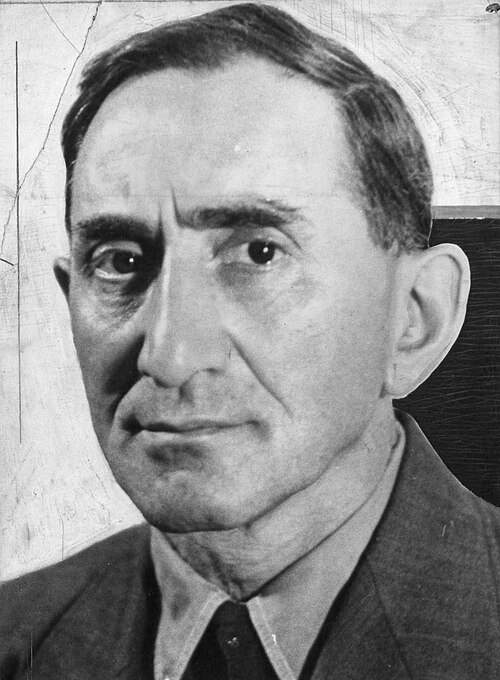
Israel Amter occupies a distinctive, though often understudied, place in the history of the American communist movement. A militant labor organizer, Marxist theoretician, and disciplined party functionary, Amter dedicated his adult life to the project of proletarian revolution in the United States during one of the most turbulent periods of modern political history. His career traversed the formative years of the Communist Party USA, the crises of the Great Depression, the rise of industrial unionism, and the intense anti communist repression that marked the interwar and early Cold War periods. Though rarely celebrated outside specialist scholarship, Amter embodied the archetype of the professional revolutionary envisioned by Leninist political theory: intellectually committed, organizationally disciplined, and entirely subordinated to the collective objectives of the communist movement.
Israel Amter was born in 1881 in Denver, Colorado, to Jewish immigrants from what was then Austro-Hungaria. Like many Eastern European Jewish immigrants of their generation, his parents arrived in the United States amid the vast migratory movements of the late nineteenth and early twentieth centuries. These immigrant communities served as fertile ground for socialist and labor politics. Exploitative industrial conditions, overcrowded urban life, and ethnic marginalization generated deep receptivity to radical critiques of capitalism. Amter’s political consciousness emerged within this milieu of immigrant socialism, labor agitation, and revolutionary internationalism.
Before his formal association with communism, Amter was active in socialist politics connected to the broader American left. However, the Russian Revolution of 1917 profoundly transformed the ideological horizons of radicals throughout the world, including in the United States. For Amter, the Bolshevik seizure of power demonstrated that socialism was not merely an ethical aspiration or electoral program, but a concrete revolutionary possibility. He became an early supporter of the communist movement that crystallized around allegiance to the Communist International.
The Communist Party USA emerged under extraordinarily difficult circumstances. The first Red Scare, state repression, internal factionalism, and ideological disputes plagued the organization during its formative years. Amter nevertheless distinguished himself as a capable organizer and reliable cadre. He was particularly involved in labor organizing and unemployment struggles, areas central to communist strategy during the interwar period. Unlike many intellectual sympathizers who moved in and out of radical politics, Amter represented the hardened core of party militants who devoted themselves entirely to organizational work.
Amter’s most significant public role came during the Great Depression, when mass unemployment destabilized American capitalism and opened new opportunities for communist organizing. As millions faced eviction, starvation, and social collapse, the Communist Party attempted to position itself as the militant vanguard of working class resistance. Amter became heavily associated with the Unemployed Councils, organizations designed to mobilize unemployed workers around demands for relief, housing protections, and labor solidarity. These campaigns frequently combined practical assistance with revolutionary political education.
The most famous episode of Amter’s political career occurred in 1930 during the so called “March of the Unemployed” in Washington, D.C. Organized under communist leadership, the demonstration sought federal relief for unemployed workers suffering amid the deepening economic crisis. Amter and other organizers were arrested after attempting to present demands to Congress. The arrests transformed the demonstration into a national political spectacle. Communist publications portrayed the event as evidence of the capitalist state’s hostility toward the working class, while mainstream newspapers frequently depicted the marchers as dangerous agitators manipulated by Moscow.
The episode illustrates a central tension within Amter’s political life. On one hand, he was genuinely rooted in the material struggles of unemployed and industrial workers. On the other hand, he operated within a party increasingly constrained by the strategic directives of the Soviet aligned Communist International. During the late 1920s and early 1930s, the Communist Party embraced the ultra left “Third Period” strategy, which characterized social democrats as “social fascists” and rejected cooperation with non communist labor organizations. Amter loyally defended these positions despite their strategic limitations. His career thus reflects both the dedication and the rigidity that characterized many communist militants of the era.
By the mid 1930s, the Communist Party shifted toward the Popular Front strategy, emphasizing broad alliances against fascism. Like many disciplined party members, Amter adapted to the new line. He continued labor and political organizing while remaining deeply committed to Soviet socialism as the leading force of international revolution. His writings and speeches consistently emphasized class struggle, anti fascism, and proletarian internationalism.
Amter’s intellectual contributions, while less prominent than those of major Marxist theorists, nevertheless reveal the political culture of American communism during its peak years. He wrote extensively in party publications on unemployment, labor organization, and the necessity of revolutionary discipline. His prose reflected the highly structured ideological framework of official communist discourse, emphasizing historical materialism, capitalist crisis, and the inevitability of proletarian struggle. Though not a major theoretician, Amter functioned as an important translator of Marxist Leninist concepts into the practical realities of American labor politics.
The later decades of Amter’s life unfolded amid the decline of the American communist movement. The Nazi Soviet Pact, Cold War anti communism, internal party crises, and the rise of McCarthyism devastated communist influence in the United States. Yet Amter remained loyal to the party throughout these upheavals. This enduring commitment has generated differing historical interpretations. Critics portray figures like Amter as dogmatic defenders of Soviet authoritarianism, while sympathetic historians emphasize the sincerity of their anti capitalist convictions and their role in labor and anti racist struggles.
Modern scholarship increasingly situates Amter within the broader history of immigrant radicalism and working class militancy rather than dismissing him solely through the lens of Cold War ideology. Historians of labor and the American left have noted that communist organizers often played disproportionately significant roles in unemployment organizing, industrial unionization, anti lynching campaigns, and anti fascist mobilization. Amter’s life therefore illuminates both the possibilities and contradictions of twentieth century American communism.
Israel Amter died in 1954, having spent decades in service to revolutionary politics. He never witnessed the socialist transformation he believed history would produce. Yet his life remains historically significant because it captures the aspirations, sacrifices, and contradictions of a generation of communists who sought to construct a revolutionary movement within American capitalism itself. His biography offers insight not only into the Communist Party USA, but into the broader political struggles that shaped the twentieth century working class experience.
Bibliography
Amter, Israel. Man and the Job: A Story of the Organization of the Unemployed and the Employed in the United States. International Publishers, 1932.
Communist Party of the United States of America. The Communist Party: A Manual on Organization. Workers Library Publishers, 1935.
Draper, Theodore. The Roots of American Communism. Ivan R. Dee, 1982.
Draper, Theodore. American Communism and Soviet Russia. Transaction Publishers, 2003.
Howe, Irving, and Lewis Coser. The American Communist Party: A Critical History. Beacon Press, 1957.
Klehr, Harvey. The Heyday of American Communism: The Depression Decade. Basic Books, 1984.
Ottanelli, Fraser M. The Communist Party of the United States: From the Depression to World War II. Rutgers University Press, 1991.
Shannon, David A. The Decline of American Communism. Harcourt, Brace and Company, 1959.
Zumoff, Jacob A. The Communist International and US Communism, 1919–1929. Brill, 2014.


Leave a comment