Book Review
Terence. The Brothers and Other Plays. Translated by Peter Brown, Oxford University Press, 2008.
Terence’s Adelphoe (The Brothers), first performed in 160 BCE, stands among the most intellectually sophisticated works of Roman New Comedy. Adapted primarily from Menander, the play explores questions of fatherhood, moral education, social authority, and generational conflict through the contrasting philosophies of two brothers, Demea and Micio. Beneath its elegant comic structure lies a penetrating examination of Roman masculinity and the tensions within the Roman household during the middle Republic. Though framed as comedy, Adelphoe possesses a remarkable seriousness of purpose. Its laughter is civilized but uneasy, drifting through the play like lamplight in a wealthy Roman atrium where every polished surface reflects a different version of authority.
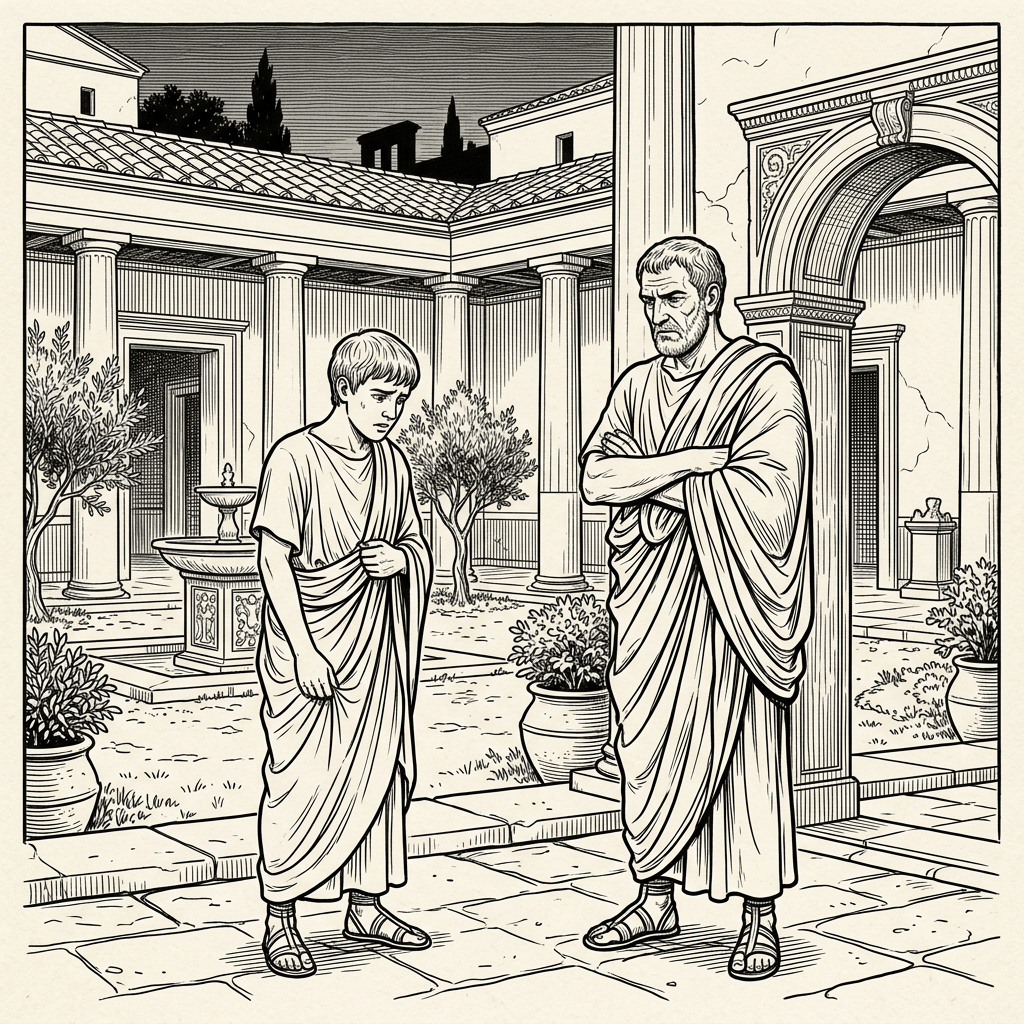
At the center of the drama are two elderly brothers who embody opposing educational and ethical systems. Demea is rigid, frugal, authoritarian, and deeply attached to traditional rural discipline. Micio, by contrast, is urban, affluent, indulgent, and committed to a more permissive form of upbringing. The conflict between them is dramatized through their sons. Demea’s biological son Ctesipho has been raised by Micio, while Demea himself raises Aeschinus, who becomes entangled in a scandal involving the apparent abduction of a music girl. Terence uses this premise not merely for comic misunderstanding but to interrogate the foundations of paternal authority itself.
One of the play’s greatest achievements lies in its resistance to simplistic moral resolution. At first glance, Micio’s humane tolerance appears superior to Demea’s severity. Micio values persuasion over coercion and affection over fear. His famous declaration that “it is better for children to obey out of shame than fear” articulates a philosophy strikingly modern in tone. Yet Terence carefully complicates this apparent endorsement. Micio’s leniency often borders upon passivity, while Demea’s strictness emerges from genuine concern for familial stability and moral discipline. Neither brother entirely succeeds. Their methods produce anxiety, concealment, and emotional confusion in the younger generation.
The play’s conclusion has long generated scholarly debate because it destabilizes audience expectations. In the final act, Demea abruptly adopts a posture of extravagant generosity and social charm, distributing gifts and favor with theatrical enthusiasm. Critics have interpreted this reversal in radically different ways. Some read it as sincere moral transformation, while others view it as bitter irony designed to expose the superficiality of Micio’s permissive worldview. Demea’s sudden popularity suggests that Roman society rewards appearances of generosity more readily than genuine ethical consistency. The ending therefore resists the harmonious closure expected of conventional comedy. Terence leaves the audience suspended between reconciliation and satire.
This ambiguity reflects the broader sophistication of Terentian comedy. Unlike Plautus, whose plays often revel in linguistic exuberance and farcical chaos, Terence cultivates psychological realism and conversational refinement. His dialogue is controlled, elegant, and carefully balanced. Characters speak not merely to advance plot but to articulate competing moral perspectives. Ancient critics sometimes accused Terence of excessive subtlety or insufficient comic energy, yet these very qualities explain his enduring importance within literary history. Renaissance humanists later admired Terence precisely because his plays seemed morally and stylistically disciplined, suitable for educational instruction as well as theatrical performance.
Adelphoe also provides invaluable insight into Roman anxieties regarding Hellenization. Terence adapts Greek dramatic material for a Roman audience living through profound cultural transformation. Micio’s urban sophistication and relaxed domestic ethics evoke elite Roman encounters with Greek intellectual culture, while Demea represents older agrarian ideals associated with stern republican virtue. The play does not wholly endorse either perspective. Instead, it dramatizes the instability produced when traditional Roman authority confronts cosmopolitan social change. In this sense, Adelphoe becomes more than domestic comedy. It functions as a cultural negotiation between competing visions of Roman identity.
The figure of the father occupies particular importance in this negotiation. Roman society vested extraordinary legal and symbolic authority in the paterfamilias, whose control over household and lineage formed a cornerstone of republican social order. Terence subjects this institution to careful scrutiny. Both Demea and Micio struggle to command genuine respect from their sons. Authority based solely on fear proves alienating, yet authority grounded entirely in permissiveness risks collapse into indulgence. Terence therefore exposes the fragility underlying patriarchal confidence. The Roman household appears less as a stable hierarchy than as a contested emotional terrain shaped by performance, affection, resentment, and economic power.
Modern scholarship has increasingly emphasized the play’s dramatic self consciousness. Terence repeatedly draws attention to the theatricality of social behavior. Characters construct identities through performance, deception, and rhetorical manipulation. Demea’s climactic transformation demonstrates how quickly public approval can be won through calculated generosity. The play thereby interrogates authenticity itself. Are moral systems genuine ethical commitments, or merely roles adopted for social advantage? Terence refuses easy answers.
Ultimately, Adelphoe endures because of its profound human complexity. The play recognizes that family life is rarely governed by coherent philosophical systems. Parents contradict themselves. Children conceal their desires. Authority oscillates between tenderness and domination. Love and control become nearly inseparable. Terence captures these tensions with remarkable restraint and intelligence. His comedy avoids both sentimentality and cynicism. Instead, it presents domestic life as an unstable negotiation between ideals and realities, one carried out beneath the stern architecture of Roman respectability and the ever present fear of social shame.


Leave a comment