Terence
-
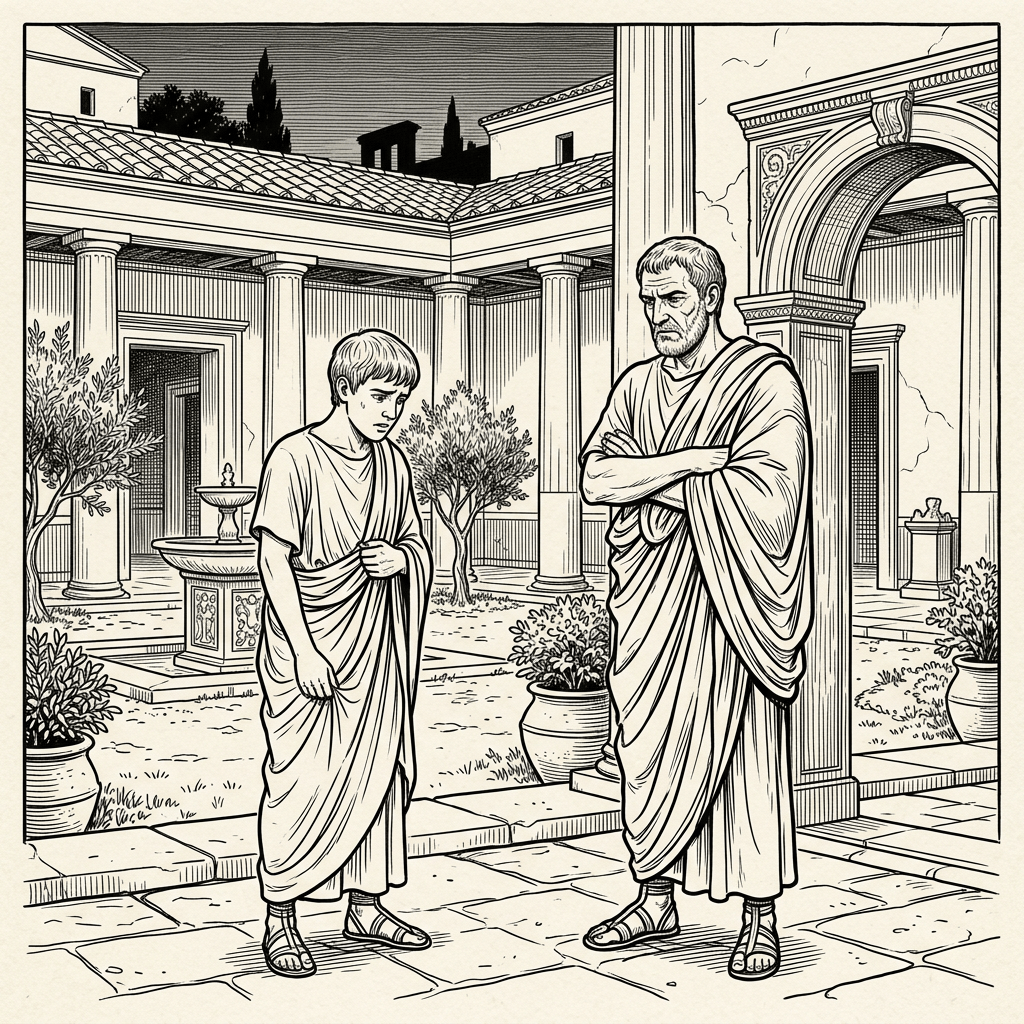
Terence’s “Adelphoe,” performed in 160 BCE, critiques Roman masculinity through the conflicting ideals of two brothers, Demea and Micio, regarding fatherhood and authority. The play navigates complex themes like educational philosophy and societal expectations, ultimately resisting simple moral resolutions and highlighting the nuances of family dynamics amid cultural transformation.
-
Terence’s Heauton Timorumenos, performed in 163 BCE, offers a nuanced exploration of paternal authority and self-inflicted suffering within Roman domestic life. Through character Menedemus, Terence examines the complexities of moral anguish and human interdependence, emphasizing emotional authenticity and psychological realism over farcical elements, reflecting deep ethical considerations in familial relationships.

