Book Review
Terence. The Self-Tormentor (Heauton Timorumenos). Translated by John Barsby, Harvard UP, 2001.
Terence’s Heauton Timorumenos (“The Self-Tormentor”), first performed in 163 BCE, occupies a peculiar and revealing position within the Roman comic tradition. Less overtly farcical than Plautus and more psychologically restrained than many surviving examples of New Comedy, the play demonstrates Terence’s distinctive literary ambition: the transformation of inherited Greek comic material into a vehicle for ethical inquiry, social observation, and emotional realism. Beneath its seemingly conventional structure of mistaken assumptions, generational conflict, and romantic intrigue lies a sophisticated examination of paternal authority, self-inflicted suffering, and the fragile possibility of reconciliation within Roman domestic life.
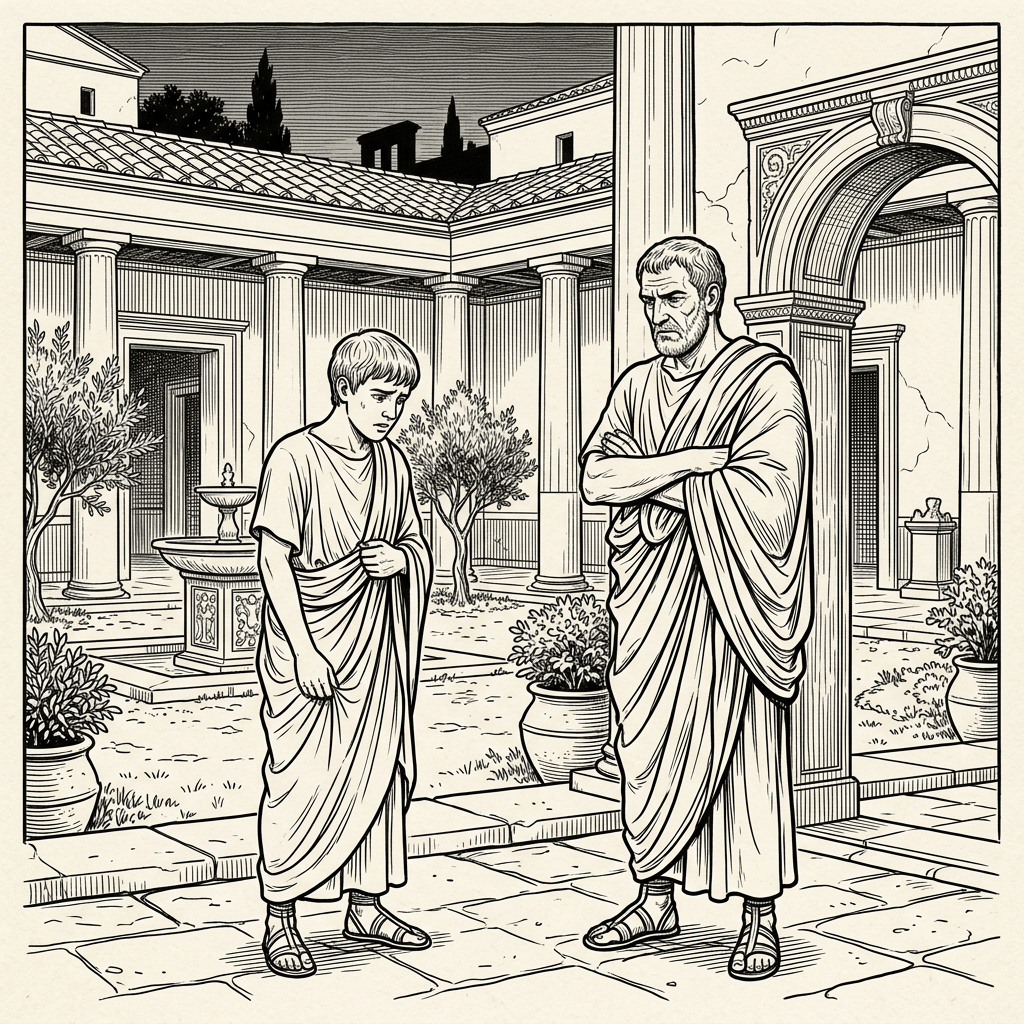
The title itself immediately establishes the thematic center of the drama. Menedemus, the elderly father whose harsh treatment drives his son Clinia into self-imposed exile, becomes the “self-tormentor” through excessive labor and voluntary misery. Unlike many comic senes figures in Roman comedy, Menedemus is not merely an obstacle to youthful desire or a caricature of authoritarian rigidity. Terence instead constructs him as a morally serious and psychologically burdened figure whose punishment arises internally. His suffering is neither judicial nor divine; it is self-administered through guilt. This emphasis on inward moral anguish marks one of the play’s most significant departures from the more externalized comic violence typical of Plautine theater.
Terence’s treatment of Menedemus reveals the playwright’s broader interest in ethical moderation and humane conduct. The father’s initial severity toward Clinia reflects a traditional Roman concern for discipline, authority, and social reputation. Yet the play systematically exposes the destructive consequences of inflexible paternal control. Menedemus’ repentance does not emerge through sudden revelation or divine intervention, but through prolonged emotional deterioration. His compulsive labor in the fields becomes both literal and symbolic. He attempts to punish himself physically for moral failure, transforming agricultural toil into an act of penance. The image is strikingly uncomic: an old man exhausting himself beneath the weight of private remorse while the social machinery of comedy continues around him.
The play’s emotional gravity is reinforced by Terence’s unusually restrained comic style. While Plautus often delights in verbal exuberance, metatheatrical spectacle, and near-chaotic reversals, Terence pursues clarity, conversational realism, and psychological consistency. Dialogue in Heauton Timorumenos frequently resembles moral debate rather than comic performance. Characters speak with a measured intelligence that reflects Terence’s debt to Menander and the Hellenistic tradition of refined domestic comedy. The result is a play less concerned with laughter as an end in itself than with the moral tensions embedded within family life.
Particularly notable is the relationship between Menedemus and his neighbor Chremes. Chremes initially adopts the role of concerned observer, attempting to understand the reasons behind Menedemus’ self-destructive behavior. Yet Terence gradually reveals Chremes’ own deficiencies, especially his tendency toward intrusive curiosity and hypocritical moralizing. The famous line, Homo sum: humani nihil a me alienum puto (“I am human; I think nothing human is alien to me”), spoken by Chremes, has often been interpreted as a declaration of universal human sympathy. However, the line acquires greater complexity within the dramatic context. Chremes uses it partly to justify meddling in another man’s affairs. Terence therefore avoids simplistic moral idealization. Human connectedness becomes both virtuous and invasive, compassionate and self-serving.
This ambivalence contributes substantially to the sophistication of the play. Terence repeatedly resists rigid moral binaries. Fathers are neither wholly tyrannical nor entirely benevolent. Sons are neither purely innocent nor recklessly corrupt. Even the courtesan Bacchis, who might easily have become a stock figure of comic greed or manipulation, demonstrates intelligence, adaptability, and emotional sensitivity. Terence’s dramatic world operates through negotiation rather than absolute judgment. Individuals misunderstand one another not because they are monstrous, but because social expectations distort communication and emotional honesty.
The play also illuminates broader tensions within Roman cultural identity during the second century BCE. Terence, an African-born former slave writing adaptations of Greek originals for elite Roman audiences, occupies a uniquely liminal position within Roman literary culture. Heauton Timorumenos reflects this hybridity. The play’s Greek setting and Hellenistic ethical concerns are filtered through Roman anxieties regarding household authority, inheritance, masculinity, and paternal obligation. Roman audiences would likely have recognized the dangers of excessive severitas even while affirming the necessity of patriarchal control. Terence exploits this instability masterfully. The comedy neither rejects Roman social structures nor fully endorses them. Instead, it exposes the emotional costs required to maintain them.
Structurally, the play reveals Terence’s technical discipline. The plot unfolds with remarkable coherence and restraint compared to the exuberant convolution of Plautine comedy. Misunderstandings and concealed identities remain central to the action, yet they are subordinated to character development rather than mere mechanical surprise. Terence’s interest lies less in improbable comic resolution than in emotional recognition. Reconciliation in the play feels earned because it emerges from psychological transformation rather than arbitrary coincidence.
Nevertheless, some critics have argued that Terence’s refinement diminishes comic vitality. Ancient audiences themselves reportedly received Heauton Timorumenos less enthusiastically than more overtly theatrical productions. The relative absence of broad farce, musical exuberance, and comic grotesquerie can produce an atmosphere closer to moral comedy than festive entertainment. Yet this criticism may misunderstand Terence’s artistic project. His plays seek not the ecstatic disorder of carnival, but the disciplined representation of social and emotional complexity. The quieter tone of Heauton Timorumenos is therefore integral to its thematic ambitions.
From a modern perspective, the play remains compelling precisely because of its psychological realism. Menedemus’ guilt possesses a recognizable emotional authenticity that transcends the conventions of Roman comedy. His suffering anticipates later literary explorations of self-punishment and parental regret. The central conflict feels startlingly contemporary: a father destroys intimacy with his child through rigidity, then attempts to compensate through excessive self-reproach rather than honest communication. Terence understands that remorse alone cannot undo emotional damage. Suffering may express love, but it cannot substitute for it.
Ultimately, Heauton Timorumenos stands as one of Terence’s most intellectually and emotionally sophisticated works. It transforms the framework of New Comedy into a subtle meditation on authority, guilt, and human interdependence. Beneath the polished civility of its dialogue lies a profoundly melancholic vision of domestic life, one in which affection is repeatedly obstructed by pride, convention, and fear. Terence’s achievement rests in his ability to dramatize these tensions without abandoning the formal elegance of comedy itself. The result is a play of remarkable restraint and enduring humanity, where the deepest wounds are not inflicted by fate or enemies, but by the ordinary failures of those who love one another most.
 Letters from Tomis
Leave a comment