My Socialist Hall of Fame
During this chaotic era of vile rhetoric and manipulative tactics from our so-called bourgeois leaders, I am invigorated by the opportunity to reflect on Socialists, Revolutionaries, Philosophers, Guerrilla Leaders, Partisans, and Critical Theory titans, champions, and martyrs who paved the way for us—my own audacious “Socialism’s Hall of Fame.” These are my heroes and fore-bearers. Not all are perfect, or even fully admirable, but all contributed in some way to our future–either as icons to emulate, or as warnings to avoid in the future.
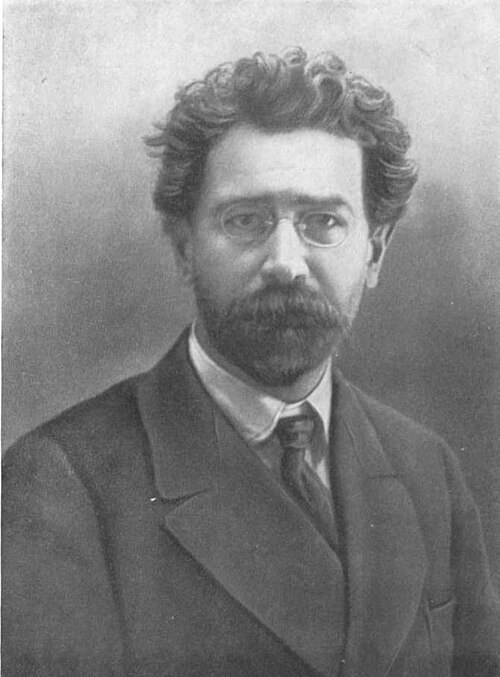
Viktor Pavlovich Nogin occupies a paradoxical place in the history of the Russian Revolution. A committed Bolshevik and veteran of the underground struggle, he nevertheless emerged in 1917 as one of the most prominent advocates of socialist coalition, resisting the consolidation of one party rule in the aftermath of the October Revolution. His political trajectory illuminates the internal tensions within early Bolshevism, particularly the unresolved question of proletarian dictatorship versus socialist pluralism.
Nogin was born in Moscow in 1878 into a working class family, a background that would decisively shape both his political commitments and his organizational strengths. Unlike many early Marxists who entered the movement through the intelligentsia, Nogin’s formation was rooted in the lived experience of urban labor. He entered revolutionary politics in the late 1890s, joining circles influenced by Russian Social Democracy. By the time of the 1903 split in the Russian Social Democratic Labor Party, Nogin aligned himself with the Bolshevik faction led by Vladimir Lenin, though his later career would demonstrate a more conciliatory temperament than that of Lenin’s inner circle.
During the Russian Revolution of 1905, Nogin played an active role in organizing workers in Moscow. He contributed to the formation of soviets and participated in strikes that revealed both the revolutionary potential and the organizational fragility of the Russian proletariat. The defeat of the 1905 uprising forced Nogin, like many revolutionaries, into a cycle of arrest, exile, and clandestine activity. These years of repression hardened his commitment to socialist politics but also exposed him to the practical limitations of insurrectionary strategy in the absence of broad social consensus.
Nogin’s importance grew significantly during the revolutionary year of 1917. Following the February collapse of tsarism, he became a leading Bolshevik figure in Moscow, helping to consolidate party influence among industrial workers. However, his political stance during this period diverged in critical ways from Lenin’s increasingly insurrectionary line. Nogin favored cooperation with other socialist parties, particularly the Mensheviks and Socialist Revolutionaries, believing that the revolutionary process required a broad proletarian and peasant alliance rather than a narrowly defined party dictatorship.
After the October Revolution, Nogin was appointed People’s Commissar for Trade and Industry in the new Soviet government. Yet his tenure was brief. In November 1917, he joined a group of Bolshevik leaders who resigned from the government in protest against the exclusion of other socialist parties. This episode marked one of the earliest and most significant internal oppositions within the Bolshevik regime. Nogin and his allies argued for the formation of a coalition socialist government, warning that the monopolization of power by a single party would alienate the working class and undermine the revolution’s legitimacy.
Although Nogin eventually returned to party work, the political line he represented was decisively defeated. The consolidation of Bolshevik authority during the Civil War period marginalized figures associated with conciliatory positions. Nogin’s subsequent career was therefore less prominent, though he remained active in Soviet economic administration and trade union work. His expertise in industrial organization made him a valuable functionary in the emerging Soviet state, even as his earlier dissent receded from official narratives.
Nogin died in 1924, the same year as Lenin, at a moment when the Soviet Union was entering a new phase of institutional consolidation and factional struggle. His legacy was subsequently overshadowed by the dominant historiography of Bolshevism, which tended to privilege figures aligned with the victorious central leadership. Yet Nogin’s career offers a crucial window into alternative possibilities within the revolutionary movement. His insistence on socialist unity and his skepticism toward one party rule highlight the contested nature of early Soviet political development.
From a historiographical perspective, Nogin has often been treated as a secondary figure, appearing in studies of intra party opposition rather than as a subject in his own right. However, recent scholarship has begun to reassess the diversity of Bolshevik thought in 1917, situating Nogin within a broader current that sought to reconcile revolutionary transformation with democratic socialist principles. His life underscores the extent to which the outcome of the Russian Revolution was not predetermined but emerged through conflict, contingency, and the suppression of dissenting visions within the revolutionary camp itself.
Bibliography
Carr, E. H. The Bolshevik Revolution, 1917–1923. Vol. 1. London: Macmillan, 1950.
Fitzpatrick, Sheila. The Russian Revolution. Oxford: Oxford University Press, 2008.
Rabinowitch, Alexander. The Bolsheviks Come to Power: The Revolution of 1917 in Petrograd. New York: W. W. Norton, 2004.
Service, Robert. Lenin: A Biography. Cambridge, MA: Harvard University Press, 2000.
Smith, S. A. Red Petrograd: Revolution in the Factories, 1917–1918. Cambridge: Cambridge University Press, 1983.
 Letters from Tomis
Leave a comment