During this chaotic era of vile rhetoric and manipulative tactics from our so-called bourgeois leaders, I am invigorated by the opportunity to reflect on Socialists, Revolutionaries, Philosophers, Guerrilla Leaders, Partisans, and Critical Theory titans, champions, and martyrs who paved the way for us—my own audacious “Socialism’s Hall of Fame.” These are my heroes and fore-bearers. Not all are perfect, or even fully admirable, but all contributed in some way to our future–either as icons to emulate, or as warnings to avoid in the future.
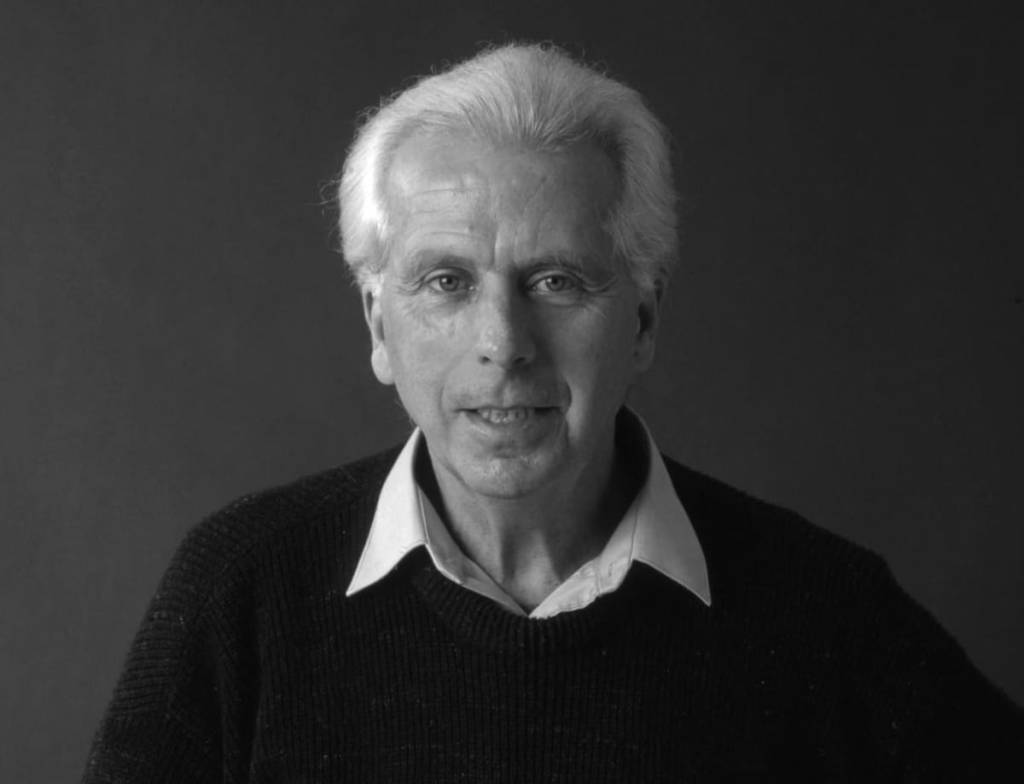
Michel Clouscard (1928–2009) stands as one of the most original and controversial Marxist philosophers in late twentieth century France. His work, situated at the intersection of sociology, political economy, and cultural critique, sought to diagnose what he identified as the transformation of capitalism in the postwar West into a system he famously termed “liberal-libertarian capitalism.” In contrast to both orthodox Marxism and the dominant currents of French poststructuralism, Clouscard advanced a theory of capitalism that foregrounded the integration of consumer pleasure, moral permissiveness, and market expansion.
Born in Montpinier in the Tarn region of southern France, Clouscard came of age during the upheavals of the Second World War and the reconstruction that followed. These formative experiences shaped his lifelong commitment to understanding the structural transformations of capitalist society. Educated within the French university system, he pursued philosophy and developed a strong grounding in the works of Karl Marx and Georg Wilhelm Friedrich Hegel, whose dialectical methods would deeply inform his later analyses. Clouscard’s intellectual trajectory was also influenced by French rationalist traditions, particularly the legacy of Rousseau, whom he would later reinterpret as a proto critic of bourgeois individualism.
Clouscard’s early academic work focused on the moral and social philosophy of Jean-Jacques Rousseau. His doctoral thesis, later published as L’Être et le Code, offered a systematic reading of Rousseau as a thinker of social totality rather than merely a theorist of political legitimacy. In this work, Clouscard argued that Rousseau’s critique of inequality anticipated the contradictions of modern capitalist society, particularly the tension between formal freedom and material dependency.
It was, however, in the decades following the events of May 1968 that Clouscard developed his most distinctive contributions. While many French intellectuals, including Michel Foucault and Gilles Deleuze, interpreted the upheavals of 1968 as a liberation from repressive social norms, Clouscard advanced a sharply dissenting view. He contended that the apparent cultural emancipation of the period was not a rupture with capitalism but rather a reconfiguration of it. In his analysis, the expansion of consumer culture, sexual permissiveness, and individual lifestyle choices functioned as new mechanisms of capitalist integration.
This thesis was most fully elaborated in Le Capitalisme de la Séduction (1981), Clouscard’s best known work. Here, he argued that postwar capitalism had shifted from a model based on scarcity and discipline to one organized around consumption and desire. The system, he claimed, encouraged transgression in the cultural sphere while maintaining structural inequalities in the economic sphere. The result was a form of domination that masked itself as liberation. Clouscard described this configuration as a “liberal-libertarian” order, in which market expansion was coupled with the ideological promotion of personal freedom.
Central to Clouscard’s critique was the notion of a “new petty bourgeoisie,” composed of cultural intermediaries, media figures, and professionals who benefited from and reproduced this system. He argued that this class played a key role in legitimizing consumer capitalism by presenting its values as progressive and emancipatory. In this respect, Clouscard’s work can be read as a sustained polemic against what he saw as the complicity of the intellectual left in the reproduction of capitalist relations.
Clouscard’s methodological approach combined elements of Marxist political economy with a broad cultural analysis that encompassed literature, advertising, sexuality, and everyday life. He sought to reconstruct what he viewed as the totality of capitalist society, resisting the fragmentation characteristic of contemporary theory. This ambition placed him at odds with the dominant intellectual currents of his time, particularly poststructuralism, which he criticized for abandoning questions of class and production in favor of discourse and difference.
Despite the originality of his work, Clouscard remained marginal within both academic and political institutions. His critiques of the post 1968 left alienated him from many of his contemporaries, while his heterodox Marxism limited his reception within more orthodox circles. Nevertheless, his ideas experienced a revival in the early twenty first century, particularly among critics of neoliberal globalization and cultural commodification.
Clouscard’s later writings continued to elaborate and refine his analysis of contemporary capitalism. He examined the globalization of consumer culture, the transformation of labor, and the persistence of inequality under conditions of apparent abundance. Throughout, he maintained a commitment to a form of Marxism grounded in material analysis and skeptical of ideological mystification.
Michel Clouscard died in 2009, leaving behind a body of work that remains both provocative and contested. His insistence that capitalism could incorporate and even profit from forms of cultural rebellion continues to resonate in contemporary debates about consumer culture, identity politics, and the limits of emancipation under market conditions. For scholars of critical theory, Clouscard represents an important, if often overlooked, voice in the effort to rethink Marxism in the late twentieth century.
Bibliography
Clouscard, Michel. L’Être et le Code. Paris: Mouton, 1972.
Clouscard, Michel. Le Capitalisme de la Séduction: Critique de la Social-Démocratie Libertaire. Paris: Éditions Sociales, 1981.
Clouscard, Michel. Critique du Libéralisme Libertaire. Paris: Delga, 2006.
Rousseau, Jean-Jacques. Discourse on the Origin of Inequality. Translated by Donald A. Cress, Hackett, 1992.
Cusset, François. French Theory: How Foucault, Derrida, Deleuze, and Co. Transformed the Intellectual Life of the United States. University of Minnesota Press, 2008.
Callinicos, Alex. Against Postmodernism: A Marxist Critique. Polity Press, 1989.


Leave a comment