My Socialist Hall of Fame
During this chaotic era of vile rhetoric and manipulative tactics from our so-called bourgeois leaders, I am invigorated by the opportunity to reflect on Socialists, Revolutionaries, Philosophers, Guerrilla Leaders, Partisans, and Critical Theory titans, champions, and martyrs who paved the way for us—my own audacious “Socialism’s Hall of Fame.” These are my heroes and fore-bearers. Not all are perfect, or even fully admirable, but all contributed in some way to our future–either as icons to emulate, or as warnings to avoid in the future.
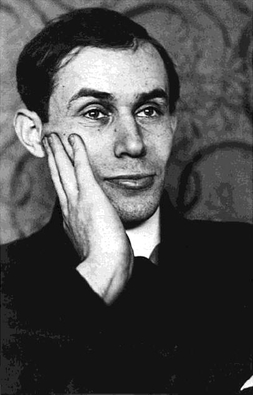
Arkadi Maslow was one of the most intellectually formidable and politically contentious figures of the German communist movement during the interwar period. A theoretician of considerable brilliance and an early leader of the Communist Party of Germany, Maslow played a central role in shaping the ideological debates of European communism during the turbulent years following the First World War. His career reflects the trajectory of many revolutionary intellectuals of the twentieth century: radicalization through war and revolution, influence within the early Communist International, subsequent marginalization through factional struggle, and eventual destruction in the era of Stalinist repression.
Early Life and Education
Arkadi Maslow was born Isaak Yefimovich Chemerinsky in 1891 in Yelisavetgrad in the Russian Empire, today Kropyvnytskyi in Ukraine. He was born into a Jewish middle class family that valued education and intellectual pursuits. Like many Jewish students in the late imperial period, he experienced both the cultural vitality and the structural restrictions of life within the Russian Empire.
Maslow initially pursued studies in mathematics and physics at the University of St Petersburg. His early academic interests suggest a strong analytical mind, and contemporaries later remarked on his ability to approach political questions with the precision of a trained scientist. Political repression following the failed Russian Revolution of 1905 radicalized many students of his generation. Maslow gravitated toward Marxism during these years and became involved with socialist circles that were increasingly under police surveillance.
Facing growing repression, Maslow emigrated to Germany in the early 1910s. Germany at the time possessed the most powerful socialist movement in Europe and offered a fertile intellectual environment for Marxist debate. In Berlin he continued his scientific studies while becoming increasingly active in socialist politics.
Radicalization During the First World War
The outbreak of the First World War in 1914 proved decisive for Maslow’s political development. The decision of the German Social Democratic Party to support war credits fractured the international socialist movement. Maslow joined the radical opposition to the war and aligned himself with the revolutionary current associated with Rosa Luxemburg and Karl Liebknecht.
This antiwar opposition eventually coalesced into the Spartacus League, which later formed the core of the Communist Party of Germany (Kommunistische Partei Deutschlands, KPD). Maslow distinguished himself within this milieu as a gifted polemicist and theoretician. Unlike many revolutionary activists whose influence derived from organizational ability or mass agitation, Maslow’s reputation rested primarily on his intellectual authority and analytical clarity.
Leadership in the Communist Party of Germany
After the German Revolution of 1918 and the founding of the KPD in 1919, Maslow rapidly rose to prominence within the party’s leadership. He became closely associated with Ruth Fischer, another influential communist leader and his political and personal partner. Together they represented a faction within the KPD that sought to sharpen the party’s revolutionary profile and distance it from reformist socialism.
During the early 1920s the German communist movement was characterized by intense strategic debates. Questions concerning revolutionary tactics, relations with the Social Democratic Party, and the role of the Communist International dominated party life. Maslow became one of the principal theorists advocating an uncompromising revolutionary strategy.
His writings during this period addressed several major issues confronting the European left: the nature of the postwar capitalist crisis, the prospects for proletarian revolution in Germany, and the relationship between national struggles and international communism. Maslow argued that Germany remained the central battleground of the European revolution. He believed that the defeat of German capitalism would trigger a broader revolutionary transformation across the continent.
Between 1924 and 1925 Maslow and Fischer briefly led the KPD. Their leadership coincided with a period of tactical radicalization within the party, often referred to by historians as the “ultra left” phase of German communism. They sharply criticized the Social Democratic Party, describing it as a primary obstacle to revolutionary transformation. This position later became associated with the controversial theory of “social fascism,” though Maslow’s own formulations were more complex than later doctrinal versions of that concept.
Conflict with the Communist International
Maslow’s political career was deeply shaped by the evolving power structure within the Communist International (Comintern). During the early 1920s the Comintern functioned as a forum of relatively open debate among revolutionary parties. By the middle of the decade, however, the consolidation of Joseph Stalin’s authority within the Soviet Union transformed the organization into a more centralized and disciplined apparatus.
Maslow increasingly clashed with the emerging Stalinist leadership. His independence of thought and willingness to challenge official positions made him suspect within the increasingly rigid structures of international communism. The Fischer Maslow leadership of the KPD lost favor with Moscow, which began supporting rival factions within the German party.
In 1925 Maslow and Fischer were removed from leadership positions in the KPD under pressure from the Comintern. Over the next several years their political isolation deepened. Maslow criticized the growing bureaucratization of the Soviet system and the narrowing of debate within the international communist movement. These criticisms placed him within the broader current of communist opposition movements that emerged during the late 1920s.
Opposition and Exile
By the late 1920s Maslow had effectively broken with the official communist leadership. He became associated with opposition groups that criticized the Stalinization of the Comintern and sought to revive what they regarded as the revolutionary and democratic traditions of early Bolshevism.
These opposition currents remained politically marginal but intellectually significant. They included figures who had once played prominent roles within the communist movement and who now sought to reinterpret Marxist theory outside the constraints of Stalinist orthodoxy. Maslow’s writings from this period reveal a continued engagement with the central problems of revolutionary strategy, particularly the failure of the German working class to achieve power in the aftermath of the First World War.
The rise of the Nazi regime in 1933 forced Maslow into exile. Like many German leftists he fled first to France and later moved between several European countries. Exile proved politically and personally difficult. The fragmentation of the anti Stalinist left limited the practical influence of Maslow’s ideas, while the growing threat of fascism transformed the political landscape of Europe.
Final Years and Death
Maslow eventually settled in Cuba during the late 1930s. His relocation to Havana reflected the global dispersion of political exiles during the era of fascism and Stalinism. Although physically distant from Europe, he continued to write and comment on international political developments.
His final years were marked by declining political influence and persistent uncertainty. In 1941 Maslow died under circumstances that remain controversial. Some contemporaries suspected that his death may have been connected to Soviet intelligence operations targeting former communist oppositionists abroad. Definitive evidence has never been produced, and historians remain divided on the question.
Historical Significance
Arkadi Maslow occupies a distinctive place in the history of European communism. He was neither a mass leader nor a state builder. His importance lies instead in the intellectual debates that shaped the communist movement during the formative decades of the twentieth century.
Maslow’s career illustrates several broader historical themes. First, it demonstrates the intense theoretical culture that characterized early communism, particularly in Germany where Marxist theory had long flourished. Second, it reflects the factional struggles that accompanied the institutional consolidation of the Soviet dominated Communist International. Finally, Maslow’s life highlights the tragic trajectory of many revolutionary intellectuals who found themselves marginalized, exiled, or eliminated during the Stalinist era.
Modern historians have increasingly revisited Maslow’s writings as part of a broader reassessment of opposition currents within the communist movement. His critiques of bureaucratic centralization and his analyses of the failures of German communism continue to inform scholarly debates about the fate of revolutionary socialism in the twentieth century.
Bibliography
Primary Sources
Maslow, Arkadi. The German Revolution and the Tasks of the Communist Party. Berlin: Communist Party of Germany Publications, 1924.
Maslow, Arkadi. Selected Political Writings. Various articles in Die Rote Fahne and other Communist Party publications, 1920–1925.
Secondary Sources
Broué, Pierre. The German Revolution 1917–1923. Leiden: Brill, 2005.
Carr, Edward Hallett. The Interregnum 1923–1924. London: Macmillan, 1954.
Fischer, Ruth. Stalin and German Communism: A Study in the Origins of the State Party. Cambridge: Harvard University Press, 1948.
Harman, Chris. The Lost Revolution: Germany 1918 to 1923. Chicago: Haymarket Books, 2008.
McDermott, Kevin, and Jeremy Agnew. The Comintern: A History of International Communism from Lenin to Stalin. New York: St. Martin’s Press, 1996.
Service, Robert. Comrades: Communism, A World History. Cambridge: Harvard University Press, 2007.
Wolin, Richard. Walter Benjamin: An Aesthetic of Redemption. Berkeley: University of California Press, 1994.


Leave a comment