My Socialist Hall of Fame
During this chaotic era of vile rhetoric and manipulative tactics from our so-called bourgeois leaders, I am invigorated by the opportunity to reflect on Socialists, Revolutionaries, Philosophers, Guerrilla Leaders, Partisans, and Critical Theory titans, champions, and martyrs who paved the way for us—my own audacious “Socialism’s Hall of Fame.” These are my heroes and fore-bearers. Not all are perfect, or even fully admirable, but all contributed in some way to our future–either as icons to emulate, or as warnings to avoid in the future.
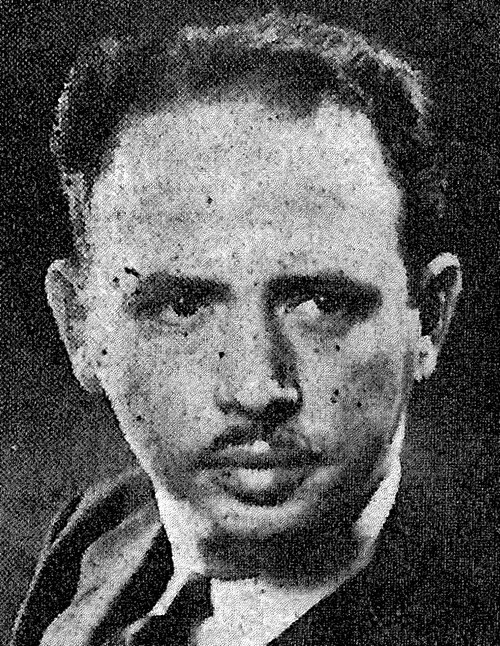
Max Shachtman (September 10, 1904–November 4, 1972) was one of the most influential—and politically protean—figures in twentieth-century U.S. Marxism: a formative communist organizer of the 1920s, a principal founder of American Trotskyism, architect of the “Third Camp” tradition during the Second World War, and later a leading theorist of anti-Stalinist democratic socialism who worked in close proximity to segments of organized labor’s Cold War liberalism.
Early life, immigration, and political formation
Born in Warsaw in the Russian Empire’s Polish territories, Shachtman came to the United States as a child and grew up in New York’s immigrant working-class milieus. He entered radical politics at a moment when the Bolshevik Revolution and post-war labor turmoil were reshaping socialist strategy worldwide. By the early 1920s he had joined the American communist movement and distinguished himself as an organizer, journalist, and polemicist—roles that would define his public life regardless of later ideological shifts.
From Communist Party cadre to founder of U.S. Trotskyism
Shachtman’s first major political rupture came out of the factional wars and international realignments that followed Stalin’s consolidation of power. In 1928–29, alongside James P. Cannon and Martin Abern, he helped found the organized Trotskyist current in the United States after the expulsion of key dissidents from the Communist Party. Over the next decade he became especially important as an editor and translator: he helped consolidate Trotskyist political culture through periodical work (notably New International) and sustained controversy over program, party-building, and the meaning of revolutionary democracy.
The 1940 split: the USSR question and “bureaucratic collectivism”
The decisive turning point of Shachtman’s career was the 1939–40 crisis over the Soviet Union’s geopolitical behavior (including the Soviet invasion of Finland) and the broader implications of the Nazi–Soviet Pact. In 1940, Shachtman led a split from the Socialist Workers Party to form the Workers Party, rejecting “unconditional defense” of the USSR and arguing that Stalinism represented a distinct form of class rule rather than a merely “degenerated workers’ state.” The Workers Party developed the theory of “bureaucratic collectivism,” treating the Stalinist bureaucracy as a new exploiting ruling stratum and insisting that socialist politics required opposition to both capitalist imperial blocs and Stalinist expansion.
The “Third Camp” tradition and wartime labor politics
Out of this break emerged Shachtman’s signature strategic idea: the “Third Camp,” a socialist alternative to both the Axis and Allied imperial camps, rooted in independent working-class and anti-colonial struggle. This was not merely a foreign-policy posture; it was also a theory of agency under conditions where “anti-fascist unity” and wartime discipline threatened to subordinate labor militancy to state imperatives. Shachtman and his milieu sought a politics that could oppose fascism without converting the working class into an auxiliary of capitalist war aims, while also resisting Stalinism as a counterrevolutionary force.
Independent Socialist League and the postwar intellectual diaspora
In 1949, Shachtman’s organization reconstituted itself as the Independent Socialist League (ISL), reflecting a shift from “party” self-conception to a cadre-educational and labor-oriented current. The WP/ISL milieu became an incubator for a generation of democratic socialist intellectuals and organizers (including Michael Harrington and Irving Howe), helping shape postwar anti-Stalinist left culture in the United States.
The 1950s–60s: realignment toward social democracy and Cold War labor liberalism
By the late 1950s Shachtman concluded that revolutionary prospects were constrained by both U.S. capitalism’s stability and Stalinism’s global reach. In 1958 the ISL dissolved into (and sought influence within) the Socialist Party of America, marking a strategic turn toward social-democratic coalition politics. In this period Shachtman also became a prominent anti-Stalinist voice whose networks overlapped with mainstream organized labor; accounts of his later career emphasize his proximity to figures and staff around AFL-CIO leadership, reflecting a move from revolutionary oppositionism toward influence within liberal-labor institutions.
Intellectually, Shachtman sought to synthesize an anti-authoritarian Marxism with a sustained critique of Stalinist state formation. His best-known later compilation, The Bureaucratic Revolution: The Rise of the Stalinist State (1962), collected key arguments about the emergence and expansion of Stalinist regimes, presenting them as a distinct obstacle to socialist emancipation rather than a flawed variant of proletarian rule.
Significance and legacy
Shachtman’s enduring significance lies less in the stability of his political conclusions than in the problems he forced onto the agenda of the U.S. Left: how to name and analyze Stalinism as a social system; how to defend working-class independence amid inter-imperial war; and how to relate socialist ethics to democratic freedoms when “socialism” was widely identified with one-party police states. Archival collections underscore his centrality to mid-century anti-Stalinist socialism and the institutional afterlives of the Workers Party/ISL tradition.
At the same time, Shachtman’s late-career realignment remains contested: admirers stress strategic adaptation to Cold War realities and the defense of democratic space against totalitarian expansion, while critics see a drift toward accommodation with U.S. liberalism and labor officialdom. The continuing debate is itself evidence of his importance as a theorist of political choice under adverse historical constraints.
Bibliography
Primary works by Shachtman
Shachtman, Max. The Bureaucratic Revolution: The Rise of the Stalinist State. The Donald Press, 1962.
Shachtman, Max. “Max Shachtman Internet Archive.” Marxists Internet Archive, updated 2 Oct. 2025.
Archival and reference sources
“Max Shachtman Papers.” Tamiment Library & Robert F. Wagner Labor Archives, New York University.
“Workers Party and Independent Socialist League Records.” Tamiment Library & Robert F. Wagner Labor Archives, New York University.
“Bio-bibliographical sketch of Max Shachtman.” Marxists Internet Archive (PDF).
“Max Shachtman Correspondence with Leon Trotsky.” Yale University Library ArchivesSpace.
Selected secondary readings
“Shachtman and His Legacy.” Against the Current.
“Max Shachtman.” International Socialist Review (archival profile).
“The Myth of Max Shachtman.” Marxists Internet Archive (critical essay/document collection).


Leave a Reply