During this chaotic era of vile rhetoric and manipulative tactics from our so-called bourgeois leaders, I am invigorated by the opportunity to reflect on Socialists, Revolutionaries, Philosophers, Guerrilla Leaders, Partisans, and Critical Theory titans, champions, and martyrs who paved the way for us—my own audacious “Socialism’s Hall of Fame.” These are my heroes and fore-bearers. Not all are perfect, or even fully admirable, but all contributed in some way to our future–either as icons to emulate, or as warnings to avoid in the future.
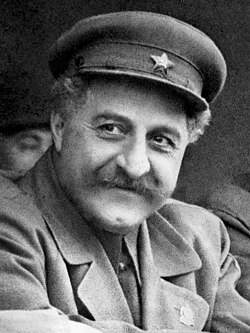
Sergo Konstantinovich Ordzhonikidze (Georgian: სერგო ორჯონიკიძე), one of the most consequential Bolshevik administrators of the Stalin era, stands at the intersection of revolution, empire, industrial transformation, and the lethal internal politics of Soviet rule. A Georgian revolutionary forged in the underground traditions of Tsarist repression and early party factionalism, Ordzhonikidze rose from provincial organizer and militant Bolshevik operative into one of the Soviet Union’s most powerful economic administrators—especially as People’s Commissar of Heavy Industry during the First and Second Five-Year Plans. His career exemplifies the conversion of revolutionary commitment into state-building authority, and his death in 1937—officially recorded as suicide, widely suspected to have been coerced—reveals the terminal logic of Stalinist political consolidation: even the regime’s chief builders could become expendable.
Early Life and Revolutionary Formation (1886–1917)
Ordzhonikidze was born in 1886 in western Georgia (then part of the Russian Empire), in a social environment shaped by peasant poverty, national-cultural distinctiveness, and the growing appeal of socialist radicalism. Like many Caucasian Bolsheviks, he entered revolutionary politics early, becoming involved in Marxist circles and underground party organization while still young. His formative political experiences were those typical of professional revolutionaries: clandestine work, police pursuit, repeated arrests, and exile.
By the first decade of the twentieth century he had joined the Bolshevik faction of the Russian Social Democratic Labor Party (RSDLP), aligning with Lenin’s organizational model emphasizing disciplined cadre politics. In the Caucasus, where labor activism, bandit traditions, nationalist movements, and imperial administration overlapped, revolutionary practice often required practical coercion and flexible use of illegality. Ordzhonikidze became known as a hard-driving organizer, a trait that later translated smoothly into his administrative style in Soviet power.
The revolutions of 1917 transformed Ordzhonikidze from conspiratorial militant into a political functionary of emerging state authority. During the Civil War and revolutionary consolidation, he served in a series of important regional roles, increasingly identified with the Bolshevik effort to bind the imperial periphery to the new socialist center.
Revolutionary State-Building and the Caucasus (1918–1926)
Ordzhonikidze’s historical weight emerges most sharply in the Caucasus. He played a central role in the Bolshevik reconquest and integration of the region during and after the Civil War. In the early 1920s he served as a senior party authority connected to the Caucasus Bureau (Kavburo), where he acted in concert with Stalin—then People’s Commissar for Nationalities and a rising political operator—to secure Moscow’s dominance over Georgia, Armenia, and Azerbaijan.
This period includes one of the most debated episodes in early Soviet nationality policy: the “Georgian affair” of 1922. Ordzhonikidze was accused by Georgian Bolsheviks of heavy-handed methods and Great Russian chauvinism in enforcing central directives, including the controversial push for Georgia’s subordination within a Transcaucasian federation. Lenin, near incapacitation but still politically alert, criticized Stalin and Ordzhonikidze in sharp terms, interpreting the episode as evidence of bureaucratic brutality and national insensitivity. In later historiography, Ordzhonikidze appears here as both instrument and symbol of the emerging Soviet imperial form: formally federal, practically coercive, and increasingly governed through centralized party discipline.
The Caucasus phase also demonstrates his primary political identity: not a theorist or ideologue, but an enforcer-administrator whose legitimacy derived from loyalty, effectiveness, and capacity for command.
The Stalin Era Administrator: Industry, Planning, and Command (1926–1937)
Ordzhonikidze’s most important institutional role came with his appointment as People’s Commissar of Heavy Industry (NKTP) in 1932, following the reorganization of economic commissariats during the radical push of the First Five-Year Plan. Under Stalin’s industrialization drive, heavy industry was not merely a sector; it was the strategic core of socialist modernization, military capability, and ideological triumph. Ordzhonikidze thus occupied a position analogous to a “super-minister” in the planned economy: responsible for vast industrial expansion, labor discipline, technical modernization, and the political performance of economic success.
He became one of the Soviet leadership’s most visible champions of industrial achievement—associated with flagship projects, production targets, and the construction of an industrial proletariat disciplined to the plan. Yet the commissariat he led was also central to coercive labor systems: rapid industrialization depended on harsh workplace discipline, criminalization of “sabotage,” and large-scale forced labor (often administered through other agencies, though coordinated materially across Soviet institutions). The industrial sphere became a major site of Stalinist terror logic, where technical failures and unrealistic targets were reinterpreted as political crimes.
Ordzhonikidze, unlike some other commissars, acquired a reputation—supported unevenly by archival evidence and memoir literature—for sometimes defending engineers and managers from the most absurd accusations, insisting on technical explanations rather than conspiratorial ones. Whether understood as principled moderation, managerial rationality, or factional maneuvering, this posture placed him at risk in a political environment increasingly defined by paranoia, denunciation, and police primacy. The more industry was treated as a battlefield against hidden enemies, the more a commissar responsible for output became vulnerable: failure could be criminalized, and advocacy for specialists could be recoded as disloyalty.
Relations with Stalin and Political Meaning
Ordzhonikidze’s political life was deeply bound to Stalin. Both were Caucasian Bolsheviks, both had underground credentials, and both valued discipline and centralized party authority. For much of the 1920s and early 1930s, Ordzhonikidze appeared as a stalwart Stalin ally—an administrator whose revolutionary biography added credibility to Stalin’s regime of modernization and control.
Yet the very scale of the Stalinist transformation created new tensions within the elite. As the terror intensified in 1936–1937, Stalin’s consolidation of power increasingly depended on eliminating even loyal comrades who might serve as alternative poles of authority or reservoirs of institutional resistance. Ordzhonikidze, as a powerful industrial commissar with deep networks, could be interpreted as politically dangerous even if personally loyal.
His death in February 1937 remains one of the era’s most haunting elite episodes. The Soviet state announced that he died from heart failure, while later accounts and declassified materials suggest suicide—possibly under unbearable political pressure, including attacks on his associates and family. In the historiography of the Great Terror, Ordzhonikidze’s death symbolizes the collapse of the Old Bolshevik revolutionary cohort into Stalin’s system of personalized power: revolutionary prestige could no longer shield anyone from the state’s coercive mechanisms.
Historical Assessment
In historical interpretation, Ordzhonikidze occupies a complex position.
1. As revolutionary: he embodied the hard cadre culture of Bolshevik illegality and regional militancy.
2. As imperial administrator: he helped shape the coercive integration of the Caucasus into Soviet federal forms.
3. As economic modernizer: he became a chief architect and promoter of heavy industrial expansion, with all its achievements and human costs.
4. As victim (or casualty) of the Terror: his death reveals the political instability and internal destructiveness of Stalinist governance.
He is neither simply a “moderate” nor purely a “terrorist official,” but rather a Bolshevik modernizer whose administrative identity collided with the increasingly total police-political logic of the mid-1930s. His biography thus allows scholars to analyze the Soviet Union not merely as ideology in motion, but as a system of institutions, coercion, modernization imperatives, and elite power struggles.
Bibliography
Primary Sources / Published Documents
• Lenin, V. I. Letters on the National Question (Including the “Georgian Affair” materials), 1922–1923. In Lenin Collected Works. Moscow: Progress Publishers, various vols.
• Ordzhonikidze, Sergo. Selected Speeches and Writings (various Soviet-era compilations). Moscow: Politizdat, various editions.
• Stalin, Joseph. Works and Correspondence relevant to industrial policy and nationality questions. Moscow: Politizdat, various vols.
Scholarly Monographs and Syntheses
• Kotkin, Stephen. Stalin: Paradoxes of Power, 1878–1928. New York: Penguin, 2014.
• Kotkin, Stephen. Stalin: Waiting for Hitler, 1929–1941. New York: Penguin, 2017.
• Suny, Ronald Grigor. The Making of the Georgian Nation. Bloomington: Indiana University Press, 1994.
• Suny, Ronald Grigor. The Soviet Experiment: Russia, the USSR, and the Successor States. Oxford: Oxford University Press, 1998 (and later editions).
• Smith, Jeremy. The Bolsheviks and the National Question, 1917–23. London: Macmillan, 1999.
• Martin, Terry. The Affirmative Action Empire: Nations and Nationalism in the Soviet Union, 1923–1939. Ithaca: Cornell University Press, 2001.
• Fitzpatrick, Sheila. Everyday Stalinism: Ordinary Life in Extraordinary Times. New York: Oxford University Press, 1999.
• Viola, Lynne. The Unknown Gulag: The Lost World of Stalin’s Special Settlements. Oxford: Oxford University Press, 2007.
• Davies, R. W. The Industrialisation of Soviet Russia. London: Macmillan/Palgrave, multi-volume series, 1980s–1990s.
• Lewin, Moshe. The Making of the Soviet System: Essays in the Social History of Interwar Russia. New York: Pantheon, 1985.
Terror and Elite Politics
• Getty, J. Arch, and Oleg V. Naumov. The Road to Terror: Stalin and the Self-Destruction of the Bolsheviks, 1932–1939. New Haven: Yale University Press, 1999.
• Khlevniuk, Oleg V. Stalin: New Biography of a Dictator. New Haven: Yale University Press, 2015.


Leave a comment