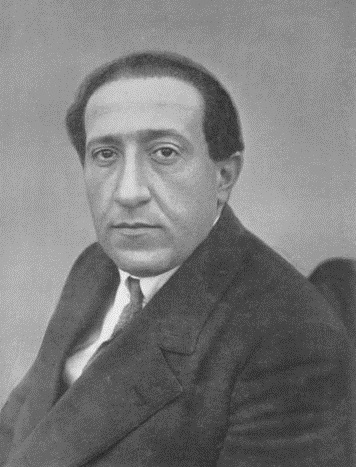
József Pogány: Revolutionary Journalist of Hungary
My Socialist Hall of Fame
During this chaotic era of vile rhetoric and manipulative tactics from our so-called bourgeois leaders, I am invigorated by the opportunity to reflect on Socialists, Revolutionaries, Philosophers, Guerrilla Leaders, Partisans, and Critical Theory titans, champions, and martyrs who paved the way for us—my own audacious “Socialism’s Hall of Fame.” These are my heroes and fore-bearers. Not all are perfect, or even fully admirable, but all contributed in some way to our future–either as icons to emulate, or as warnings to avoid in the future.
József Pogány was a Hungarian communist revolutionary, journalist, and political organizer whose career bridged the radicalization of the Hungarian left during the First World War, the short lived Hungarian Soviet Republic of 1919, and the early institutional consolidation of international communism under the Comintern. His trajectory illustrates both the possibilities and dangers faced by revolutionary intellectuals navigating the transition from mass insurgency to bureaucratized party rule in the interwar period.
Born in 1886 in Hungary, Pogány was trained as a journalist and entered political life through socialist and anti militarist agitation prior to the First World War. Like many Central European Marxists of his generation, he was deeply influenced by the crisis of the Second International in 1914 and the collapse of prewar socialist internationalism. During the war he served as a correspondent and political writer, becoming increasingly radicalized by the brutality of the conflict and the failures of reformist social democracy.
Pogány rose to prominence during the revolutionary upheavals that followed the dissolution of the Austro Hungarian Empire. In the autumn of 1918 and early 1919 he became a central figure within the Hungarian soldiers’ councils, which represented one of the most radical and socially volatile forces in the country. As a leader and spokesman for these councils, Pogány advocated the arming of workers and soldiers, the democratization of the military, and the transfer of power away from bourgeois parliamentary institutions. His role brought him into close collaboration with Béla Kun and other leaders of the Hungarian Communist Party.
During the Hungarian Soviet Republic of 1919, Pogány served in high political and military capacities, including involvement in the People’s Commissariat for War. He was associated with the radical wing of the regime that favored coercive measures and revolutionary discipline in response to both internal opposition and external military threats. The rapid collapse of the Soviet Republic after only 133 days forced Pogány into exile, first in Austria and later in Soviet Russia.
In exile Pogány became an active functionary of the Communist International. He worked as a journalist, propagandist, and political operative, contributing to Comintern publications and participating in debates over revolutionary strategy, trade union work, and the role of armed force in proletarian struggle. His experience in Hungary made him a valuable figure during the Comintern’s early years, when the memory of failed revolutions in Central Europe shaped strategic thinking.
However, Pogány’s revolutionary credentials did not protect him from the shifting political climate of the Soviet Union in the 1930s. Like many foreign communists and early Bolshevik allies, he became vulnerable as Stalinist consolidation intensified suspicion toward independent revolutionary traditions and former oppositionists. Pogány was arrested during the Great Purge and executed in 1938, a fate shared by numerous veterans of the revolutionary wave of 1917 to 1923.
Posthumously rehabilitated after Stalin’s death, Pogány’s historical significance lies less in theoretical innovation than in his embodiment of a particular revolutionary type: the militant journalist and organizer shaped by war, collapse, and insurgency, whose authority derived from mass action rather than institutional longevity. His career highlights the tension between revolutionary spontaneity and centralized party power, as well as the tragic arc experienced by many early communists who survived defeat at home only to fall victim to repression abroad.
Select Bibliography
Broué, Pierre. The Hungarian Soviet Republic of 1919. Translated by John Howe. London: Pluto Press, 1991.
McDermott, Kevin, and Jeremy Agnew. The Comintern: A History of International Communism from Lenin to Stalin. London: Macmillan, 1996.
Romsics, Ignác. Hungary in the Twentieth Century. Translated by Tim Wilkinson. Budapest: Corvina, 1999.
Tökés, Rudolf L. Béla Kun and the Hungarian Soviet Republic. New York: Praeger, 1967.
Volkogonov, Dmitri. Stalin: Triumph and Tragedy. Translated by Harold Shukman. New York: Grove Weidenfeld, 1991.


Leave a Reply