During this chaotic era of vile rhetoric and manipulative tactics from our so-called bourgeois leaders, I am invigorated by the opportunity to reflect on Socialists, Revolutionaries, Philosophers, Guerrilla Leaders, Partisans, and Critical Theory titans, champions, and martyrs who paved the way for us—my own audacious “Socialism’s Hall of Fame.” These are my heroes and fore-bearers. Not all are perfect, or even fully admirable, but all contributed in some way to our future–either as icons to emulate, or as warnings to avoid in the future.
Introduction
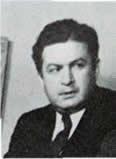
Felix Morrow occupies a distinctive place in twentieth-century American Marxism as both a committed revolutionary socialist and a penetrating critic of Stalinism, liberal anti-fascism, and what he perceived as the political ossification of postwar Trotskyism. Best known for Revolution and Counter-Revolution in Spain (1938), Morrow combined rigorous historical analysis with polemical urgency, seeking to clarify the strategic failures of the international left in the face of fascism, imperialist war, and bureaucratic degeneration. His intellectual trajectory—from disciplined Trotskyist cadre to heterodox socialist critic—mirrors the broader crisis of revolutionary Marxism in the mid-twentieth century.
Early Life and Political Formation
Felix Morrow was born in 1906 in New York City to a working-class Jewish immigrant family. He came of age politically during the ferment of the Great Depression, a period that radicalized large sections of the American working class and intelligentsia. Like many young Marxists of his generation, Morrow initially gravitated toward the Communist movement but soon rejected Stalinism, whose authoritarian practices and subordination of international working-class interests to Soviet state policy he regarded as a betrayal of Marxist internationalism.
By the early 1930s, Morrow had aligned himself with the American Trotskyist movement, then organized around the Communist League of America and later the Socialist Workers Party (SWP). His early political education was shaped by the writings of Karl Marx, V. I. Lenin, and Leon Trotsky, but also by close engagement with contemporary revolutionary struggles, which he believed provided the decisive testing ground for Marxist theory.
The Spanish Civil War and Revolution and Counter-Revolution in Spain
Morrow’s reputation rests above all on Revolution and Counter-Revolution in Spain (1938), a work widely regarded as one of the most incisive Marxist analyses of the Spanish Civil War. Written while the conflict was still unfolding, the book argued that the defeat of the Spanish Republic was not inevitable, but the result of deliberate political choices—above all, the suppression of working-class revolutionary initiatives by the Popular Front government under the influence of Stalinist policy.
Against liberal and Communist narratives that framed the war primarily as a defense of democracy against fascism, Morrow insisted that Spain in 1936–1937 presented a genuine revolutionary situation. Workers’ control of factories, collectivization of agriculture, and the formation of militias signaled the emergence of dual power. According to Morrow, the Communist Party’s insistence on restoring bourgeois state authority—under the banner of “anti-fascist unity”—demobilized the working class, undermined morale, and ultimately paved the way for Franco’s victory.
The book combined detailed empirical research with sharp theoretical argument, making it a foundational text for anti-Stalinist Marxist interpretations of the Spanish tragedy. It also exemplified Morrow’s enduring methodological commitment: history must be analyzed from the standpoint of class struggle and revolutionary possibility, not merely from institutional or diplomatic perspectives.
Wartime Politics and Imprisonment
During World War II, Morrow remained active within the SWP and the broader Trotskyist movement, opposing both fascism and what he regarded as imperialist war aims on all sides. This stance brought him into direct conflict with the U.S. state. In 1941, under the Smith Act, Morrow was convicted alongside other SWP leaders for advocating the overthrow of the government and was sentenced to federal prison.
Morrow’s imprisonment marked a significant turning point. While he remained committed to socialism, his wartime experiences intensified his skepticism toward rigid party orthodoxy and what he increasingly saw as sectarian isolation from real historical developments—particularly the defeat of fascism by forces that did not conform to classical revolutionary expectations.
Postwar Reassessment and Break with Trotskyism
After his release from prison, Morrow gradually broke with the organized Trotskyist movement. Unlike many former revolutionaries who moved toward liberalism or Cold War anti-communism, Morrow sought to rethink Marxism itself in light of postwar realities: the consolidation of Stalinist regimes in Eastern Europe, the stabilization of capitalism in the West, and the apparent absence of imminent proletarian revolution.
In essays published in Politics and later New International, Morrow argued that Trotskyist theory had underestimated capitalism’s capacity for adaptation and overestimated the immediacy of revolutionary crisis. He criticized the tendency to explain defeats solely through “betrayals” of leadership, insisting instead on a more sober analysis of social forces, mass consciousness, and historical contingency.
This reassessment placed Morrow at odds with orthodox Trotskyism but aligned him with a broader current of Marxist self-criticism that included figures such as Dwight Macdonald and, later, certain strands of Western Marxism. His work from this period reflects a tragic sensibility: a recognition of revolutionary possibilities foreclosed not only by enemies but by structural and historical limits.
Later Life and Intellectual Legacy
In his later years, Morrow withdrew from active party politics but continued to write and reflect on the failures and prospects of socialism. He never renounced Marxism, but he rejected what he saw as its dogmatic simplifications. His mature outlook combined revolutionary commitment with historical pessimism, insisting on intellectual honesty over ideological comfort.
Morrow’s legacy endures primarily through Revolution and Counter-Revolution in Spain, which remains widely cited in studies of the Spanish Civil War and debates over Popular Frontism. More broadly, his career exemplifies a critical Marxist tradition willing to confront defeat, error, and ambiguity—an increasingly rare posture in an era of ideological polarization.
Bibliography
Primary Works by Felix Morrow
• Morrow, Felix. Revolution and Counter-Revolution in Spain. New York: Pioneer Publishers, 1938.
• ———. “Spain and the Popular Front.” New International 4, no. 5 (1938): 145–160.


Leave a comment