During this chaotic era of vile rhetoric and manipulative tactics from our so-called bourgeois leaders, I am invigorated by the opportunity to reflect on Socialists, Revolutionaries, Philosophers, Guerrilla Leaders, Partisans, and Critical Theory titans, champions, and martyrs who paved the way for us—my own audacious “Socialism’s Hall of Fame.” These are my heroes and fore-bearers. Not all are perfect, or even fully admirable, but all contributed in some way to our future–either as icons to emulate, or as warnings to avoid in the future.
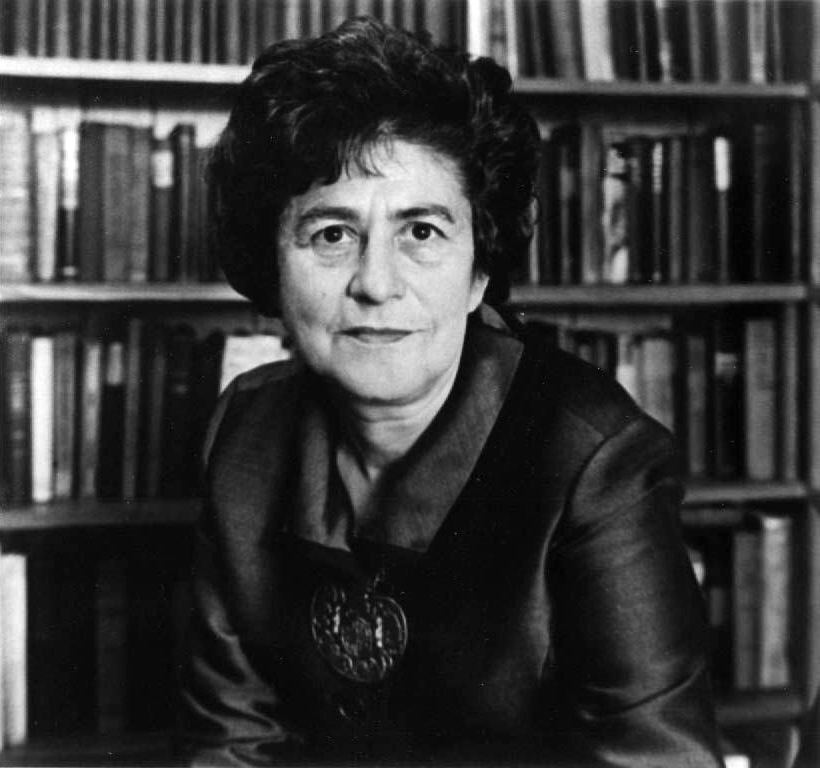
Raya Dunayevskaya (1910–1987) occupies a distinctive and increasingly recognized position within the Marxist tradition. As the founder of Marxist Humanism in the United States, her work represents a sustained effort to recover the humanist core of Marx’s philosophy, critique the bureaucratic deformation of revolutionary movements, and expand Marxism through engagement with Hegelian dialectics, feminism, Black liberation, and global anti-imperial struggles. Her contributions bridge multiple domains—philosophy, political economy, revolutionary theory, and social movements—while articulating a unique vision of freedom that remains consequential for contemporary Marxist thought.
Early Life and Emigration
Born Raya Shpigel in Yaryshev, in present-day Ukraine, Dunayevskaya emigrated to the United States in 1922, part of a wave of Jewish refugees fleeing pogroms, famine, and the aftershocks of the Russian Civil War. Settling in Chicago, she entered the American labor movement as a teenager, joining the Young Communist League and quickly distinguishing herself for both her theoretical seriousness and her command of Russian Marxist literature. Her early years were marked by a profound engagement with the promises and contradictions of the Soviet project—an engagement that framed the rest of her intellectual life.
Break with Stalinism and Turn to Trotskyism
Disillusionment with Stalinist politics during the early 1930s led her to the anti-bureaucratic opposition movement aligned with Leon Trotsky. By 1937 she had become Trotsky’s Russian-language secretary in Mexico. These years were decisive: Dunayevskaya participated in debates over the nature of the USSR, the Spanish Revolution, and the future of the Fourth International. Although Trotsky’s perspective influenced her deeply, their disagreements—particularly over the class nature of the Soviet Union—foreshadowed her later theoretical break. She rejected the notion of the USSR as a “workers’ state,” arguing instead for its characterization as a new form of exploitative social formation.
Following Trotsky’s assassination in 1940, Dunayevskaya’s thinking evolved in dialogue with the pressing question of whether state ownership and planning were compatible with human freedom. Her analysis of the Soviet Union as state-capitalist crystallized in this period and marked her first major divergence from Trotskyism.
The Birth of Marxist Humanism
The 1940s and early 1950s were an intense period of philosophical and political reorientation. Dunayevskaya’s return to Hegel, facilitated by her deep study of the Science of Logic and Phenomenology of Spirit, led her to view dialectics not merely as a methodological tool but as a philosophy of liberation rooted in the self-movement of human subjects. In 1941 she formed a theoretical partnership with C. L. R. James, culminating in the Johnson–Forest Tendency within the American Trotskyist movement. Their collaborative work—particularly the development of state-capitalist theory and the turn toward workers’ self-activity—proved catalytic, though the partnership dissolved in the early 1950s over divergent interpretations of Hegel and the vanguard party.
Her first major book, Marxism and Freedom: From 1776 Until Today (1958), synthesized this emerging perspective. By placing Marx’s early humanist writings at the center of his mature critique of political economy, Dunayevskaya challenged orthodox Marxism and insisted that freedom, not economic determinism or party authority, was the animating force of Marx’s thought. The book also integrated analyses of U.S. labor struggles, the Black freedom movement, and women’s liberation, situating them as organic expressions of Marx’s humanist dialectic.
Philosopher of Revolution: Hegel, Marx, and Human Subjects
Throughout the 1960s and 1970s Dunayevskaya developed her most ambitious philosophical contributions. Her intensive study of Hegel’s Absolute Idea and Subjectivity led her to reinterpret Marxism as a philosophy of liberation inseparable from the self-development of human beings. Rather than viewing revolution as an external imposition by a party or state, Dunayevskaya emphasized the self-activity of workers, women, and racialized subjects as irreducible determinants of social transformation.
Her second major work, Philosophy and Revolution: From Hegel to Sartre and from Marx to Mao (1973), deepened this argument by tracing a line of continuity between Hegelian dialectics and modern emancipatory movements. She insisted that Marx’s “return to Hegel” was not an academic exercise but a revolutionary imperative: only through dialectical thinking could movements avoid the pitfalls of bureaucratization and authoritarianism. Her critique of Maoism, Stalinism, and existentialism reflected her attempt to defend a concept of revolution that remained radically democratic and human-centered.
Dialogue with Feminism and Black Liberation
Dunayevskaya’s work stands out among 20th-century Marxist theorists for her sustained engagement with feminist and Black liberation movements. She argued that these struggles were not peripheral to Marxism but central expressions of the dialectic of liberation. Her correspondence with Black intellectuals and activists—among them Martin Luther King Jr., James Boggs, and Grace Lee Boggs—shaped her understanding of race, class, and humanism in the American context.
Her third book, Rosa Luxemburg, Women’s Liberation, and Marx’s Philosophy of Revolution (1982), posited a lineage of revolutionary thought in which the unfulfilled potential of Luxemburg’s emancipatory vision converged with contemporary feminist movements. Dunayevskaya argued that women’s liberation embodied the “new passions and new forces” capable of transforming both society and Marxist theory.
Marxist Humanism as Movement and Organization
Dunayevskaya founded the organization News and Letters Committees in 1955, establishing a political body explicitly subordinated to philosophical reflection rather than the reverse. The movement aimed to synthesize theory and practice through continual dialogue with workers, activists, and intellectuals. The newspaper News & Letters embodied this approach, integrating reports from factory committees, prison correspondents, and grassroots organizers with theoretical commentary.
Her later work included volumes of letters, essays, and unfinished manuscripts, collectively exploring the relationship between dialectical philosophy and political organization. Until her death in 1987, Dunayevskaya remained committed to the view that revolution must arise from the self-activity of masses rather than from the dictates of a centralized apparatus.
Legacy and Contemporary Significance
In recent decades, Dunayevskaya’s writings have experienced a revival, particularly as scholars reexamine the humanist and democratic strands of Marxist thought. Her insistence on the centrality of Hegel’s dialectics, her critique of state socialism, and her incorporation of feminist and anti-racist struggles prefigured contemporary debates about intersectionality, prefigurative politics, and revolutionary subjectivity.
Her work remains vital for at least three reasons:
1. Reaffirmation of Marxist Humanism: She restored Marx’s early writings—and their themes of alienation and human emancipation—to a central place in Marxist theory.
2. Dialectics as Philosophy of Freedom: Her readings of Hegel offer a non-authoritarian, anti-dogmatic dialectical methodology still relevant to theory and organizing.
3. Integration of Movements and Philosophy: Dunayevskaya anticipated modern efforts to link Marxism with feminism, Black radicalism, and global liberation movements.
Raya Dunayevskaya endures as a theorist who refused the dichotomy between philosophy and revolution. Her life’s work challenges Marxists to ground revolutionary practice in the deepest humanist dimensions of dialectical thought—and to continually reimagine freedom as the self-movement of the masses themselves.
Bibliography
Primary Works by Dunayevskaya
• Dunayevskaya, Raya. Marxism and Freedom: From 1776 Until Today. New York: Bookman Associates, 1958; later editions by Humanity Books/Humanities Press.
• ———. Philosophy and Revolution: From Hegel to Sartre and from Marx to Mao. New York: Dell, 1973; Humanities Press, 1989.
• ———. Rosa Luxemburg, Women’s Liberation, and Marx’s Philosophy of Revolution. Atlantic Highlands: Humanities Press, 1982.
• ———. The Power of Negativity: Selected Writings on the Dialectic in Hegel and Marx. Edited by Peter Hudis and Kevin B. Anderson. Lanham: Lexington Books, 2002.
• ———. Women’s Liberation and the Dialectics of Revolution: Reaching for the Future. Detroit: News & Letters, 1985.
• ———. The Raya Dunayevskaya Collection: Marxist-Humanism: A Half Century of Its World Development. Wayne State University Archives of Labor and Urban Affairs, multiple microfilm volumes.
Secondary Literature
• Anderson, Kevin B. Lenin, Hegel, and Western Marxism: A Critical Study. Urbana: University of Illinois Press, 1995.
• Anderson, Kevin B., and Peter Hudis, eds. The Rosa Luxemburg Reader. New York: Monthly Review Press, 2004.
• Hudis, Peter. Marx’s Concept of the Alternative to Capitalism. Leiden: Brill, 2012.
• Kellner, Douglas. “Marxism and Humanism: Raya Dunayevskaya’s Contribution.” The Philosophical Forum 15, no. 1–2 (1983): 154–173.
• Roberts, William Clare. “Freedom and Necessity in Marxist Humanism.” Historical Materialism 21, no. 2 (2013): 47–75.
• Zeilig, Leo, ed. The Red Critique: Essays on Raya Dunayevskaya and Marxist Humanism. Chicago: Haymarket Books, forthcoming/various essays.
Archival and Organizational Sources
• News & Letters (1955–present). News and Letters Committees.
• Wayne State University, Walter P. Reuther Library. “Raya Dunayevskaya Collection.”


Leave a Reply