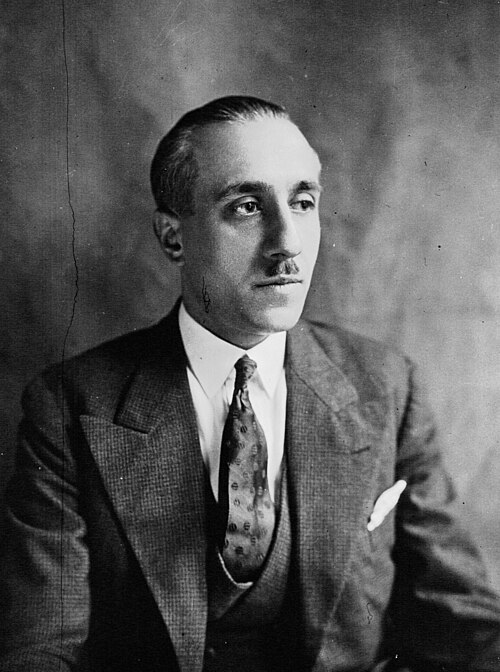
My Socialist Hall of Fame
During this chaotic era of vile rhetoric and manipulative tactics from our so-called bourgeois leaders, I am invigorated by the opportunity to reflect on Socialists, Revolutionaries, Philosophers, Guerrilla Leaders, Partisans, and Critical Theory titans, champions, and martyrs who paved the way for us—my own audacious “Socialism’s Hall of Fame.” These are my heroes and fore-bearers. Not all are perfect, or even fully admirable, but all contributed in some way to our future–either as icons to emulate, or as warnings to avoid in the future.
The life of Gabriel Péri unfolds at the fault line between political conviction and mortal risk, where journalism becomes not merely a profession but a weapon. Born on 9 February 1902 in Toulon, Péri emerged from the charged political atmosphere of early twentieth century France, a world still reckoning with the Dreyfus Affair and the fractures of class and republic. His formative years coincided with the consolidation of socialist and communist currents that would define his intellectual and political commitments.
Péri joined the French Communist Party in the early 1920s, at a moment when the party was still shaping its identity after its split from the socialist movement at the Tours Congress. Unlike many contemporaries whose engagement remained doctrinal, Péri’s vocation fused political activism with journalism. He quickly distinguished himself as a writer of unusual clarity and force, contributing to the communist daily L’Humanité, where his articles dissected international politics with a rigor that combined Marxist analysis and a sharp sensitivity to diplomatic nuance. His specialization in foreign affairs made him one of the party’s foremost interpreters of European tensions during the interwar period.
Elected to the Chamber of Deputies in 1932 as a representative for Argenteuil, Péri brought his journalistic sensibility into parliamentary life. His speeches reveal a man attentive to the global dimensions of fascism and war, particularly the rise of regimes in Nazi Germany and Fascist Italy. He opposed appeasement policies with a prescience that would later appear tragically vindicated. During the years of the Spanish Civil War, Péri advocated for support of the Spanish Republic, framing the conflict as a decisive struggle against fascist expansion.
Yet Péri’s trajectory was not without contradiction. The signing of the Molotov-Ribbentrop Pact between the Soviet Union and Nazi Germany in 1939 placed the French Communist Party in a precarious position, leading to its suppression by the French government. Péri, loyal to the party line yet increasingly confronted with the moral ambiguities of the international communist movement, withdrew from public life as repression intensified. After the German occupation of France in 1940, he entered clandestinity, contributing to underground resistance publications and attempting to reorganize communist networks under conditions of extreme danger.
His arrest by French police in May 1941 marked the beginning of his final passage. Transferred to German custody, Péri was interned and eventually selected as a hostage in reprisal for resistance activities. On 15 December 1941, he was executed by firing squad at the Fort Mont-Valérien, a site that became one of the principal places of martyrdom for the French Resistance. His final letter to his family, composed on the eve of his execution, stands as one of the most poignant documents of the period, combining personal tenderness with unwavering political resolve.
Péri’s posthumous legacy occupies a complex place in French memory. Within communist historiography, he is celebrated as a martyr of the Resistance, a figure whose intellectual discipline and courage exemplify the highest ideals of the movement. More broadly, historians have revisited his life to interrogate the tensions between party loyalty and ethical judgment, particularly in relation to the shifting directives of Soviet policy. His journalism, once tied to the immediacy of political struggle, now reads as a record of a Europe sliding toward catastrophe, written by a man who understood the stakes with uncommon clarity.
There is something of the night watchman about him in the archive. He saw the storm gathering while others debated the weather. By the time the guns spoke, he had already chosen his side.
Bibliography
Courtois, Stéphane, and Marc Lazar, eds. Histoire du Parti communiste français. Paris: Presses Universitaires de France, 1995.
Jackson, Julian. France: The Dark Years, 1940–1944. Oxford: Oxford University Press, 2001.
Péri, Gabriel. Les Grands Problèmes internationaux. Paris: Éditions Sociales, 1938.
Péri, Gabriel. Dernières Lettres de Fusillés. Paris: Éditions Sociales, 1950.
Robrieux, Philippe. Histoire intérieure du Parti communiste. Paris: Fayard, 1980.
Wieviorka, Olivier. The French Resistance. Cambridge, MA: Harvard University Press, 2016.


Leave a Reply