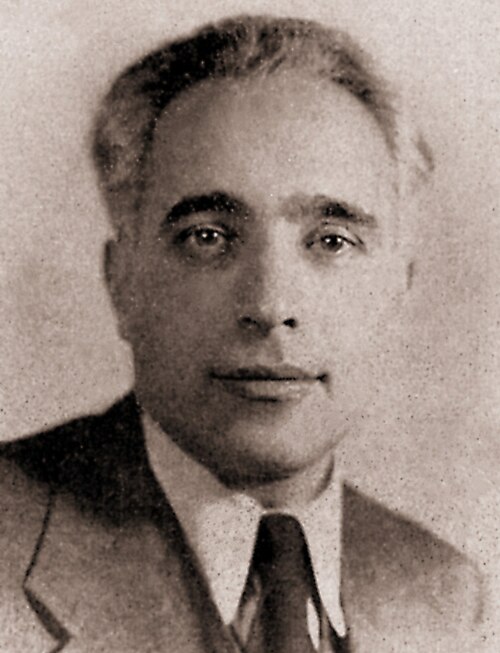
My Socialist Hall of Fame
During this chaotic era of vile rhetoric and manipulative tactics from our so-called bourgeois leaders, I am invigorated by the opportunity to reflect on Socialists, Revolutionaries, Philosophers, Guerrilla Leaders, Partisans, and Critical Theory titans, champions, and martyrs who paved the way for us—my own audacious “Socialism’s Hall of Fame.” These are my heroes and fore-bearers. Not all are perfect, or even fully admirable, but all contributed in some way to our future–either as icons to emulate, or as warnings to avoid in the future.
Albert Goldman (1897–1960) occupies a distinctive place in the history of American radicalism as one of the most formidable courtroom advocates for revolutionary Marxism in the United States. A gifted attorney, a revolutionary socialist, and a relentless critic of Stalinism, Goldman helped articulate a Marxist opposition to the political repression of the mid-twentieth century. His trajectory—from Jewish immigrant worker to Communist Party militant, from Trotskyist leader and attorney to dissident socialist—mirrors the contradictory evolution of the American left under conditions of capitalist expansion, wartime nationalism, and Cold War anticommunism. Goldman’s life reveals the tensions between revolutionary theory and the constraints of U.S. political culture, and demonstrates the place of law, dissent, and ideological struggle within the broader history of American communism.
Early Life and Radicalization
Born in Białystok, then part of the Russian Empire, Goldman emigrated to the United States in 1906 amid tsarist repression and the upheavals of the 1905 Revolution. His formative years coincided with the consolidation of industrial capitalism in the United States and the growth of working-class politics in the immigrant milieu of Chicago. Like many Eastern European Jewish immigrants, Goldman experienced intense labor exploitation, anti-immigrant prejudice, and the brutalities of early twentieth-century industrial life, all of which shaped his political radicalization.
Goldman pursued legal studies at the University of Chicago Law School, graduating in 1920. Rather than pursuing a conventional career in the expanding world of corporate law, he grounded himself in labor defense. The post-World War I atmosphere—marked by the Palmer Raids, the Red Scare, and mass repression—created both the necessity and the political opening for lawyers willing to defend radicals.
His early political commitments drew him into the Communist Party USA (CPUSA). Unlike some who entered the party through theoretical debates, Goldman arrived through practical solidarity with the oppressed, defense of labor militants, and immersion in immigrant socialist circles. Yet from the outset, Goldman displayed an independent streak, questioning bureaucratic tendencies and seeking a principled Marxism rooted in class struggle.
Break with the Communist Party and the Turn to Trotskyism
Goldman’s break with the CPUSA followed the trajectory of many American militants who became disillusioned with Stalinist centralism during the 1920s and early 1930s. The Party’s approach to internal democracy, its rigid adherence to the Comintern’s ultra-left “Third Period” line, and its intolerance of independent Marxist positions pushed Goldman toward opposition.
Around 1934, Goldman joined the Communist League of America, the American section of the international Left Opposition founded by Leon Trotsky. His shift toward Trotskyism marked a deepening of theoretical commitment. He adopted the classical Marxist emphasis on proletarian democracy, permanent revolution, and principled revolutionary strategy against both reformism and Stalinist substitutionism.
Goldman quickly became one of the principal public figures of American Trotskyism, alongside James P. Cannon and Max Shachtman. His training as a lawyer made him an indispensable public voice in moments of crisis.
Legal Advocacy and the Minneapolis Sedition Trial
Goldman’s greatest contribution to American revolutionary history lies in his role as defense attorney for the leaders of the Socialist Workers Party (SWP) and the Minneapolis Teamsters during the infamous Minneapolis Sedition Trial of 1941—the first major prosecution under the Smith Act.
The defendants—Teamster militants who led the historic 1934 Minneapolis General Strike—were charged with advocating the overthrow of the U.S. government. In a political climate dominated by the looming entrance into World War II and increasing pressure to suppress radical opposition, the case was intended to break the Trotskyist movement and intimidate the labor left.
Goldman’s defense blended constitutional argumentation with Marxist political exposition. He insisted on the legitimacy of revolutionary socialist ideas as part of democratic discourse and exposed the trial as a political prosecution. His courtroom performance, marked by analytical clarity and sharp polemical skill, became legendary within left-wing circles. Although the defendants were ultimately convicted, Goldman’s strategy helped clarify the political nature of the proceedings and strengthened the Trotskyist movement’s cohesion.
Goldman’s work on the case aligned him with Trotsky’s own political vision. Trotsky expressed respect for Goldman’s abilities, particularly his capacity to combine legal technicality with revolutionary conviction.
Post-War Trotskyism, Expulsion, and the Socialist Workers Party Split
After the trial and a brief period of imprisonment, Goldman remained active within the SWP, contributing as legal counsel, political theorist, and a public speaker. Yet his relationship with the party became strained following World War II.
Goldman increasingly argued that world political conditions had shifted in ways that required a strategic reassessment. He believed that the SWP overestimated the imminence of revolutionary upheaval in the United States and underestimated the stabilizing effects of post-war prosperity. Together with Felix Morrow, he called for a more flexible orientation toward mass movements and advocated broader coalitions.
This minority perspective clashed sharply with the Cannon leadership, leading to sharp factional disputes. In 1946, Goldman and Morrow were expelled from the SWP on charges of factionalism and political deviation.
Afterward, Goldman joined Shachtman’s Workers Party, which had broken with Trotskyism over the class nature of the Soviet Union and adopted a “bureaucratic collectivist” analysis. Goldman’s later writings reflected a continued commitment to Marxism, but they carried a more critical, independent cast, shaped by decades of factional struggle and disillusionment with doctrinaire leadership models.
Later Years, Anti-Communist Pressures, and Legacy
Goldman’s final decade unfolded against the backdrop of Cold War anti-communism. Although he remained politically active, he never again played the central role he enjoyed during the Minneapolis trial or the wartime struggles of the SWP.
He continued legal defense work, including representing left-wing trade unionists and radicals targeted by federal repression. But the combination of political isolation, the decline of the Trotskyist movement, and the ferocity of McCarthyism narrowed the political space for revolutionary advocacy.
Goldman died in 1960 at the age of 63. His passing marked the end of an era for the older generation of American revolutionaries shaped by the Depression, the labor upsurge of the 1930s, and the Stalinist-Trotskyist split.
Assessment: Goldman’s Contribution to American Communism
Albert Goldman stands out for several reasons:
1. A Theoretician of Revolutionary Constitutionalism
Goldman demonstrated how Marxists could intervene within the bourgeois legal system while defending the right to revolutionary politics—an argument that remains central to contemporary debates on free speech and political repression.
2. A Link Between International Marxism and American Labor
Goldman’s work in the Minneapolis case represents one of the most significant intersections between revolutionary Marxist theory and practical class struggle in U.S. history.
3. A Symbol of Anti-Stalinist Marxism
His break with the CPUSA and subsequent Trotskyist leadership exemplify the global conflict between Stalinism and revolutionary Marxism.
4. An Exemplar of the Contradictions of American Radicalism
Goldman’s expulsions, factional conflicts, and later political wanderings reflect the difficulty of sustaining revolutionary continuity within the fragmented and repressive environment of U.S. politics.
In the broader history of American communism, Goldman occupies a position comparable to William Z. Foster, C. L. R. James, and Earl Browder—but distinct in his role as the revolutionary lawyer whose political commitments shaped both legal strategy and ideological clarity.
Bibliography
Primary Sources
• Goldman, Albert. The Labor Spy Racket. New York: Pioneer Publishers, 1937.
• Goldman, Albert. “Testimony in the Minneapolis Sedition Trial.” Federal Reporter, 1941.
• Goldman, Albert, and Felix Morrow. The War and the Fourth International: Minority Documents. New York: Socialist Workers Party, 1945.
• Trotsky, Leon. Writings 1939–40. New York: Pathfinder Press, 1973. (Contains references to Goldman.)
Secondary Sources
• Cannon, James P. The History of American Trotskyism. New York: Pathfinder Press, 1944.
• Dobbs, Farrell. Teamster Rebellion. New York: Pathfinder Press, 1972.
• Draper, Theodore. American Communism and Soviet Russia. New York: Viking Press, 1960.
• Halperin, Morton. “The Smith Act and Political Repression.” Annals of the American Academy of Political and Social Science 280 (1952): 63–75.
• Laslett, John H. M. Labor and the Left in the 1930s. Urbana: University of Illinois Press, 1980.
• Le Blanc, Paul. Trotskyism in the United States: Historical Essays and Reconsiderations. Amherst: Humanity Books, 1996.
• Wald, Alan. The New York Intellectuals: The Rise and Decline of the Anti-Stalinist Left from the 1930s to the 1980s. Chapel Hill: University of North Carolina Press, 1987.
• Warren, Frank. “Repression and the Trotskyist Movement in the United States.” Science & Society 38, no. 3 (1974): 303–319.
Archival Collections
• Tamiment Library & Robert F. Wagner Labor Archives, New York University (collections on the SWP, Trotskyism, and the Minneapolis Trials).
• U.S. National Archives, Records of the Department of Justice: Smith Act Trial Documents.


Leave a comment