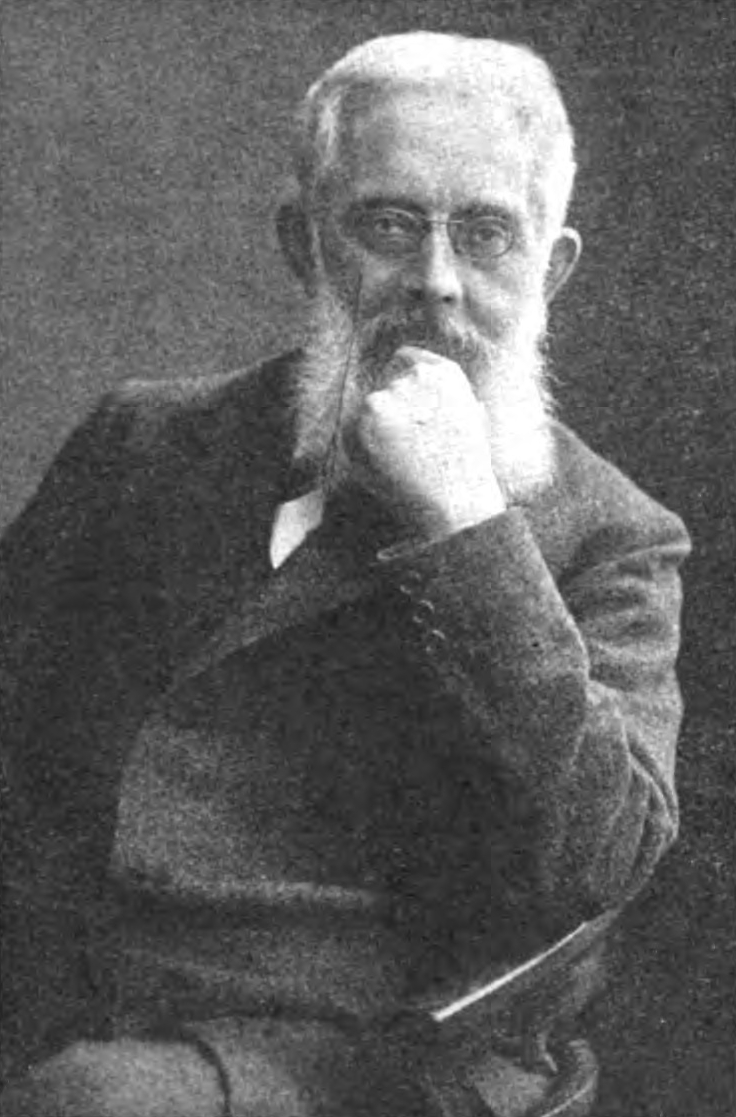
My Socialist Hall of Fame
During this chaotic era of vile rhetoric and manipulative tactics from our so-called bourgeois leaders, I am invigorated by the opportunity to reflect on Socialists, Revolutionaries, Philosophers, Guerrilla Leaders, Partisans, and Critical Theory titans, champions, and martyrs who paved the way for us—my own audacious “Socialism’s Hall of Fame.” These are my heroes and fore-bearers. Not all are perfect, or even fully admirable, but all contributed in some way to our future–either as icons to emulate, or as warnings to avoid in the future.
Franz Mehring (1846–1919) occupies a significant yet often underappreciated place in the history of German Marxism. As a historian, journalist, literary critic, and political activist, Mehring bridged the worlds of theory and practice during the formative years of the German Social Democratic Party (SPD) and the later revolutionary movements that gave rise to the German Communist Party (KPD). His career illustrates the complex tensions within German socialism between reformist and revolutionary strategies, as well as the enduring significance of Marxist historiography and cultural criticism.
Early Life and Intellectual Formation
Born on 27 February 1846 in Schlawe, Pomerania (today Sławno, Poland), Mehring came of age in the aftermath of the failed 1848 revolutions, in a society marked by Prussia’s reactionary consolidation and the uneven rise of capitalism. Initially trained in classical philology and philosophy at the universities of Leipzig and Berlin, he was shaped by the intellectual currents of German idealism, but gradually gravitated toward radical democratic and socialist politics.
Mehring began his career as a liberal journalist, contributing to bourgeois newspapers, but soon came into conflict with nationalist and conservative currents in German liberalism. His early writings reveal a tension between democratic aspirations and the limits of bourgeois reform, a tension that would later find resolution in his embrace of Marxism.
Turn to Marxism and Political Engagement
By the 1880s, Mehring had moved decisively toward Marxism, influenced by his encounters with August Bebel and Wilhelm Liebknecht, as well as by his growing disillusionment with liberal politics. He joined the SPD, where his talents as a writer and historian soon made him a leading figure in the party’s intellectual life.
Mehring’s work as an editor and journalist—particularly at Die Neue Zeit, the theoretical organ of the SPD—placed him in dialogue with the most advanced debates of the Second International. He became known for his sharp critiques of bourgeois historiography, his defense of dialectical materialism, and his insistence on connecting Marxist theory to the cultural and intellectual life of the German working class.
Historian of the German Revolution
Mehring’s most enduring contribution lies in his historical and literary scholarship. His magnum opus, Karl Marx: The Story of His Life (1918), remains the first comprehensive biography of Marx, combining archival research with an appreciation of Marx’s intellectual development and revolutionary praxis. This work helped canonize Marx as both thinker and revolutionary at a time when Social Democracy was riven between reformist and revolutionary wings.
Equally important were his History of the German Social Democracy (1897–98) and his studies of the 1848 Revolution. Mehring’s historical writing exemplified the Marxist method applied to German history: he emphasized class struggle, the limitations of bourgeois liberalism, and the necessity of proletarian leadership in democratic and revolutionary movements. His works challenged nationalist and idealist interpretations, reframing German history within a materialist and internationalist framework.
Literary Criticism and Aesthetics
Mehring also made lasting contributions as a literary critic. His essays on Lessing, Schiller, and Goethe challenged the dominant aesthetic traditions of German culture, arguing for a materialist reading of literature that rooted artistic production in social and historical conditions. His Lessing-Legende (1893) remains a landmark of Marxist literary criticism, emphasizing Gotthold Ephraim Lessing’s progressive role in German Enlightenment thought while stripping away idealist mythologization.
Through such work, Mehring pioneered a Marxist approach to aesthetics and culture, anticipating later debates within Marxist literary theory. He linked literature and cultural production to class struggle, thereby offering the working-class movement intellectual tools for cultural self-understanding.
Political Militancy and Legacy
Mehring’s later years were marked by increasing political radicalization. A fierce opponent of the SPD leadership’s support for German war credits in 1914, he broke with the party and became a founding member of the Spartacus League alongside Rosa Luxemburg and Karl Liebknecht. Despite his age and frail health, he aligned himself fully with revolutionary defeatism and the perspective of proletarian revolution.
In 1919, amidst the revolutionary upheavals in postwar Germany, Mehring co-founded the German Communist Party (KPD). He did not live to see its full development, passing away on 29 January 1919, shortly after the murder of Luxemburg and Liebknecht. His death symbolized both the continuity of classical Marxism and the tragic rupture of the German revolutionary movement.
Assessment
Franz Mehring’s legacy is twofold: as a historian, he laid the foundations for Marxist historiography in Germany; as a critic, he articulated one of the earliest coherent frameworks for Marxist literary analysis. Politically, his journey from liberalism to Marxism, and from reformist Social Democracy to revolutionary communism, mirrored the trajectory of the German workers’ movement itself.
Though sometimes overshadowed by figures like Luxemburg, Mehring’s contributions remain essential for understanding the intellectual and cultural breadth of Marxism in the Second International era. His biography of Marx, in particular, continues to serve as a key reference point in Marxist scholarship and historical studies.
Bibliography
• Mehring, Franz. Karl Marx: The Story of His Life. Translated by Edward Fitzgerald. London: George Allen & Unwin, 1935.
• Mehring, Franz. History of the German Social Democracy. Chicago: Charles H. Kerr & Co., 1898.
• Mehring, Franz. The Lessing Legend. Translated by Edward Fitzgerald. London: George Allen & Unwin, 1930.
• Broué, Pierre. The German Revolution, 1917–1923. Leiden: Brill, 2005.
• Nettl, J. P. Rosa Luxemburg. London: Oxford University Press, 1966.
• Draper, Hal. Karl Marx’s Theory of Revolution, Vol. 1–5. New York: Monthly Review Press, 1977–2005.
• Steenson, Gary P. Karl Kautsky: 1854–1938, Marxism in the Classical Years. Pittsburgh: University of Pittsburgh Press, 1978.
• Hunt, Tristram. The Frock-Coated Communist: The Revolutionary Life of Friedrich Engels. London: Allen Lane, 2009.
• Riazanov, David. “Franz Mehring and Marxist Historiography.” In Marx and Engels Archive. New York: International Publishers, 1935.
 Letters from Tomis
Leave a comment