My Socialist Hall of Fame
During this chaotic era of vile rhetoric and manipulative tactics from our so-called bourgeois leaders, I am invigorated by the opportunity to reflect on Socialists, Revolutionaries, Philosophers, Guerrilla Leaders, Partisans, and Critical Theory titans, champions, and martyrs who paved the way for us—my own audacious “Socialism’s Hall of Fame.” These are my heroes and fore-bearers. Not all are perfect, or even fully admirable, but all contributed in some way to our future–either as icons to emulate, or as warnings to avoid in the future.
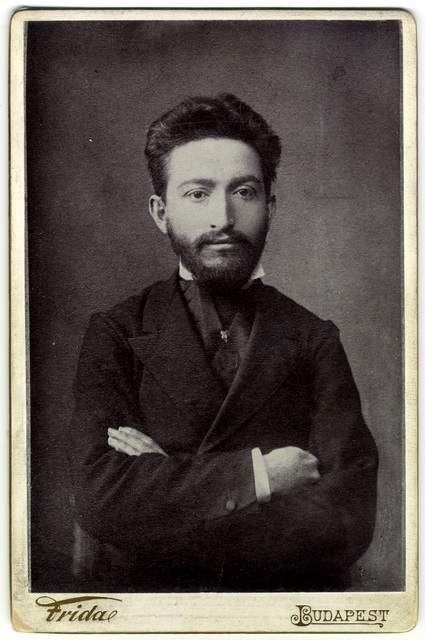
Leó Frankel (1844–1896) occupies a distinctive place in the history of the international socialist movement as one of the few prominent Central European revolutionaries to assume a leading role in the Paris Commune of 1871. A Hungarian born Jew, skilled metalworker, committed Marxist, and close associate of Karl Marx and Friedrich Engels, Frankel embodied the emerging international character of the nineteenth century working class. His political career bridged the artisan radicalism of the 1860s and the increasingly organized socialist parties that developed during the final decades of the century. Although often overshadowed by better known Communards such as Louis-Auguste Blanqui and Eugène Varlin, Frankel made enduring contributions to socialist theory and practice through his advocacy of workers’ organization, labor rights, and proletarian internationalism.
Frankel was born on 25 February 1844 in Óbuda, then part of the Kingdom of Hungary within the Austrian Empire. He grew up in a wealthy, German-oriented Jewish family whose modest economic circumstances compelled him to enter a trade at an early age. Apprenticed as a goldsmith and jeweler, he belonged to the highly skilled artisan class that occupied a transitional position between traditional craft production and modern industrial labor. During the middle decades of the nineteenth century, mechanization and capitalist concentration steadily undermined the independence of skilled craftsmen. Like many artisans of his generation, Frankel experienced firsthand the contradictions created by industrial capitalism, which increasingly transformed independent producers into wage laborers.
Following the customary pattern of European craftsmen, Frankel traveled extensively after completing his apprenticeship. His journeys brought him to Germany, Switzerland, Britain, and ultimately France. These travels exposed him to the rapidly developing labor movement throughout Europe and acquainted him with the diverse political traditions of republicanism, trade unionism, and socialism. Paris, where he settled during the late 1860s, became the center of his political development.
Paris at this time represented both the industrial heart of continental Europe and a laboratory of revolutionary politics. The city contained a growing industrial proletariat alongside a substantial population of artisans struggling against capitalist competition. Frankel quickly became involved with workers’ organizations and joined the International Workingmen’s Association, commonly known as the First International. Established in London in 1864, the International sought to unite workers across national boundaries while promoting class consciousness and collective political action.
Within the French section of the International, Frankel emerged as one of its most capable organizers. His multilingual abilities and international experience enabled him to bridge divisions among workers of different nationalities. More importantly, he aligned himself closely with the political outlook advanced by Karl Marx. At a time when the International contained followers of Pierre Joseph Proudhon, Mikhail Bakunin, and other socialist tendencies, Frankel consistently defended Marx’s emphasis upon class struggle, collective ownership of the means of production, and the necessity of independent working class political organization.
The Franco Prussian War of 1870 transformed French political life and created the conditions that culminated in the Paris Commune. Following Napoleon III’s defeat at Sedan and the collapse of the Second Empire, Paris endured months of siege before the French government under Adolphe Thiers attempted to disarm the National Guard on 18 March 1871. The resulting popular uprising established the Commune, the first government in history largely controlled by representatives of the working class.
Frankel was elected to the Communal Council from the Thirteenth Arrondissement and quickly assumed one of its most important administrative responsibilities. He became Delegate for Labor, Industry, and Exchange, effectively serving as the Commune’s labor minister. His appointment reflected both his organizational abilities and his long standing commitment to workers’ rights.
In this position, Frankel sought to implement policies that anticipated many later socialist labor reforms. He advocated the reopening of abandoned workshops under workers’ cooperative management, arguing that enterprises deserted by their owners should become collective property administered democratically by those employed within them. This proposal represented one of the earliest practical attempts to replace capitalist ownership with workers’ control.
Frankel also promoted improved working conditions, regulation of labor practices, and greater protection for wage earners. Among the Commune’s most significant labor measures were the abolition of night work for bakers, restrictions upon arbitrary employer fines imposed on workers, and encouragement of cooperative production. These reforms reflected a broader effort to transform labor from a commodity purchased by capital into a social activity governed by democratic principles.
His policies demonstrated the influence of Marxist political economy while remaining sensitive to the practical realities confronting Parisian workers. Rather than immediately abolishing all forms of private enterprise, Frankel emphasized transitional measures that expanded collective ownership and workers’ self management. His administrative record illustrates the experimental character of the Commune itself, which attempted to construct socialist institutions under conditions of military siege and political isolation.
Frankel maintained regular correspondence with Marx throughout the Commune. Marx regarded him as one of the most politically reliable members of the revolutionary government and frequently praised his practical judgment. Their relationship reflected the growing influence of Marxism within the International during the early 1870s. Although Marx never exercised direct control over the Commune, Frankel served as one of the principal channels through which Marxist ideas informed Communard policy.
The suppression of the Commune during the Bloody Week of May 1871 forced Frankel into exile after he was wounded during the fighting. The massacre carried out by the forces of Adolphe Thiers claimed approximately twenty thousand Communard lives and represented one of the bloodiest episodes of class repression in nineteenth century Europe. Frankel escaped execution and eventually reached London, where many surviving leaders of the Commune gathered.
Exile strengthened rather than diminished Frankel’s commitment to revolutionary socialism. In London he worked closely with Marx and Engels within the General Council of the First International. His experience of the Commune profoundly influenced subsequent Marxist debates concerning the nature of the workers’ state. Marx’s famous pamphlet The Civil War in France drew heavily upon the experience of Communards such as Frankel to argue that the working class could not simply seize the existing bourgeois state apparatus but had to replace it with fundamentally new institutions based upon democratic control.
During the factional conflicts that eventually divided the International, Frankel consistently supported Marx against the anarchist current led by Bakunin. He defended the necessity of political organization and regarded the conquest of political power by the working class as indispensable to socialist transformation. His position reflected both theoretical conviction and practical experience. The defeat of the Commune convinced him that revolutionary enthusiasm alone could not overcome the military and political resources of the capitalist state without disciplined organization and international coordination.
Following the gradual dissolution of the First International, Frankel continued to participate actively in the socialist movement. He spent periods in Britain, France, Austria, and Hungary, contributing to the formation of socialist organizations and labor unions. Although police surveillance and political repression limited his activities, he remained an important figure within the international socialist network.
Frankel returned to Hungary after political conditions permitted greater freedom of activity during the 1880s. There he became involved in the emerging Hungarian Social Democratic movement, helping to establish organizational foundations for socialist politics within the Austro Hungarian Empire. His international reputation as a veteran of the Paris Commune gave him considerable prestige among younger socialist militants.
Throughout his later career, Frankel advocated an approach that combined revolutionary objectives with patient organizational work among industrial workers. Unlike some former Communards who abandoned revolutionary politics after 1871, he viewed the Commune as an instructive, though incomplete, experiment whose lessons would guide future proletarian struggles. He emphasized the importance of trade unions, socialist education, and international solidarity while maintaining unwavering opposition to capitalism.
From a Marxist perspective, Frankel’s historical significance lies not merely in his participation in the Commune but in his role as an organizer who translated socialist theory into administrative practice. His work demonstrated that socialism required more than moral criticism of capitalism. It demanded concrete institutions capable of reorganizing production, protecting labor, and democratizing economic life. The labor reforms he initiated anticipated many later demands advanced by socialist and labor movements throughout Europe.
Frankel also exemplified the international composition of the nineteenth century proletarian movement. A Hungarian Jew serving as a minister in a French revolutionary government while collaborating closely with German socialist theorists, he personified the internationalism proclaimed by the First International. His life challenged nationalist conceptions of political identity by demonstrating that class solidarity could transcend linguistic, ethnic, and national divisions.
Modern scholarship increasingly recognizes Frankel as one of the Commune’s most capable administrators. Historians have emphasized that his proposals concerning workers’ cooperatives represented an important precursor to later socialist experiments in collective ownership. While the Commune itself survived only seventy two days, its social legislation and democratic institutions profoundly influenced Marxist political thought, particularly Lenin’s analysis in The State and Revolution and subsequent debates concerning proletarian democracy.
Leó Frankel died in Paris on 29 March 1896 after decades devoted to the international socialist cause. His remains were later reinterred in Budapest, where he is commemorated as one of Hungary’s foremost revolutionary socialists. Although less celebrated than Marx, Engels, or Blanqui, Frankel remains a significant figure in the history of revolutionary socialism because he united theoretical commitment with practical administration during one of the defining episodes of nineteenth century working class history. His career illustrates the emergence of Marxism as both an international political movement and a practical program for transforming capitalist society through organized proletarian action.
Bibliography
Berlanstein, Lenard R., ed. The Paris Commune of 1871. Bedford Books, 1992.
Johnson, Martin Phillip. The Paradise of Association: Political Culture and Popular Organizations in the Paris Commune of 1871. University of Michigan Press, 1996.
Marx, Karl. The Civil War in France. International Publishers, 1993.
Merriman, John. Massacre: The Life and Death of the Paris Commune. Basic Books, 2014.
Ross, Kristin. Communal Luxury: The Political Imaginary of the Paris Commune. Verso, 2015.
Rougerie, Jacques. Paris Libre 1871. Éditions du Seuil, 1971.
Shaffer, Kirwin R. Anarchists of the Caribbean: Countercultural Politics and Transnational Networks in the Age of US Expansion. Cambridge University Press, 2020. (Provides broader context on the international revolutionary tradition.)
Tombs, Robert. The Paris Commune 1871. Routledge, 1999.
Wheen, Francis. Karl Marx. W. W. Norton, 1999.


Leave a Reply