My Socialist Hall of Fame
During this chaotic era of vile rhetoric and manipulative tactics from our so-called bourgeois leaders, I am invigorated by the opportunity to reflect on Socialists, Revolutionaries, Philosophers, Guerrilla Leaders, Partisans, and Critical Theory titans, champions, and martyrs who paved the way for us—my own audacious “Socialism’s Hall of Fame.” These are my heroes and fore-bearers. Not all are perfect, or even fully admirable, but all contributed in some way to our future–either as icons to emulate, or as warnings to avoid in the future.
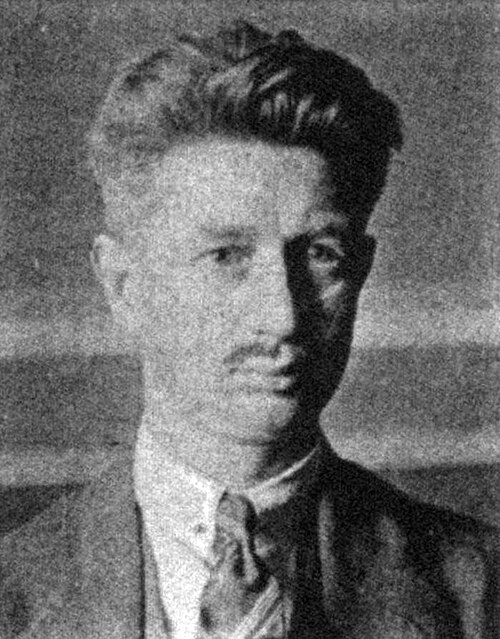
Hugo Urbahns (1890–1946) occupies a distinctive, if often overlooked, place in the history of the German revolutionary movement during the turbulent years of the Weimar Republic. A communist organizer, parliamentarian, and later opposition leader, Urbahns emerged from the radicalization of the German working class during and after the First World War. His political trajectory reflects both the promise and fragmentation of the revolutionary left in interwar Germany. While overshadowed by figures such as Rosa Luxemburg, Karl Liebknecht, Ernst Thälmann, and Leon Trotsky, Urbahns played a significant role in the development of anti Stalinist communist opposition currents and contributed to debates over revolutionary strategy during a period marked by economic crisis, political polarization, and the rise of fascism.
Born on 18 February 1890 in Lieth, Germany, Urbahns came from a working class background and entered political life through the German labor movement. Like many militants of his generation, he was shaped by the rapid industrialization of imperial Germany and the growing strength of the Social Democratic Party (SPD). During the First World War he became increasingly hostile to the SPD leadership’s support for the war effort. The collapse of the German Empire in 1918 and the revolutionary upheavals that followed transformed him into an active participant in the communist movement.
Urbahns joined the Communist Party of Germany (KPD) shortly after its formation. The young party emerged from the revolutionary wing of German socialism and sought to emulate the success of the Bolshevik Revolution in Russia. Urbahns quickly established himself as an effective organizer, particularly in northern Germany. During the revolutionary crises of the early 1920s he became associated with efforts to build a disciplined communist party capable of leading mass struggles against both capitalist rule and the remnants of the old imperial order.
His prominence within the KPD grew steadily. In 1924 he was elected to the Reichstag, serving as a communist deputy during one of the most volatile periods in Weimar political life. As a parliamentarian, Urbahns combined legislative work with party agitation, viewing parliamentary activity primarily as a platform for revolutionary propaganda rather than reform. His speeches and writings reflected a commitment to revolutionary Marxism and a belief that the instability of German capitalism created opportunities for socialist transformation.
The decisive turning point in Urbahns’s political career came through his opposition to the growing influence of Joseph Stalin within the Communist International. During the mid 1920s, disputes over strategy, party democracy, and international leadership divided communist parties across the world. Urbahns became increasingly critical of the KPD leadership and of what he regarded as the bureaucratization of the Soviet Communist Party.
In 1926 he was expelled from the KPD. Rather than abandoning communist politics, he became one of the leading figures in the German Communist opposition. He helped establish the Leninbund, an organization that sought to preserve what its members viewed as the authentic revolutionary traditions of Marxism and Bolshevism. Although the Leninbund initially attracted a number of prominent dissidents, it struggled to develop a stable organizational base. Urbahns himself occupied a complex position within the opposition movement. While broadly sympathetic to many of Leon Trotsky’s criticisms of Stalinism, he differed from Trotsky on several strategic and organizational questions. These disagreements prevented a lasting political alliance between the two men.
The Leninbund represented one of several attempts to construct an alternative communist movement outside the control of Moscow. Urbahns argued that the KPD’s increasingly sectarian policies weakened the German working class and undermined resistance to the growing threat of the far right. Nevertheless, opposition groups remained fragmented and lacked the influence necessary to challenge either the official communist apparatus or the mass organizations of social democracy.
The rise of National Socialism placed Urbahns and other revolutionary opponents of both fascism and Stalinism in an increasingly precarious position. Adolf Hitler’s seizure of power in 1933 destroyed the organizational foundations of the German left. Like thousands of socialists and communists, Urbahns was forced into exile. He spent years outside Germany, continuing political activity under increasingly difficult conditions while witnessing the destruction of the labor movement he had devoted his life to building.
Exile also exposed the limitations of the communist opposition currents. Their organizations were small, divided, and deprived of access to the mass working class constituencies that had sustained them during the Weimar years. Despite these setbacks, Urbahns continued to defend the necessity of revolutionary socialism and remained committed to anti fascist struggle throughout the Nazi period.
Following the Second World War, Urbahns returned to Germany amid the political reconstruction of the country. The postwar environment, however, differed dramatically from the revolutionary conditions that had shaped his earlier career. The emerging Cold War and the division of Germany narrowed the political space for independent revolutionary movements. Urbahns died in Hamburg on 16 November 1946, only months after the war’s conclusion.
Historically, Hugo Urbahns is significant less for the institutional success of the organizations he led than for the political questions his career embodied. He represented a generation of revolutionaries caught between loyalty to the October Revolution and opposition to the bureaucratic transformation of the Soviet state. His life illustrates the diversity of communist opposition movements during the interwar period and highlights the intense ideological struggles that shaped international communism after Lenin’s death.
Modern scholarship generally treats Urbahns as an important figure within the broader history of anti-Stalinist communism. Although his organizations never achieved mass influence, they provide valuable insight into the debates surrounding party democracy, revolutionary strategy, and the relationship between national communist parties and the Soviet leadership. His career also serves as a reminder that the history of European communism cannot be reduced to a simple contest between social democracy and official Soviet aligned parties. Between these poles existed a variety of opposition currents whose members sought alternative paths toward socialist transformation.
Bibliography
Alexander, Robert J. The Right Opposition: The Lovestoneites and the International Communist Opposition of the 1930s. Westport: Greenwood Press, 1981.
Broué, Pierre. The German Revolution, 1917–1923. Chicago: Haymarket Books, 2006.
Broué, Pierre. The History of the German Communist Party, 1918–1923. Leiden: Brill, 2005.
Hoffrogge, Ralf. Working Class Politics in the German Revolution: Richard Müller, the Revolutionary Shop Stewards and the Origins of the Council Movement. Leiden: Brill, 2014.
McDermott, Kevin, and Jeremy Agnew. The Comintern: A History of International Communism from Lenin to Stalin. New York: St. Martin’s Press, 1996.
Trotsky, Leon. The Challenge of the Left Opposition (1926–27). New York: Pathfinder Press, 1980.
Wheeler, Robert F. “The Independent Left Opposition in Germany.” Journal of Contemporary History, vol. 16, no. 1, 1981, pp. 105–122.
Wohlgemuth, Heinz. Die Entstehung der KPD (Opposition) und des Leninbundes. Berlin: Dietz Verlag, 1970.
Worley, Matthew, ed. In Search of Revolution: International Communist Parties in the Third Period. London: I.B. Tauris, 2004.


Leave a Reply