My Socialist Hall of Fame
During this chaotic era of vile rhetoric and manipulative tactics from our so-called bourgeois leaders, I am invigorated by the opportunity to reflect on Socialists, Revolutionaries, Philosophers, Guerrilla Leaders, Partisans, and Critical Theory titans, champions, and martyrs who paved the way for us—my own audacious “Socialism’s Hall of Fame.” These are my heroes and fore-bearers. Not all are perfect, or even fully admirable, but all contributed in some way to our future–either as icons to emulate, or as warnings to avoid in the future.
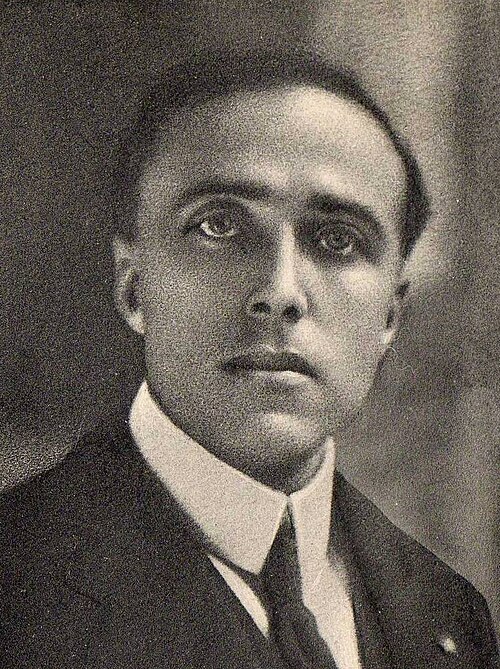
Giacomo Matteotti occupies a singular place in the political history of twentieth century Europe. Few figures embodied the moral resistance to fascism with such clarity, and fewer still paid so immediate and public a price for it. A reformist socialist, parliamentarian, journalist, and fierce critic of Benito Mussolini, Matteotti emerged during the turbulent aftermath of the First World War as one of Italy’s most articulate defenders of constitutional government and working class democracy. His assassination in 1924 transformed him from opposition deputy into an international symbol of anti fascist resistance. The shadow of his murder lingered over the Fascist regime like cigarette smoke trapped beneath a low ceiling, impossible to disperse entirely no matter how tightly Mussolini tried to seal the windows.
Born on 22 May 1885 in Fratta Polesine, in the province of Rovigo in northern Italy, Giacomo Matteotti came from a comparatively prosperous landowning family. Unlike many socialist leaders of his generation, he was not born into industrial poverty. This background shaped his politics in complex ways. Matteotti developed an ethical socialism grounded less in revolutionary romanticism than in disciplined legal reform, municipal organization, and democratic accountability. Educated at the University of Bologna, where he studied law, he was strongly influenced by positivist thought and the traditions of Italian democratic radicalism. From an early age he demonstrated an extraordinary commitment to local political organization. He immersed himself in the conditions of agricultural laborers in the Po Valley, a region marked by sharp inequalities between landowners and peasants.
Matteotti joined the Italian Socialist Party, or PSI, during a period when socialism in Italy was divided between revolutionary maximalists and gradualist reformers. He aligned himself with the reformist wing associated with Filippo Turati. Matteotti believed socialism could and should operate within parliamentary institutions. He rejected both anarchic violence and nationalist militarism. His opposition to the Italo Turkish War of 1911 and later to Italian intervention in the First World War placed him among the most uncompromising anti militarists in Italian public life. During the war he was persecuted for his pacifist stance and subjected to surveillance and harassment by authorities who viewed dissent as treasonous.
The collapse of liberal stability after 1918 transformed the Italian political landscape. Economic dislocation, labor unrest, inflation, and fear of socialist revolution destabilized the parliamentary state. In this atmosphere Mussolini’s Fascist movement emerged as a coalition of nationalist veterans, middle class reactionaries, industrial interests, and rural landowners terrified of labor militancy. Fascist squads, the infamous squadristi, carried out systematic campaigns of violence against trade unions, socialist councils, peasant leagues, and opposition newspapers. Matteotti became one of the earliest national politicians to recognize fascism not as a temporary outburst of disorder but as a coherent authoritarian threat.
Elected repeatedly to the Chamber of Deputies, Matteotti distinguished himself through meticulous documentation of Fascist violence and corruption. He possessed neither Mussolini’s theatrical charisma nor Gabriele D’Annunzio’s operatic nationalism. His power came from precision. Contemporary observers frequently remarked upon his austere demeanor, his cold intellectual discipline, and the almost prosecutorial quality of his speeches. He approached parliamentary debate like a lawyer constructing a criminal indictment. This method reached its most famous expression in his denunciation of the Fascist regime following the general election of April 1924.
The election itself was deeply compromised. Under the Acerbo Law, passed in 1923, any party receiving a plurality of votes would automatically obtain a parliamentary supermajority. Fascists exploited intimidation, violence, censorship, and fraud to secure victory. On 30 May 1924 Matteotti delivered his historic speech before the Chamber of Deputies. Calm but relentless, he catalogued electoral abuses committed by Fascists across Italy. He demanded the annulment of the election and directly challenged the legitimacy of Mussolini’s government. According to several accounts, Matteotti concluded by telling his colleagues that they could now prepare his funeral.
Ten days later, on 10 June 1924, Matteotti was abducted in Rome by Fascist operatives linked to Mussolini’s inner circle. Witnesses saw him forced into a vehicle near his residence. His body was discovered nearly two months later in a shallow grave outside the city. The murder triggered national outrage and an acute political crisis known as the Matteotti Crisis. Opposition deputies withdrew from parliament in what became known as the Aventine Secession, hoping the monarchy would dismiss Mussolini and restore constitutional order. King Victor Emmanuel III refused to act decisively, fearing civil conflict and perhaps doubting the strength of liberal institutions themselves.
The consequences proved historic. Rather than collapsing, Mussolini consolidated power. On 3 January 1925 he assumed political responsibility for Fascist violence in a speech that effectively inaugurated the dictatorship. Independent parties were dismantled, censorship intensified, and Italy’s fragile liberal order disappeared into authoritarian rule. Matteotti’s death therefore marks both an ending and a beginning: the death of a socialist deputy and the birth of openly totalitarian Fascism in Italy.
Historiographically, Matteotti has occupied an unusual position. Liberal historians often portray him as a martyr for constitutional democracy, while socialist scholars emphasize his commitment to labor organization and democratic socialism. Marxist interpretations have sometimes criticized the limitations of reformism in confronting fascist violence, arguing that parliamentary mechanisms proved inadequate against organized counterrevolution. Yet even among critics there remains admiration for Matteotti’s personal courage and political clarity. Antonio Gramsci himself, despite profound ideological differences, recognized the significance of Matteotti’s resistance within the broader struggle against Fascism.
Modern scholarship has increasingly examined Matteotti within the wider European crisis of democracy during the interwar period. His career illuminates the vulnerability of liberal institutions confronted by mass politics, paramilitary violence, and elite collaboration with authoritarian movements. Historians such as Emilio Gentile and Adrian Lyttelton have emphasized that Fascism succeeded not solely through force but through the failures of the Italian state, industrial elites, monarchy, and conservative establishment. Matteotti understood this danger earlier than many of his contemporaries. He recognized that Fascism was not merely a vulgar street movement but a political project aimed at the destruction of democratic pluralism itself.
Today Matteotti remains one of the central moral figures of modern Italian political memory. Streets, schools, and monuments bear his name across Italy. Yet the enduring importance of his life lies not simply in martyrdom. It lies in the disciplined seriousness with which he approached politics. Matteotti believed democratic institutions required active defense, intellectual rigor, and moral courage. He confronted Fascism at a moment when many preferred compromise, silence, or accommodation. In the dim corridor between liberal collapse and dictatorship, he stood almost alone at times, armed with documents, speeches, and an increasingly dangerous honesty.
Bibliography
Cannistraro, Philip V. Historical Dictionary of Fascist Italy. Greenwood Press, 1982.
Gentile, Emilio. The Struggle for Modernity: Nationalism, Futurism, and Fascism. Praeger, 2003.
Gramsci, Antonio. Selections from Political Writings, 1921–1926. Edited by Quintin Hoare, International Publishers, 1978.
Lyttelton, Adrian. The Seizure of Power: Fascism in Italy, 1919–1929. Princeton University Press, 2004.
Matteotti, Giacomo. The Fascisti Exposed: A Year of Fascist Domination. Howard Fertig, 1972.
Mussolini, Benito. My Autobiography. Charles Scribner’s Sons, 1928.
Nolte, Ernst. Three Faces of Fascism: Action Française, Italian Fascism, National Socialism. Holt, Rinehart and Winston, 1966.
Salvemini, Gaetano. The Fascist Dictatorship in Italy. Harcourt, Brace and Company, 1928.
Seton Watson, Christopher. Italy from Liberalism to Fascism, 1870–1925. Methuen, 1967.
Spriano, Paolo. The Occupation of the Factories: Italy 1920. Pluto Press, 1975.
 Letters from Tomis
Leave a comment