My Socialist Hall of Fame
During this chaotic era of vile rhetoric and manipulative tactics from our so-called bourgeois leaders, I am invigorated by the opportunity to reflect on Socialists, Revolutionaries, Philosophers, Guerrilla Leaders, Partisans, and Critical Theory titans, champions, and martyrs who paved the way for us—my own audacious “Socialism’s Hall of Fame.” These are my heroes and fore-bearers. Not all are perfect, or even fully admirable, but all contributed in some way to our future–either as icons to emulate, or as warnings to avoid in the future.
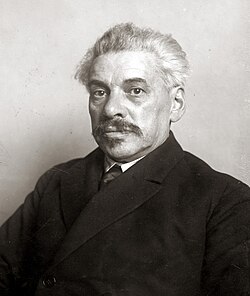
A biography of Adolf Warski must situate him within the turbulent trajectory of the international socialist movement in the early twentieth century, particularly the crises that accompanied the collapse of the Second International, the emergence of Bolshevism, and the subsequent consolidation of Stalinist orthodoxy.
Adolf Warski was born as Adolf Warszawski in 1868 in Warsaw, then part of the Russian Empire. His political formation unfolded within the ferment of late nineteenth century Polish socialism, which was itself divided between nationalist and internationalist currents. Warski aligned early with the latter tendency, becoming associated with the Social Democracy of the Kingdom of Poland and Lithuania (SDKPiL), the revolutionary Marxist organization co-founded by Rosa Luxemburg and Leo Jogiches. The SDKPiL rejected Polish independence as a primary political aim, arguing instead that the emancipation of the working class could only be achieved through international revolution.
Warski’s early career was marked by repeated arrests and exile under Tsarist repression. Like many revolutionaries of his generation, he spent extended periods abroad, especially in Germany and Switzerland, where he participated in émigré political networks and contributed to socialist publications. His writings from this period reflect a rigorous adherence to orthodox Marxism, shaped by Luxemburg’s critique of reformism and nationalism. Warski developed a reputation as a disciplined organizer and theoretician, though he never achieved the intellectual prominence of Luxemburg herself.
The outbreak of the First World War in 1914 constituted a decisive rupture for European socialism. Warski remained aligned with the internationalist opposition to the war, rejecting the collapse of the Second International into national chauvinism. The Russian Revolution of 1917 opened new possibilities, and Warski became an active supporter of Bolshevik power. During the subsequent revolutionary wave, he emerged as a leading figure in the reconstituted Polish communist movement.
In 1918, the SDKPiL merged with the Polish Socialist Party Left to form the Communist Workers’ Party of Poland (later the Communist Party of Poland, KPP). Warski assumed a central leadership role within the new party, navigating the complex political terrain of a newly independent Polish state that was hostile to communism. The KPP operated largely underground, subject to intense repression by the Polish authorities, which significantly constrained its organizational capacity.
Warski’s importance extended beyond Poland into the structures of the Communist International. He served as a representative of the Polish party within the Comintern, participating in its congresses and contributing to debates over strategy and doctrine. In this capacity, he was involved in the broader effort to align national communist parties with the directives emanating from Moscow. His position required balancing the specific conditions of Poland with the increasingly centralized authority of the Soviet leadership.
The consolidation of Stalin’s power in the late 1920s and early 1930s profoundly altered the political environment in which Warski operated. Like many veteran revolutionaries, he became entangled in factional struggles and ideological campaigns that redefined orthodoxy in shifting and often arbitrary ways. Although Warski attempted to maintain loyalty to the Comintern line, he was eventually accused of deviations and political unreliability. These accusations must be understood within the context of the growing climate of suspicion that characterized the Stalinist system.
Warski’s fate was sealed during the Great Purges. Arrested in the Soviet Union in the mid-1930s, he was charged with participation in counterrevolutionary activities, a standard accusation deployed against a wide range of perceived opponents. In 1937, he was executed following a show trial. His death exemplifies the tragic trajectory of many early communists who, having dedicated their lives to the revolutionary project, were ultimately destroyed by the apparatus they helped to build.
From a historiographical perspective, Warski occupies an intermediate position. He was neither a major theorist nor a marginal functionary. Rather, he represents a cadre intellectual whose career illuminates the institutional and ideological evolution of the communist movement from its internationalist origins to its Stalinist consolidation. His life underscores the tension between revolutionary idealism and political centralization, as well as the vulnerability of even loyal party members within a system governed by suspicion and coercion.
In recent scholarship, Warski has attracted renewed attention as historians reassess the history of the Comintern and the national communist parties. His biography provides insight into the transnational networks of revolution, the internal dynamics of the Polish left, and the mechanisms of repression that culminated in the purges. As such, he remains a significant, if often overlooked, figure in the study of twentieth century Marxism.
Bibliography
Carr, E. H. The Bolshevik Revolution 1917–1923. Vol. 3. London: Macmillan, 1953.
Conquest, Robert. The Great Terror: A Reassessment. Oxford: Oxford University Press, 1990.
Luxemburg, Rosa. The National Question: Selected Writings. New York: Monthly Review Press, 1976.
McDermott, Kevin, and Jeremy Agnew. The Comintern: A History of International Communism from Lenin to Stalin. New York: St. Martin’s Press, 1996.
Pankhurst, Richard. “The Social Democracy of the Kingdom of Poland and Lithuania.” International Review of Social History 12, no. 2 (1967): 203–225.
Service, Robert. Comrades: A History of World Communism. Cambridge: Harvard University Press, 2007.
Snyder, Timothy. Sketches from a Secret War: A Polish Artist’s Mission to Liberate Soviet Ukraine. New Haven: Yale University Press, 2005.
Watson, Derek. “The Communist Party of Poland, 1918–1938.” Europe-Asia Studies 34, no. 2 (1982): 157–178.
 Letters from Tomis
Leave a comment