Book Review
Finkel, Michael. The Art Thief: A True Story of Love, Crime, and a Dangerous Obsession. Vintage Books, 2023.
Michael Finkel’s The Art Thief: A True Story of Love, Crime, and a Dangerous Obsession (2023) occupies a curious space at the intersection of narrative journalism, psychological portraiture, and true crime. Known for his earlier work on identity and deception in True Story, Finkel here turns his attention to Stéphane Breitwieser, one of the most prolific art thieves in modern European history. The result is a text that is less concerned with the mechanics of theft than with the aesthetic and psychological logic that underwrites it. Finkel constructs a narrative that is at once intimate and unsettling, inviting the reader to confront the uneasy proximity between aesthetic reverence and criminal compulsion.
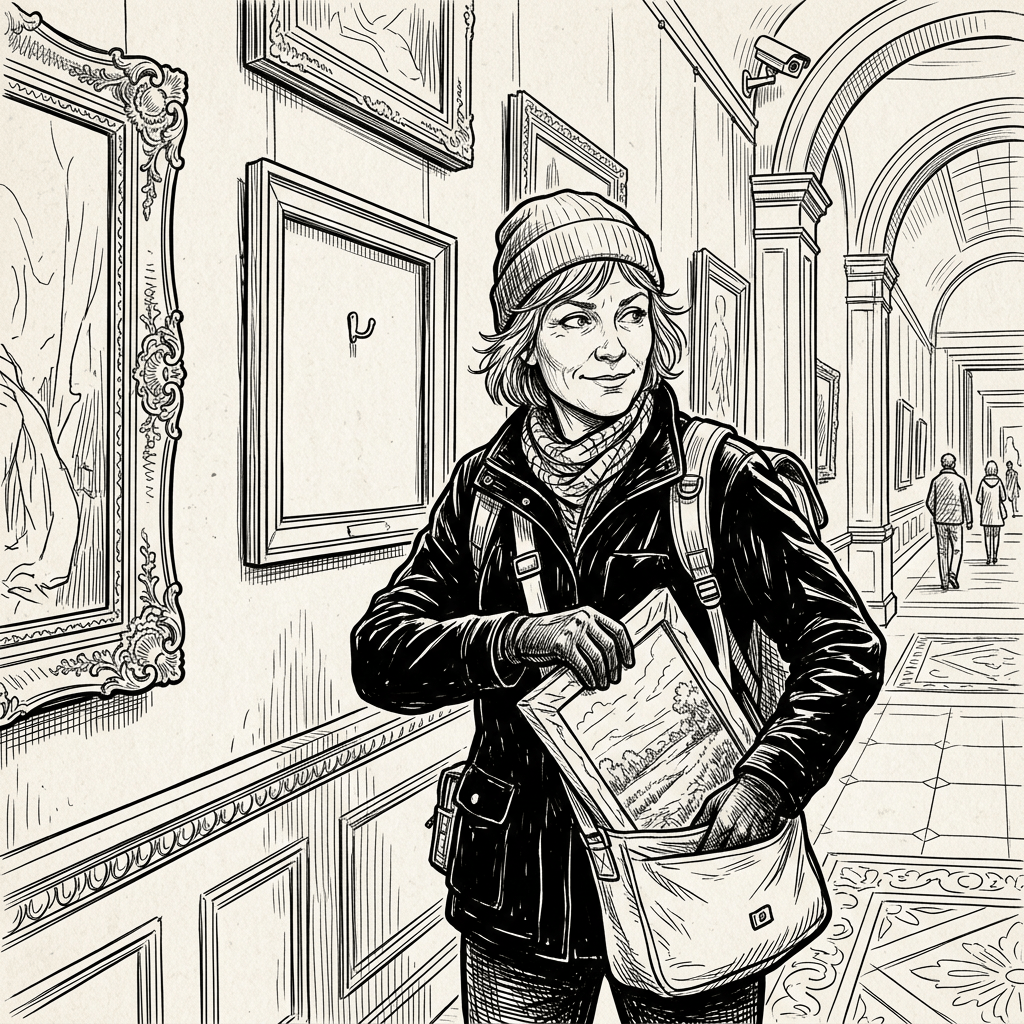
At the center of the book is Breitwieser, whose thefts across small European museums and churches in the 1990s and early 2000s defy conventional criminal typologies. Unlike thieves motivated by profit, Breitwieser stole for private contemplation, amassing a secret collection of hundreds of objects which he displayed in his attic bedroom. Finkel’s account frames this behavior not merely as eccentricity but as a form of obsessive aesthetic consumption. In doing so, the book engages implicitly with questions central to art history and critical theory, particularly the tension between possession and appreciation. Breitwieser’s actions literalize the bourgeois impulse to own beauty, collapsing the distinction between connoisseurship and domination.
Finkel’s narrative method is notable for its reliance on extensive interviews with Breitwieser himself. This choice produces both the book’s greatest strength and its most significant limitation. On one hand, it allows for a richly detailed reconstruction of the thefts, narrated with a clarity and immediacy that lends the text novelistic momentum. On the other, it raises questions about narrative authority and reliability. Breitwieser emerges as a self conscious narrator of his own myth, and Finkel, despite occasional gestures toward skepticism, often reproduces his subject’s perspective with minimal interrogation. The result is a subtle but persistent tension between reportage and complicity.
Stylistically, Finkel adopts a restrained prose that privileges scene over analysis. His descriptions of the stolen works, many of them minor or obscure pieces from regional collections, are rendered with a quiet attentiveness that mirrors Breitwieser’s own gaze. This aestheticization of the objects risks reproducing the very fetishism that the book might otherwise critique. Yet it also underscores the central paradox of the narrative. The reader is invited to share in the pleasure of looking even as they are made aware of its illicit conditions. In this sense, the text participates in what Walter Benjamin might describe as the aura of the artwork, while simultaneously exposing the violence inherent in its appropriation.
The book also situates Breitwieser within a broader social and relational context, particularly through his relationship with his girlfriend and accomplice, Anne Catherine Kleinklaus. Their partnership complicates any straightforward reading of the thefts as solitary acts of obsession. Instead, Finkel presents a dynamic in which intimacy and criminality are mutually reinforcing. The shared experience of theft becomes a form of bonding, suggesting that the desire for art is inseparable from the desire for recognition and connection. This relational dimension adds a layer of emotional depth to the narrative, even as it further muddies the ethical terrain.
From a historiographical perspective, The Art Thief gestures toward the vulnerabilities of smaller European institutions, whose limited security infrastructures made them particularly susceptible to Breitwieser’s methods. Finkel’s account implicitly critiques the uneven distribution of cultural capital, wherein masterpieces housed in major metropolitan museums are heavily guarded, while equally significant works in provincial settings remain exposed. This imbalance reflects broader patterns of neglect within the cultural heritage sector, raising questions about whose art is deemed worthy of protection and why.
Despite its narrative strengths, the book stops short of fully engaging with the legal and ethical implications of Breitwieser’s actions. The destruction of many stolen works by Breitwieser’s mother, a moment that should serve as the moral fulcrum of the text, is treated with a degree of restraint that borders on understatement. Finkel resists overt moralizing, but this restraint can feel like an evasion, particularly given the irreversible loss of cultural artifacts. A more sustained critical engagement with this episode might have provided a necessary counterweight to the seductive allure of the thief’s perspective.
In sum, Finkel’s The Art Thief is a compelling and meticulously crafted work that raises as many questions as it answers. Its greatest achievement lies in its ability to destabilize the reader’s moral certainties, drawing them into a world where the appreciation of beauty becomes entangled with its violation. Yet this very quality also constitutes its central limitation, as the narrative’s proximity to its subject risks reproducing the logic it seeks to examine. The book ultimately stands as a provocative contribution to contemporary true crime literature, one that invites further critical reflection on the ethics of art, ownership, and desire.
 Letters from Tomis
Leave a comment