Figes, Orlando. The Whisperers: Private Life in Stalin’s Russia. Penguin History, 2008.
Orlando Figes’s The Whisperers: Private Life in Stalin’s Russia (2008) represents a landmark contribution to the historiography of Soviet society, shifting the analytical lens from institutions and elite politics to the intimate, often concealed, textures of everyday life under Stalinism. Drawing extensively on oral histories collected by the Memorial, alongside diaries, letters, and family archives, Figes reconstructs the moral, emotional, and psychological landscapes of ordinary Soviet citizens. The result is a deeply human account of how terror penetrated the private sphere, reshaping family relations, memory, and identity.
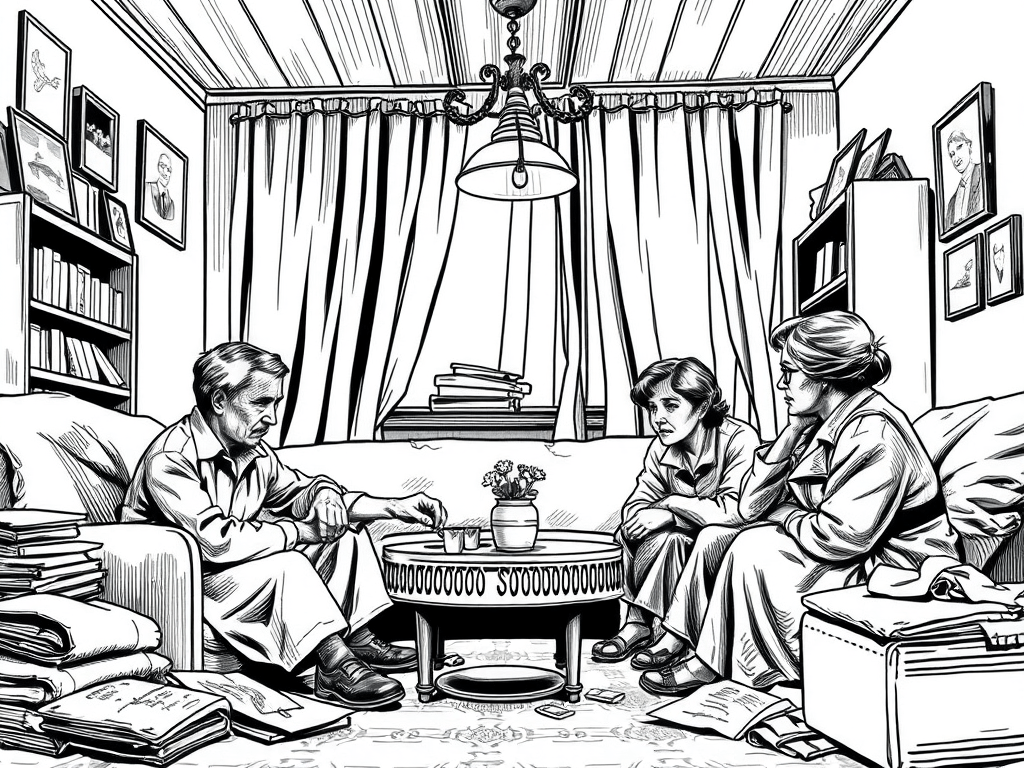
At the core of Figes’s argument is the contention that Stalinist repression did not merely operate through public mechanisms such as show trials or purges, but through the internalization of fear that colonized domestic life. The titular “whisperers” refers both to the literal lowering of voices in communal apartments and to the broader culture of silence, self-censorship, and coded communication that defined interpersonal relations. Figes demonstrates how families became sites of both refuge and danger. Children were taught to monitor speech, spouses concealed aspects of their past, and denunciation could emerge from within the household itself. In this sense, the book extends earlier totalitarian frameworks by showing how state power was reproduced through everyday practices rather than imposed solely from above.
Methodologically, Figes’s use of oral testimony is both the book’s greatest strength and its most contested feature. By privileging subjective experience, he captures the affective dimensions of Stalinism with remarkable immediacy. Individual stories, such as those of Gulag survivors or children of “enemies of the people,” accumulate into a collective portrait of a society fractured by mistrust and moral compromise. At the same time, reliance on retrospective accounts raises questions about memory, narrative reconstruction, and the influence of post-Soviet perspectives. Critics have noted that the temporal distance between events and testimony may introduce distortions, yet Figes is generally attentive to these limitations, often triangulating oral evidence with archival sources.
Thematically, The Whisperers engages with broader debates in Soviet historiography concerning the nature of consent and coercion. Figes resists simplistic binaries. He shows that many Soviet citizens were neither passive victims nor committed believers, but rather individuals navigating a shifting terrain of survival, accommodation, and occasional complicity. Particularly compelling is his analysis of identity formation, where official Soviet categories intersected with personal histories to produce fragmented selves. The tension between public conformity and private dissent emerges as a defining feature of Stalinist subjectivity.
Figes also contributes to the growing body of scholarship on trauma and memory. His narrative underscores how the legacy of repression extended beyond the Stalin era, shaping subsequent generations through inherited silences and unresolved grief. In doing so, the book aligns with memory studies while retaining a firm grounding in social history. The emphasis on intergenerational transmission of trauma adds depth to our understanding of the Soviet experience as not merely a political system but a long-lasting cultural condition.
Stylistically, Figes writes with a narrative fluency that bridges academic and popular history. While some scholars may find the prose occasionally novelistic, this approach enhances the accessibility of complex historical material without sacrificing analytical rigor. The careful interweaving of individual lives with broader historical processes allows the reader to apprehend the scale of Stalinist repression through its most intimate consequences.
In sum, The Whisperers stands as a major achievement in the study of Stalinist Russia. Its focus on private life challenges conventional historiographical boundaries and compels a reconsideration of how power operates within society. Despite methodological debates surrounding oral history, Figes’s work remains indispensable for its vivid reconstruction of lived experience and its nuanced exploration of fear, memory, and survival.


Leave a comment