George Gilmore: A Revolutionary Voice in Irish Republicanism
My Socialist Hall of Fame
During this chaotic era of vile rhetoric and manipulative tactics from our so-called bourgeois leaders, I am invigorated by the opportunity to reflect on Socialists, Revolutionaries, Philosophers, Guerrilla Leaders, Partisans, and Critical Theory titans, champions, and martyrs who paved the way for us—my own audacious “Socialism’s Hall of Fame.” These are my heroes and fore-bearers. Not all are perfect, or even fully admirable, but all contributed in some way to our future–either as icons to emulate, or as warnings to avoid in the future.
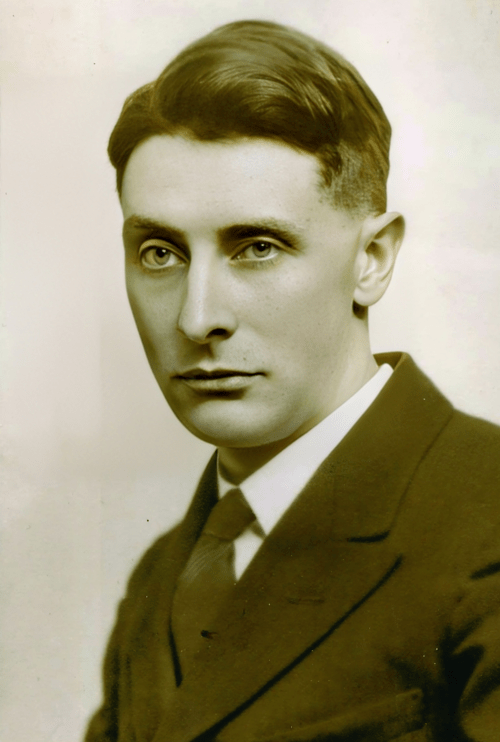
George Gilmore was a significant yet often understudied figure in twentieth-century Irish republicanism whose political trajectory traversed militant nationalism, socialist republicanism, and international anti-fascism. His life illuminates the ideological fractures within the Irish revolutionary tradition after independence, particularly the tensions between orthodox republican militarism and emergent Marxist critiques of class and empire.
Born in 1898 in County Clare, Gilmore came of age during the ferment of Irish nationalism that culminated in the Easter Rising and the subsequent War of Independence. Like many of his generation, he was drawn into the republican movement through the Irish Republican Army (IRA), participating in the guerrilla struggle against British rule between 1919 and 1921. The experience of irregular warfare, coupled with the social dislocation of rural Ireland, shaped his early political consciousness, though his later writings suggest that he came to view the conflict as incomplete in its social aims.
Gilmore opposed the Anglo-Irish Treaty, aligning with the anti-Treaty republicans during the Irish Civil War. However, his importance lies less in his military role than in his subsequent intellectual and political development. By the late 1920s, Gilmore had become increasingly critical of what he perceived as the conservatism and social narrowness of mainstream republicanism. Influenced by socialist thought, he sought to articulate a vision of republicanism grounded not only in national sovereignty but also in class struggle.
This ideological shift brought Gilmore into contact with figures such as Peadar O’Donnell and Frank Ryan, both of whom were central to efforts to radicalize the republican movement. Together, they formed part of a left-wing tendency within the IRA that advocated for land redistribution, workers’ rights, and a broader anti-imperialist agenda. Gilmore emerged as a key organizer and theorist within this current, contributing to debates about the future direction of Irish republicanism.
In 1934, these tensions culminated in the formation of the Republican Congress, a short-lived but influential attempt to create a mass movement that would unite republicans, socialists, and labor activists. Gilmore played a leading role in the Congress, which sought to move beyond the IRA’s secretive structure and engage openly with working class constituencies. The Congress’s program emphasized the establishment of a workers’ republic, positioning itself in opposition both to the conservative Irish Free State and to traditionalist elements within the republican movement.
Despite its ambitions, the Republican Congress was plagued by internal divisions, particularly over whether to prioritize class struggle or maintain a broad republican front. Gilmore aligned with those who favored a more explicitly socialist orientation, a position that contributed to the organization’s fragmentation. The Congress ultimately dissolved within a few years, but its legacy endured as a formative moment in the development of left republican thought.
Gilmore’s political commitments extended beyond Ireland. In 1936, he joined other Irish volunteers in supporting the Republican side during the Spanish Civil War, a conflict widely understood at the time as a struggle against fascism. Although less prominent than Ryan in this context, Gilmore’s participation reflects the internationalist dimension of his politics. The experience reinforced his belief in the interconnectedness of national liberation and global anti-fascist movements.
Throughout the mid-twentieth century, Gilmore remained an active commentator and participant in Irish political life, though increasingly on the margins of mainstream republicanism. He contributed to left-wing publications and continued to advocate for a synthesis of nationalism and socialism. His writings often emphasized the failure of the Irish state to address structural inequalities, arguing that political independence had not been matched by social transformation.
Gilmore was also a memoirist and historian of his own movement. His later work, particularly his reflections on the revolutionary period, offers valuable insight into the internal dynamics of the IRA and the ideological debates that shaped its evolution. Unlike more celebratory nationalist narratives, Gilmore’s accounts are marked by a critical perspective that foregrounds missed opportunities for radical change.
In assessing Gilmore’s legacy, it is essential to situate him within the broader historiography of Irish republicanism. While figures such as Éamon de Valera came to dominate the political institutions of the independent state, Gilmore represents an alternative trajectory that sought to align republicanism with socialist transformation. His career underscores the heterogeneity of the republican tradition and highlights the extent to which questions of class and social justice were contested within it.
George Gilmore died in 1985, leaving behind a body of writing and activism that continues to inform scholarly understandings of radical republicanism. Though often overshadowed by more prominent leaders, his life provides a crucial lens through which to examine the intersections of nationalism, socialism, and internationalism in twentieth-century Ireland.
Bibliography
English, Richard. Radicals and the Republic: Socialist Republicanism in the Irish Free State, 1925–1937. Oxford University Press, 1994.
Hanley, Brian. The IRA, 1926–1936. Four Courts Press, 2002.
O’Donnell, Peadar. There Will Be Another Day. Dolmen Press, 1963.
Ryan, Meda. The Real Charlotte: Life of Charlotte Despard, 1844–1939. University College Dublin Press, 2005.
“Republican Congress.” Dictionary of Irish Biography. Cambridge University Press.
Townshend, Charles. The Republic: The Fight for Irish Independence, 1918–1923. Penguin, 2014.
Gilmore, George. Inside the Irish Republican Army. New English Library, 1973.


Leave a comment