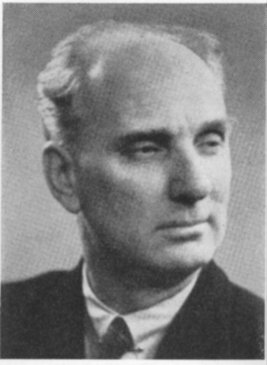
Ture Nerman: The Revolutionary Poet of Swedish Socialism
My Socialist Hall of Fame
During this chaotic era of vile rhetoric and manipulative tactics from our so-called bourgeois leaders, I am invigorated by the opportunity to reflect on Socialists, Revolutionaries, Philosophers, Guerrilla Leaders, Partisans, and Critical Theory titans, champions, and martyrs who paved the way for us—my own audacious “Socialism’s Hall of Fame.” These are my heroes and fore-bearers. Not all are perfect, or even fully admirable, but all contributed in some way to our future–either as icons to emulate, or as warnings to avoid in the future.
Introduction
Ture Nerman occupies a distinctive position in modern Swedish political and intellectual history: at once poet and cultural critic, journalist and agitator, parliamentarian and party builder. His life traces the turbulent trajectory of European socialism from the optimistic internationalism of the pre–World War I era through the fractures produced by Bolshevism, fascism, and Cold War alignments. Nerman’s importance lies not merely in his ideological commitments, but in his role as a mediator between politics and culture—one of the Scandinavian left’s most forceful examples of the writer as revolutionary, for whom literature, journalism, and organization were inseparable.
Early Life and Formation (1886–1914)
Ture Nerman was born in Norrköping, an industrial city shaped by Sweden’s late nineteenth-century modernization and labor conflicts. The social pressures of industrial capitalism and the visible presence of organized labor in Swedish civic life provided an early milieu in which socialist ideas were neither exotic nor marginal. Nerman was drawn toward writing early, and he belongs to a generation of Scandinavian radicals for whom political awakening ran in parallel with aesthetic ambition.
His education and literary ambitions coincided with the growth of the Swedish Social Democratic movement into a mass force. Swedish socialism at the turn of the century was still largely characterized by parliamentarism and reformism; yet it was also connected to broader European radical traditions—especially syndicalism, Marxism, and antimilitarism. Nerman’s earliest public work reflects this tension: he was shaped by Social Democracy but impatient with its cautious temper.
By the outbreak of World War I, Nerman had already aligned himself with the revolutionary wing of Swedish socialism. The war—experienced in Sweden as a neutral country, yet politically as a crisis of civilization and internationalism—accelerated his commitment to anti-militarism and international solidarity.
World War I, Radicalization, and the Bolshevik Moment (1914–1921)
Nerman’s political identity crystallized fully during World War I. Like many European socialist intellectuals, he regarded the collapse of the Second International (as socialist parties rallied to national war efforts) as a catastrophic betrayal. Nerman intensified his criticism of militarism and nationalism, and his journalistic writing became an instrument of political struggle.
The Russian Revolution of 1917 profoundly influenced him. For Nerman, Bolshevism represented not only the possibility of proletarian revolution, but also the revival of socialist internationalism after the war’s nationalist breakdown. In this respect, he typifies a Northern European revolutionary intellectual attracted to the October Revolution not as a specifically Russian event, but as an epochal rupture—proof that capitalism was not historically inevitable.
In Sweden, the postwar period was marked by revolutionary ferment, labor militancy, and ideological conflict inside the left. Nerman played a prominent role in the faction that rejected Social Democratic moderation and sought affiliation with the Communist International. He became a leading figure in the formation and cultural articulation of Swedish communism.
Communist Leader and Party Intellectual (1920s)
Throughout the 1920s, Nerman stood among the most visible Swedish Communist leaders. He also contributed to the institutionalization of a distinctly Swedish communist political culture: one built not only on organizing workplaces, but also on shaping a left public sphere through newspapers, pamphlets, and literary work.
His political gifts were multiple:
• Oratory: Nerman was widely recognized as a compelling speaker.
• Journalism: he understood the newspaper not merely as reportage but as political weapon.
• Cultural authority: he was a poet-politician, capable of translating socialist aspiration into emotionally charged language.
Yet this period also exposed the growing contradiction within European communism: the widening gap between revolutionary ideals and the increasingly centralized authority of the Soviet party-state. Swedish communism, like its counterparts elsewhere, became pulled into Moscow-directed discipline. Nerman’s trajectory demonstrates the dilemma of communist intellectuals who had embraced the revolution yet retained an ethical and cultural independence.
Break with Stalinism and Reorientation (1930s)
The defining political turn in Nerman’s life was his break with the Stalinized Communist movement. While the precise evolution of his position was shaped by Swedish conditions, the broader pattern follows a recognizable European arc: initial enthusiasm for Bolshevism, followed by growing unease at authoritarianism, the purges, show trials, and the crushing of internal dissent.
Nerman increasingly rejected the political and moral logic of Stalinism. In doing so, he separated himself from party orthodoxy and joined the current of Scandinavian leftists who attempted to preserve socialism’s emancipatory aims while rejecting Soviet totalitarian practice.
This reorientation coincided with another historical emergency: the rise of fascism. For Nerman, anti-fascism became inseparable from the defense of democratic freedoms and civil liberties—values that Stalinist communism increasingly compromised. Unlike communists who treated democracy as merely “bourgeois,” Nerman’s later political thinking tended to treat democratic rights as material political achievements essential for working-class organization and cultural life.
The Fight against Nazism and the Swedish Public Sphere (1933–1945)
Nerman’s greatest influence may have come during the Nazi era. Sweden’s neutrality did not insulate it from ideological struggle, espionage, or propaganda warfare. Nerman used journalism as a sustained anti-Nazi campaign, exposing fascist networks and warning against appeasement.
He became a central public voice insisting that Nazism was not simply a foreign German phenomenon but a transnational threat that could infiltrate Swedish society. His writings in this era are significant for combining:
• moral clarity about fascism’s genocidal logic,
• political analysis of fascism as a capitalist crisis-formation,
• and a cultural rhetoric that mobilized shame, urgency, and solidarity.
This period cemented Nerman’s status as an emblematic Swedish anti-fascist intellectual. His opposition to Nazism also deepened his break with Stalinism, particularly after the Molotov–Ribbentrop Pact of 1939, which shattered the credibility of communist anti-fascist claims and forced many European leftists into decisive moral and political choices.
Postwar Politics and Later Life (1945–1969)
After the war, Europe entered a new polarization. Nerman’s mature political identity—socialist, anti-fascist, anti-Stalinist—placed him in tension with both Cold War camps. He continued to defend socialist principles while rejecting Soviet authoritarianism, and he remained committed to internationalism.
In Sweden’s postwar welfare-state consolidation, Nerman’s role was complex. On one hand, the expansion of social democracy realized many reforms earlier socialists had demanded; on the other hand, the welfare state also risked neutralizing revolutionary impulses by converting class struggle into bureaucratic administration. Nerman retained the sensibility of a revolutionary intellectual, wary of complacency and attentive to international crises.
He remained active as a writer and public figure until late in life. Nerman died in 1969, as a new radical generation—shaped by anti-imperialist struggle, Vietnam, and student revolts—began revisiting older revolutionary traditions, including those that had produced figures like him.
Intellectual and Historical Significance
Nerman’s historical importance can be summarized in four overlapping roles:
Builder of Swedish Communist culture
He helped create early Swedish communism’s public language—its print culture, emotional rhetoric, and revolutionary identity.
Model of the political writer
Nerman demonstrates the Scandinavian tradition in which poetry and political journalism are not separate fields but integrated weapons.
Anti-fascist intellectual in a neutral nation
His activism highlights that neutrality does not equal political innocence; he fought fascist ideology within Sweden’s own public sphere.
Case study in the socialist rupture with Stalinism
Nerman embodies the painful ideological reckoning many European Marxists underwent in the 1930s–40s, a key episode in the moral and political history of the left.
Bibliography
Primary Works
Because many of Nerman’s writings circulated in newspapers and pamphlets, editions can be difficult to standardize; still, the following categories are essential:
• Nerman, Ture. Selected political writings and journalism (various newspaper and pamphlet publications, 1910s–1940s).
• ———. Poems and literary works (early twentieth-century Swedish publications).
• ———. Anti-fascist essays and editorials (1930s–1940s periodical literature).
Secondary Scholarship
• Eley, Geoff. Forging Democracy: The History of the Left in Europe, 1850–2000. Oxford University Press, 2002.
• Hobsbawm, Eric. Age of Extremes: The Short Twentieth Century, 1914–1991. Vintage, 1996.
• Judt, Tony. Postwar: A History of Europe Since 1945. Penguin, 2005.
• Larsson, Esbjörn. Scholarship on Swedish labor, interwar politics, and socialist culture (journal articles/monographs).
• Tingsten, Herbert. Works on Swedish political history and ideological movements.
• Upton, Anthony F. Finland in Crisis 1940–1941: A Study in Small Power Politics. Cornell University Press, 1964.


Leave a comment