Clara Lemlich: Pioneering Labor and Women’s Rights
My Socialist Hall of Fame
During this chaotic era of vile rhetoric and manipulative tactics from our so-called bourgeois leaders, I am invigorated by the opportunity to reflect on Socialists, Revolutionaries, Philosophers, Guerrilla Leaders, Partisans, and Critical Theory titans, champions, and martyrs who paved the way for us—my own audacious “Socialism’s Hall of Fame.” These are my heroes and fore-bearers. Not all are perfect, or even fully admirable, but all contributed in some way to our future–either as icons to emulate, or as warnings to avoid in the future.
Introduction: A Working-Class Revolutionary in the Progressive Era
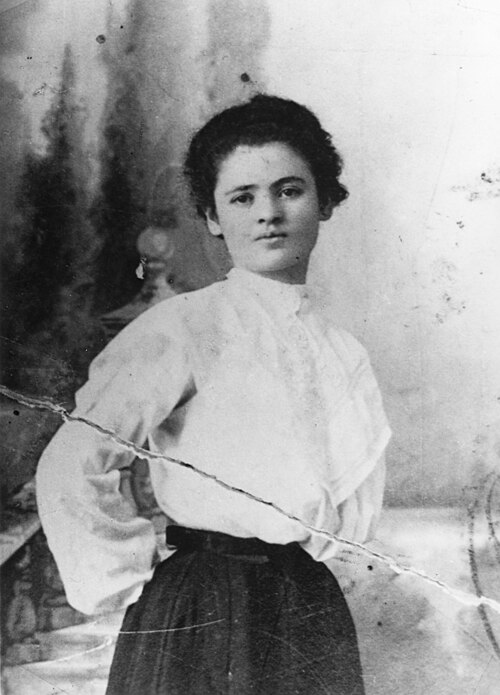
Clara Lemlich occupies a central place in the political history of American labor, women’s militancy, and immigrant radicalism. A Jewish immigrant from the Russian Empire, Lemlich became one of the most influential rank-and-file labor activists in the United States during the first decades of the twentieth century. She is most widely remembered for catalyzing the 1909 “Uprising of the 20,000,” the mass strike of predominantly immigrant Jewish and Italian women garment workers in New York City—one of the most pivotal confrontations in the early American labor movement. Yet her importance extends far beyond this moment. Across the long arc of her life, Lemlich remained committed to a socialist conception of working-class emancipation, fusing labor organizing with women’s political struggle and later with consumer and community activism. Her biography exemplifies how gender, immigration, class formation, and political radicalism intersected in the making of modern American social movements.
Origins in the Russian Empire: Political Formation Under Repression
Clara Lemlich was born Clara Lemlich on March 28, 1886, in Gorodok, in what was then the Russian Empire (often associated historically with the Pale of Settlement). Her early life unfolded amid the pervasive antisemitism of the Tsarist system, including legal restrictions on Jewish life and periodic violence. These conditions were not merely background to her later commitments—they constituted the structural pressures that shaped the political consciousness of many Eastern European Jewish immigrants. Like other immigrant radicals, Lemlich’s political formation was influenced by the dense culture of clandestine reading, socialist discussion circles, and oppositional talk that circulated in Jewish working-class communities under autocracy.
Her early attraction to revolutionary ideas was thus not an American development imported backward into the old world; rather, it belonged to a transnational culture of socialist opposition that connected Eastern European Jewish communities to broader currents of Marxism, anarchism, and labor internationalism.
Immigration to the United States and Entry into Industrial Labor
Lemlich immigrated to the United States in 1903, settling in New York City, at a time when the city stood as the national hub of the garment trade and of immigrant labor. The garment industry was a paradigmatic site of capitalist modernity: labor-intensive, subdivided into specialized tasks, marked by intense seasonal rhythms, and characterized by a stark power imbalance between manufacturers, contractors, and workers.
Lemlich entered the workforce as a garment worker—commonly recorded as employment in shirtwaist production. In this industry, women workers faced a compound form of exploitation: low wages, irregular employment, unpaid overtime, and unsafe conditions, intensified by workplace regimes that frequently included verbal and sexual harassment. Her experience was representative of thousands of working-class immigrant women whose labor sustained the rapid expansion of American consumer capitalism. Importantly, the garment shop functioned not only as a site of exploitation but also as a site of political education, where workplace grievances translated into collective consciousness.
The ILGWU and the Making of a Rank-and-File Leader
Lemlich rose quickly as an agitator within the International Ladies’ Garment Workers’ Union (ILGWU), demonstrating a willingness to confront both employers and cautious union leaders. This was a period in which American labor organizing was fractured along lines of skill, ethnicity, gender, and ideology. Women workers, especially immigrant women, were often treated paternalistically by male union officials and were frequently dismissed as transient or unorganizable. Lemlich’s organizing directly contradicted this assumption, as she insisted on women’s capacity for collective discipline, courage, and strategic militancy.
Her activism expressed a socialist-inflected conception of unionism: not merely the negotiation of better wages and hours but the cultivation of working-class power, solidarity, and dignity. She also embodied a distinctive model of leadership: charismatic and confrontational, but fundamentally grounded in the rank-and-file rather than bureaucratic control.
The “Uprising of the 20,000” (1909–1910)
Lemlich’s most famous historical role occurred in 1909, during the buildup to what became the shirtwaist strike, known as the “Uprising of the 20,000.” Garment workers had been organizing in response to intolerable conditions and employer resistance to unionization. Mass meetings were held in New York City, including a pivotal gathering at Cooper Union.
At this meeting, after labor leaders offered speeches urging caution, Lemlich famously demanded immediate action. Accounts vary in wording, but the essence is stable: she called for a general strike. Her intervention crystallized diffuse anger into collective commitment. The result was one of the most significant labor strikes in U.S. history, involving tens of thousands of workers—primarily young immigrant women—whose political agency disrupted prevailing assumptions about gender and class.
During the strike, Lemlich and her fellow activists faced violent repression, including arrests, physical assaults, and intimidation. Police and courts operated less as neutral state institutions than as enforcement arms of industrial order. Yet the strike also generated new alliances, particularly with middle-class reformers and suffragists who supported the workers. This coalition was politically ambiguous: it provided resources and legitimacy, but it also risked framing labor struggle as moral reform rather than class antagonism.
The strike produced mixed outcomes. Many shops conceded demands, but important employers resisted. Nonetheless, the uprising transformed labor politics in the garment industry and demonstrated the potential of mass organizing among women workers.
After 1909: Persistent Radicalism and the Limits of Reform
The years following the uprising revealed the enduring tension within labor between militant insurgency and institutional consolidation. For Lemlich, the strike was not an endpoint but part of a wider political project. She continued to organize and agitate, aligning herself with socialist politics and with forms of feminism rooted in working-class struggle rather than elite reform.
This distinction is crucial. Lemlich’s activism belonged to what historians call working-class feminism: the view that women’s emancipation could not be separated from the transformation of capitalist labor relations. Unlike suffrage activists who treated the vote as the primary horizon of liberation, Lemlich pursued power where working-class women lived most concretely—workplaces, unions, tenement neighborhoods, prices, childcare, and food access.
Her politics thus placed her in tension not only with employers but also with liberal reformers and moderate union leaders who sought stability, negotiation, and gradualism.
Marriage, Community Activism, and Consumer Politics
In later years Lemlich married and became Clara Lemlich Shavelson (often recorded as Shavelson). She remained active in political work while raising a family, a fact that undermines the stereotype that radical women militants were necessarily alienated from domestic life. Rather, Lemlich treated domestic life as itself a political terrain.
Her activism expanded into tenant organizing, housewives’ leagues, and consumer boycotts, especially during the 1920s and 1930s. This was not a retreat from labor struggle but a strategic relocation of it, as working-class women increasingly organized around the reproduction of daily life: rent, food prices, school conditions, and neighborhood health. In Marxist terms, Lemlich’s later activism engaged the sphere of social reproduction, linking household survival to broader capitalist dynamics of exploitation and crisis.
This phase of her life also reflects a broader shift in radical politics in the interwar period, when formal union organizing was often blocked or repressed, and activists sought alternative mass bases through community institutions.
Later Life and Historical Legacy
Clara Lemlich lived into the late twentieth century, dying in 1982. Her long lifespan allowed her to witness the transformation of labor from the insurgent shop-floor militancy of the early 1900s through the consolidation of New Deal unionism and into the era of postwar deindustrialization. The lasting importance of her life lies not only in her role in one dramatic strike but in her sustained commitment to the idea that working people—especially immigrant women—could act as conscious political agents in history.
Modern scholarship increasingly recognizes that Lemlich should be understood not as a symbolic heroine but as an organizer whose work reveals the political intelligence of immigrant women’s labor movements. Her life illustrates that the American working class was never merely male, native-born, or industrial in the narrow sense; it was always multiethnic, gendered, and politically contested.
Conclusion: Lemlich as a Figure of Class, Gender, and Radical Modernity
Clara Lemlich remains a defining figure for the historiography of labor, feminism, and radical immigrant politics. Her biography challenges any separation between “women’s history” and “labor history,” showing instead that the most consequential labor militancy in modern America was frequently carried by women whose exploitation was intensified by gender. Her enduring lesson is not simply courage—though she had that in abundance—but the insight that working-class struggle must be organized where life is lived: in the shop, in the street, and in the home.
Bibliography
• Dubofsky, Melvyn. The State and Labor in Modern America. Chapel Hill: University of North Carolina Press, 1994.
• Faue, Elizabeth. Rethinking the American Labor Movement. New York: Routledge, 2017.
• Freeman, Joshua B. Working-Class New York: Life and Labor Since World War II. New York: The New Press, 2000.
• Glenn, Susan A. Daughters of the Shtetl: Life and Labor in the Immigrant Generation. Ithaca: Cornell University Press, 1990.
• Orleck, Annelise. Common Sense and a Little Fire: Women and Working-Class Politics in the United States, 1900–1965. Chapel Hill: University of North Carolina Press, 1995.
• Tax, Meredith. The Rising of the Women: Feminist Solidarity and Class Conflict, 1880–1917. Urbana: University of Illinois Press, 1980.
• Von Drehle, David. Triangle: The Fire That Changed America. New York: Atlantic Monthly Press, 2003.
• Yezierska, Anzia. Bread Givers: A Struggle Between a Father of the Old World and a Daughter of the New. New York: Doubleday, Page & Company, 1925.
• Zinn, Howard. A People’s History of the United States. New York: Harper Perennial, 2003.


Leave a comment