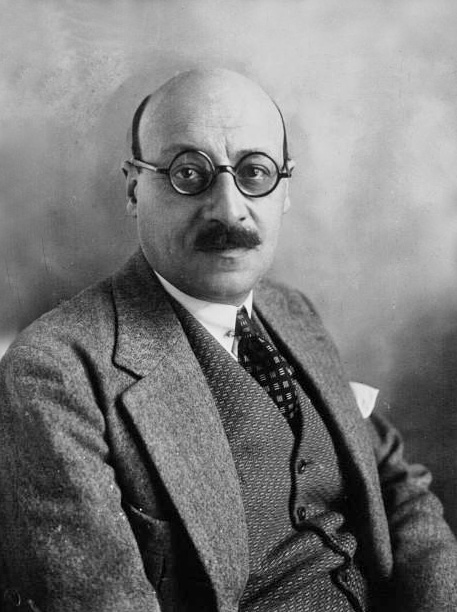
My Socialist Hall of Fame
During this chaotic era of vile rhetoric and manipulative tactics from our so-called bourgeois leaders, I am invigorated by the opportunity to reflect on Socialists, Revolutionaries, Philosophers, Guerrilla Leaders, Partisans, and Critical Theory titans, champions, and martyrs who paved the way for us—my own audacious “Socialism’s Hall of Fame.” These are my heroes and fore-bearers. Not all are perfect, or even fully admirable, but all contributed in some way to our future–either as icons to emulate, or as warnings to avoid in the future.
Early Life and Intellectual Formation
Ludovic-Oscar Frossard was born on 16 March 1889 in Foussemagne (Territoire de Belfort) into a lower middle-class family environment shaped by republican secularism and the political aftershocks of the Dreyfus Affair. Educated in the public school system, Frossard did not follow a traditional elite academic path but instead entered political life through journalism and party activism. His early political formation was marked by the influence of Jean Jaurès and by the ethical socialism of the French prewar left, which emphasized democracy, antimilitarism, and workers’ education rather than insurrectionary politics.
By the eve of the First World War, Frossard had become active within the socialist movement and gravitated toward organizational work. His talents lay less in original theoretical production than in administration, mediation, and political synthesis. This skill set would later make him indispensable during moments of factional crisis within the French left.
World War I and Socialist Realignment
The outbreak of World War I posed a profound challenge to French socialism. Like many within the Section Française de l’Internationale Ouvrière. This experience left a lasting imprint on his political thinking, instilling both a respect for state institutions and a suspicion of doctrinaire extremism.
In the postwar period, the Russian Revolution transformed the ideological landscape of European socialism. Frossard emerged as a central figure in the debates that engulfed the SFIO over whether to affiliate with the Third International. Although not a Bolshevik by temperament, he became convinced that the revolutionary wave represented a historic rupture that French socialism could not ignore.
The Tours Congress and Communist Leadership
At the Congress of Tours in December 1920, Frossard played a decisive role. The majority of delegates voted to affiliate with the Communist International, leading to the split of French socialism. Frossard became the first secretary general of the newly formed French Communist Party. In this capacity, he functioned as both an organizer and a symbolic bridge between prewar socialism and postrevolutionary communism.
His tenure as party leader, however, was marked by tension. Frossard supported affiliation with Moscow but resisted rigid subordination to Comintern directives. He favored a mass party rooted in French political traditions rather than a tightly centralized revolutionary vanguard. This position increasingly placed him at odds with the Bolshevized leadership style promoted by the Communist International during the early 1920s.
Break with Communism and Return to Social Democracy
By 1923, ideological and organizational conflicts became irreconcilable. Frossard broke with the Communist Party and returned to the socialist movement. His departure symbolized a broader pattern among Western European communists who found Comintern discipline incompatible with parliamentary politics and national political cultures.
Reintegrated into socialist and later republican political life, Frossard served in several ministerial roles during the interwar period, including posts related to public works and labor. His politics during this phase reflected reformist socialism, state intervention in the economy, and a commitment to republican legality. He remained skeptical of revolutionary rhetoric and increasingly emphasized administrative competence and social stability.
The Vichy Period and Political Discredit
The collapse of the Third Republic in 1940 marked a tragic final turn in Frossard’s career. He accepted a position within the Vichy regime, a decision that permanently damaged his political legacy. Although his role was limited and he did not belong to the ideological core of collaborationist fascism, his participation represented a profound moral and political failure.
After the Liberation, Frossard was marginalized and politically isolated. Unlike some former collaborators, he did not regain public prominence. He died on 22 March 1946, largely eclipsed by the postwar resurgence of communism and by the moral authority claimed by Resistance veterans.
Historical Assessment
Frossard occupies an ambiguous position in the history of the French left. He was instrumental in founding French communism yet rejected its authoritarian evolution. He embodied the transition from prewar ethical socialism to the fractured ideological terrain of the interwar years. His career illustrates the difficulty of reconciling revolutionary aspiration with democratic practice in Western Europe.
From a Marxist and revolutionary perspective, Frossard can be read as a figure of mediation rather than rupture. His instincts favored unity, legality, and institutional continuity, qualities that proved inadequate in moments of revolutionary crisis. At the same time, his resistance to Stalinist discipline and his later reformism underscore the structural limits of Third International strategy in advanced capitalist democracies.
Selected Bibliography
Primary Sources
Frossard, Ludovic-Oscar. La scission socialiste. Paris: Librairie de l’Humanité, 1921.
Frossard, Ludovic-Oscar. Socialisme et action parlementaire. Paris: Rieder, 1928.
Secondary Sources
Berstein, Serge. Histoire du Parti communiste français. Paris: Presses Universitaires de France, 1982.
Droz, Jacques. Histoire générale du socialisme, vol. 3. Paris: Presses Universitaires de France, 1977.
Krieg, Michel. Le Congrès de Tours. Paris: Éditions Sociales, 1964.
Robrieux, Philippe. Histoire intérieure du Parti communiste. Paris: Fayard, 1980.
Tombs, Robert. France 1914–1940. London: Longman, 1996.
 Letters from Tomis
Leave a comment