During this chaotic era of vile rhetoric and manipulative tactics from our so-called bourgeois leaders, I am invigorated by the opportunity to reflect on Socialists, Revolutionaries, Philosophers, Guerrilla Leaders, Partisans, and Critical Theory titans, champions, and martyrs who paved the way for us—my own audacious “Socialism’s Hall of Fame.” These are my heroes and fore-bearers. Not all are perfect, or even fully admirable, but all contributed in some way to our future–either as icons to emulate, or as warnings to avoid in the future.
Introduction
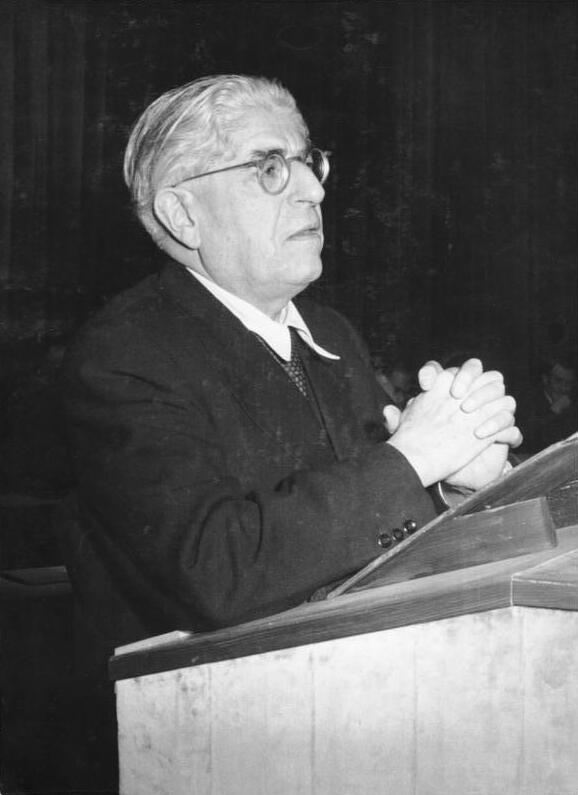
Ernst Bloch (1885–1977) stands as one of the most original and heterodox Marxist philosophers of the twentieth century. Best known for his monumental work The Principle of Hope, Bloch developed a philosophy centered on utopia, anticipation, and the “not-yet-become” (Noch-Nicht-Gewordene). Against mechanistic materialism and political fatalism, he insisted that human consciousness is fundamentally oriented toward the future and that emancipatory potential is embedded in culture, myth, religion, and everyday life. His work occupies a distinctive position within Western Marxism, combining speculative metaphysics, literary analysis, and revolutionary theory in a form that defied both Soviet orthodoxy and Western positivism.
Early Life and Intellectual Formation
Ernst Bloch was born in 1885 in Ludwigshafen am Rhein, Germany, into a middle-class Jewish family. He studied philosophy, German literature, and music in Munich and Würzburg, completing a doctoral dissertation on epistemology under Oswald Külpe. From early on, Bloch was drawn to the metaphysical dimensions of philosophy, particularly those that resisted closure and determinism.
Bloch’s early intellectual development was shaped by German Idealism (especially Hegel and Schelling), Jewish messianism, and the revolutionary currents unleashed by the First World War. He maintained close intellectual and personal relationships with figures such as Georg Lukács, Bertolt Brecht, Walter Benjamin, and Theodor Adorno, although he remained philosophically distinct from the Frankfurt School. His early work The Spirit of Utopia (1918; revised 1923) already articulated themes that would define his career: messianic hope, revolutionary possibility, and the latent futurity embedded within cultural forms.
Marxism, Utopia, and the Philosophy of Hope
Bloch’s most enduring contribution lies in his reconfiguration of Marxism as a philosophy of hope rather than a deterministic science of historical necessity. Rejecting economistic and mechanistic interpretations of historical materialism, he argued that Marxism must recover its anticipatory, utopian dimension—what he famously termed the “Not-Yet-Conscious.”
This conceptual framework reached its fullest expression in Das Prinzip Hoffnung (The Principle of Hope), written largely during his exile in the United States (1938–1947) and published in three volumes between 1954 and 1959. In this vast philosophical synthesis, Bloch examines cultural artifacts ranging from fairy tales and operas to political movements and religious symbols, arguing that they contain anticipatory traces of a more humane future.
Hope, for Bloch, is not passive optimism but an active, militant force embedded in praxis. It is ontologically grounded in reality’s incompleteness—its openness to transformation. Thus, Bloch reframes Marxism as a forward-looking philosophy grounded not merely in critique but in possibility.
Exile, Anti-Fascism, and Postwar Thought
With the rise of National Socialism, Bloch fled Germany in 1933, living in exile in Switzerland, Austria, France, and ultimately the United States. During this period, he wrote Freedom and Order and worked on The Principle of Hope. His exile sharpened his sensitivity to displacement, homelessness, and unrealized futures—key motifs in his later thought.
After World War II, Bloch returned to East Germany in 1949, accepting a professorship at the University of Leipzig. Initially welcomed as a major Marxist thinker, he soon came into conflict with the GDR’s rigid ideological orthodoxy. His emphasis on utopia, religious symbolism, and subjective hope clashed with the dogmatism of official Marxism-Leninism. Following the suppression of the Hungarian Uprising in 1956, Bloch openly criticized the East German regime and was gradually marginalized. In 1961, he relocated to West Germany, where he continued to write and teach.
Religion, Atheism, and Utopian Longing
One of Bloch’s most distinctive contributions is his engagement with religious thought. Unlike both orthodox Marxists and secular rationalists, Bloch argued that religion contains emancipatory impulses that prefigure socialist aspirations. In Atheism in Christianity (1968), he reinterpreted biblical narratives—especially Exodus and the prophetic tradition—as expressions of revolutionary hope rather than mere ideological mystification.
Bloch’s approach reframed religion as a repository of utopian longing rather than false consciousness. This position deeply influenced liberation theology and radical Christian thought in Latin America and beyond.
Influence and Legacy
Bloch’s influence extends across philosophy, theology, literary theory, and political thought. His work profoundly shaped thinkers such as Jürgen Moltmann, Fredric Jameson, and Slavoj Žižek, particularly in their engagement with temporality, utopia, and political imagination.
Despite periods of marginalization—especially during the Cold War—Bloch’s thought has experienced renewed interest in the twenty-first century amid global crises that demand renewed visions of alternative futures. His insistence that hope is a concrete, historical force continues to resonate in movements seeking emancipation beyond the confines of neoliberal realism.
Conclusion
Ernst Bloch stands as one of the most imaginative and morally ambitious philosophers of modernity. By restoring hope to Marxist thought and insisting on the anticipatory character of human consciousness, he articulated a vision of history not as fate but as possibility. His work remains indispensable for understanding the philosophical foundations of emancipatory politics and the enduring human drive toward a more just world.
Selected Bibliography
Works by Ernst Bloch
Bloch, Ernst. The Principle of Hope. Translated by Neville Plaice, Stephen Plaice, and Paul Knight, 3 vols., MIT Press, 1986.
—. The Spirit of Utopia. Translated by Anthony A. Nassar, Stanford University Press, 2000.
—. Atheism in Christianity: The Religion of the Exodus and the Kingdom. Translated by J. T. Swann, Herder and Herder, 1972.
—. Natural Law and Human Dignity. Translated by Dennis J. Schmidt, MIT Press, 1986.
—. Heritage of Our Times. Translated by Neville Plaice and Stephen Plaice, Polity Press, 1991.
Secondary Sources
Adorno, Theodor W. “Something’s Missing: A Discussion between Ernst Bloch and Theodor W. Adorno.” The Utopian Function of Art and Literature, MIT Press, 1988, pp. 1–17.
Hudson, Wayne. The Marxist Philosophy of Ernst Bloch. St. Martin’s Press, 1982.
Jameson, Fredric. Marxism and Form. Princeton University Press, 1971.
Levitas, Ruth. The Concept of Utopia. Syracuse University Press, 1990.
Moylan, Tom. Demand the Impossible: Science Fiction and the Utopian Imagination. Methuen, 1986.


Leave a comment