During this chaotic era of vile rhetoric and manipulative tactics from our so-called bourgeois leaders, I am invigorated by the opportunity to reflect on Socialists, Revolutionaries, Philosophers, Guerrilla Leaders, Partisans, and Critical Theory titans, champions, and martyrs who paved the way for us—my own audacious “Socialism’s Hall of Fame.” These are my heroes and fore-bearers. Not all are perfect, or even fully admirable, but all contributed in some way to our future–either as icons to emulate, or as warnings to avoid in the future.
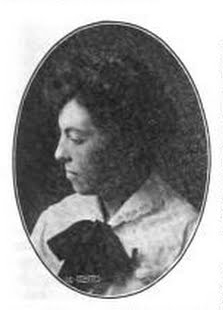
Pauline M. Newman emerged from the crucible of Eastern European Jewish migration and New York’s early-twentieth-century garment industry to become one of the most influential—if often under-credited—strategists of women’s trade unionism. Born in Kovno/Kaunas in the Russian Empire (present-day Lithuania) and raised amid the exclusions of both state schooling (anti-Jewish barriers) and communal religious norms (gender barriers), Newman’s formative years fused a hunger for education with a refusal of patriarchal and ethnic hierarchy. After immigrating to New York as a child, she entered waged labor early—first in a brush factory, then as a teenager in the shirtwaist industry, including employment at the Triangle Shirtwaist Factory—where she confronted the “speed-up,” petty discipline, and precariousness that defined sweatshop capitalism.
Radical formation: socialism, literacy, and shop-floor organizing
Newman’s early activism was inseparable from working-class political education. Like many Jewish immigrant workers, she moved through Yiddish socialist culture (including the Forward) into socialist study circles and workplace discussion groups, translating literacy into organization and organization into power. The Cornell Triangle Fire collection preserves her retrospective reflections on these years, emphasizing how worker education and collective analysis became tools against both exploitation and isolation.
“Uprising of the 20,000” and the making of a woman union organizer
Newman’s public breakthrough came with the 1909–1910 shirtwaist strike (“Uprising of the 20,000”), a mass walkout led largely by young immigrant women. In its wake she became the International Ladies’ Garment Workers’ Union’s first paid woman organizer—an appointment that signaled both the scale of women’s militancy and the union movement’s ambivalent, often contested, accommodation of women’s leadership.
In this period Newman operated at the junction of three worlds: the shop floor, the socialist public sphere, and cross-class reform networks (notably the Women’s Trade Union League). That “bridge” position was a strength—expanding resources and visibility—but also a constraint, forcing continuous negotiation with male union officials and elite allies whose commitment to labor democracy could be conditional.
Triangle Fire as political rupture and policy catalyst
Although she had left Triangle before the 1911 fire, Newman was profoundly affected by the catastrophe and its political aftermath. The Triangle Fire archive notes she was already working as an organizer and reform advocate at the time of the disaster, and her later writing frames the fire not as a tragic anomaly but as an indictment of a production system that treated women’s lives as expendable inputs.
PBS’s American Experience biography further links Newman to the broader post-fire reform surge, including investigatory and policy work aimed at workplace safety and state capacity to regulate capital—an arena where labor women translated grief into institutional change.
From strikes to “social unionism”: the ILGWU Union Health Center
Newman’s most enduring institutional legacy came through labor health and education. From the early 1920s, she helped shape (and for decades led educational/public-facing work around) the ILGWU’s Union Health Center—widely regarded as a pioneering union-sponsored medical and health-education initiative.
This phase of her career is crucial for understanding Newman as more than a strike organizer: she was a builder of working-class infrastructure. In union health programs she advanced a vision in which wages, safety, housing, and medical access formed a single field of class struggle—anticipating later debates over the welfare state, occupational health, and labor’s role in “social reproduction.” Cornell’s archival descriptions of the Health Center records underscore that Newman’s writings and programming were central to these educational efforts.
State, reform, and international labor politics
By the interwar and New Deal eras, Newman’s expertise carried into advisory and consultative work that linked labor activism to government policy and international assessments of working conditions. PBS notes her post–World War II role reviewing factory conditions in Germany under U.S. auspices, illustrating how seasoned labor women were sometimes pulled into the orbit of state power—both as a chance to improve conditions and as a terrain of political compromise.
Her long institutional life also made her a living archive of the immigrant-left origins of U.S. labor feminism. Late in the twentieth century, as second-wave feminism and women’s labor organizing renewed interest in earlier generations, Newman was honored by newer formations that treated her as a “foremother,” underscoring continuity between early garment militancy and later labor-feminist projects.
Personal life, networks, and historical recovery
Newman’s partnership with Frieda S. Miller—an influential labor reformer and later U.S. Department of Labor official—is now part of the scholarship and public history surrounding labor reform networks and queer history in the twentieth century. The NYC LGBTQ Historic Sites Project documents their long partnership and situates their household within women’s labor reform coalitions that crossed class and ethnic lines.
For researchers, Newman’s afterlife is also archival: the Kheel Center at Cornell holds a guide to her autobiography manuscript, while Harvard’s Schlesinger Library guides point to oral histories and personal papers that preserve her voice and political development across decades.
Bibliography (selected)
Primary sources and archives
• Cornell University, ILR School. The Triangle Factory Fire website, “Pauline Newman’s letter to Michael and Hugh.”
• Cornell University Library, Kheel Center for Labor-Management Documentation & Archives. Guide to the Newman, Pauline M. Autobiography, 1969.
• Harvard Library, Schlesinger Library (Radcliffe Institute). Research guides noting the Papers of Pauline Newman and related oral histories.
• Cornell University Library, Kheel Center. Guide to the ILGWU Union Health Center Records / Publications (finding aid entries referencing Newman’s articles and educational work).
• Orleck, Annelise. Common Sense and a Little Fire: Women and Working-Class Politics in the United States, 1900–1965. University of North Carolina Press, 1995; 2nd ed., 2017.
• PBS, American Experience. “Pauline Newman: Organizer.” (biographical essay associated with Triangle Fire materials).
• New Labor Forum (CUNY). “Feminism and the Labor Movement: A Century of Collaboration and Conflict” (discussion of CLUW honoring Newman and labor-feminist continuity).


Leave a comment