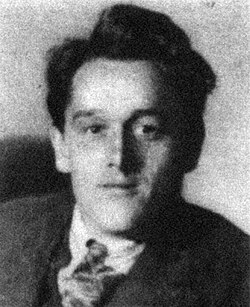
My Socialist Hall of Fame
During this chaotic era of vile rhetoric and manipulative tactics from our so-called bourgeois leaders, I am invigorated by the opportunity to reflect on Socialists, Revolutionaries, Philosophers, Guerrilla Leaders, Partisans, and Critical Theory titans, champions, and martyrs who paved the way for us—my own audacious “Socialism’s Hall of Fame.” These are my heroes and fore-bearers. Not all are perfect, or even fully admirable, but all contributed in some way to our future–either as icons to emulate, or as warnings to avoid in the future.
Introduction
Willi Münzenberg (1889–1940) was one of the most formidable and controversial figures of the early international communist movement—a revolutionary propagandist whose mastery of modern media made him the so-called “Red Millionaire.” As a key organizer of the Communist International’s cultural front, Münzenberg transformed propaganda into an instrument of mass persuasion, blending Marxist agitation with modern advertising techniques. His career illuminates the intersections of ideology, media, and political struggle in the tumultuous first half of the twentieth century.
Early Life and Political Formation
Born on August 14, 1889, in Erfurt, Germany, Münzenberg emerged from a working-class background that profoundly shaped his political consciousness. As a youth, he was active in the Sozialistische Arbeiter-Jugend (Socialist Workers’ Youth) and quickly distinguished himself as an effective organizer and orator. His early experiences with poverty and class inequality, together with the ferment of the pre-war socialist movement, oriented him toward radical politics. During the First World War, Münzenberg became a founding member of the anti-war socialist youth movement, collaborating with figures such as Karl Liebknecht and Rosa Luxemburg.
The Comintern and the “Red Millionaire”
After the 1917 Bolshevik Revolution, Münzenberg joined the Communist International (Comintern) and became one of its principal agents in Western Europe. Lenin personally entrusted him with organizing international relief for famine-stricken Soviet Russia, leading to the founding of the Internationale Arbeiter-Hilfe (International Workers’ Relief) in 1921. Ostensibly a humanitarian organization, the IAH functioned as a sophisticated political and cultural apparatus, raising funds and disseminating pro-Soviet narratives through mass campaigns, films, exhibitions, and illustrated journals.
Münzenberg’s innovation lay in his understanding of propaganda as a total social practice. Through enterprises such as the Welt am Abend newspaper, Arbeiter-Illustrierte-Zeitung (AIZ), and his extensive publishing empire, he helped create what historians later called the “Münzenberg Trust.” He deployed celebrity endorsements, photomontage, and emotionally charged imagery to make Marxist politics visually and emotionally accessible to a mass public. The AIZ’s collaborations with artists such as John Heartfield—whose anti-fascist photomontages became iconic—exemplified this fusion of aesthetics and revolutionary politics.
Anti-Fascism and Political Break with Moscow
During the 1930s, Münzenberg played a central role in organizing anti-fascist campaigns and cultural fronts, notably the International Committee for the Defense of the Victims of Fascism and the production of Der Kampf um die Welt. His media apparatus exposed atrocities in Nazi Germany and supported the Republican cause during the Spanish Civil War. However, his increasing disillusionment with Stalin’s repressive policies—especially after the Moscow Trials—led to his gradual estrangement from the Soviet leadership.
Expelled from the Communist Party of Germany (KPD) in 1938, Münzenberg sought to form an independent socialist-democratic bloc, warning against both fascism and Stalinism. His efforts to create a “third way” within the left were thwarted by the polarization of the era and his own political isolation.
Exile and Death
Following Hitler’s rise to power, Münzenberg fled Germany, living in exile in France and Switzerland. His final years were marked by paranoia, surveillance, and personal despair amid the crumbling of the Popular Front. In June 1940, after the Nazi invasion of France, Münzenberg was interned by French authorities and later found dead near Saint-Marcellin under mysterious circumstances—officially ruled a suicide, though many historians suspect assassination by Stalinist agents.
Legacy
Willi Münzenberg’s life epitomizes the contradictions of revolutionary modernity: the tension between emancipatory ideals and the authoritarian realities of twentieth-century communism. His pioneering use of media—posters, photography, cinema, and mass campaigns—anticipated the techniques of both Cold War propaganda and contemporary political communication. Scholars such as Sean McMeekin, György Lukács, and Patrice Pichon have variously described him as the “Lenin of the media age” and a precursor to modern public relations.
In recent decades, his legacy has been reassessed beyond Cold War polemics, highlighting his creative synthesis of Marxism and mass culture. Münzenberg’s trajectory from revolutionary organizer to dissident exile mirrors the broader tragedy of the European Left between the wars: a generation radicalized by capitalism’s crises, yet ensnared by the bureaucratic degeneration of the revolutionary project they helped to build.
Conclusion
Willi Münzenberg remains a seminal figure for historians of political communication and the global Left. His work demonstrates how ideology, culture, and media can become mutually constitutive forces in shaping revolutionary consciousness—and how, under repressive conditions, those same instruments can be turned inward, silencing the very voices they once amplified
Bibliography
• Babette Gross. Willi Münzenberg: Eine politische Biographie. Rowohlt, 1967.
• McMeekin, Sean. The Red Millionaire: A Political Biography of Willi Münzenberg, Moscow’s Secret Propaganda Tsar in the West. Yale University Press, 2003.
• Schubert, Gunter. Willi Münzenberg, der Pionier des revolutionären Massenmediums. Dietz Verlag, 1986.
• Pichon, Patrice. Willi Münzenberg: Le communiste impossible (1889–1940). Éditions L’Harmattan, 2005.
• Gough, Roger. Hitler and the Propaganda War: The Munich Crisis, 1938. Frank Cass, 1998.
• Koenen, Gerd. Traum und Trauma: Die Generation der Utopisten 1917–1968. Fischer Verlag, 2008.
• Lukács, György. History and Class Consciousness: Studies in Marxist Dialectics. MIT Press, 1971.
 Letters from Tomis
Leave a comment