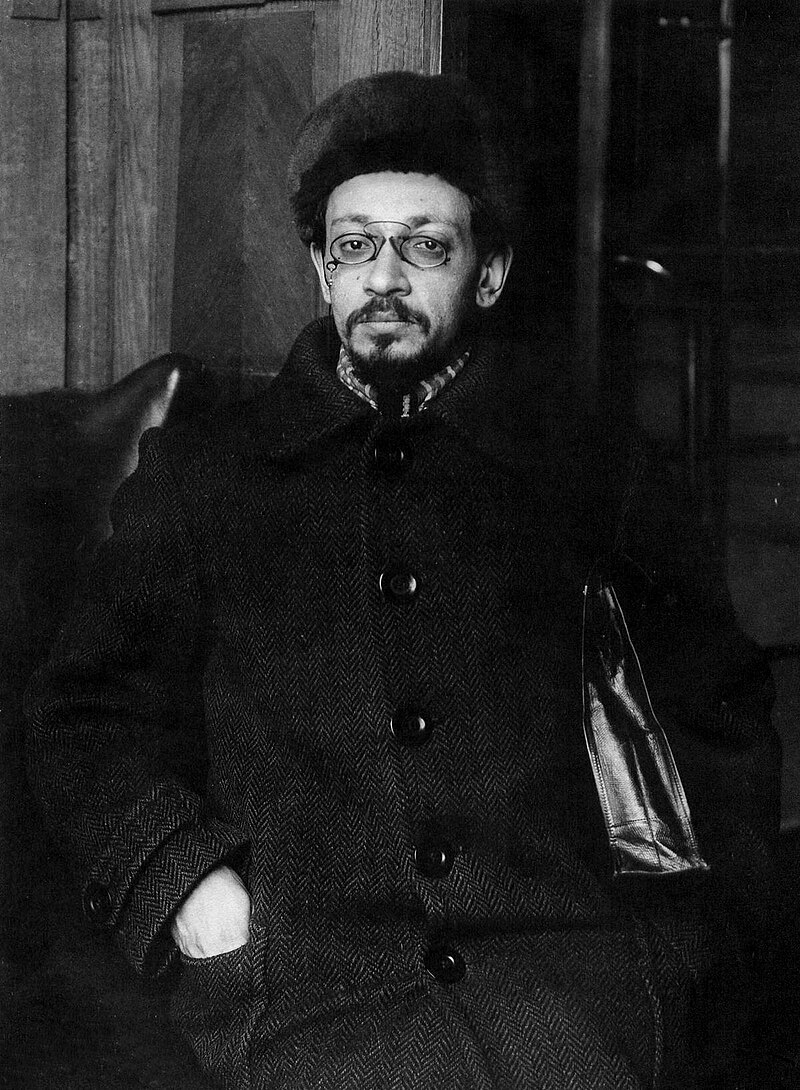
My Socialist Hall of Fame
During this chaotic era of vile rhetoric and manipulative tactics from our so-called bourgeois leaders, I am invigorated by the opportunity to reflect on Socialists, Revolutionaries, Philosophers, Guerrilla Leaders, Partisans, and Critical Theory titans, champions, and martyrs who paved the way for us—my own audacious “Socialism’s Hall of Fame.” These are my heroes and fore-bearers. Not all are perfect, or even fully admirable, but all contributed in some way to our future–either as icons to emulate, or as warnings to avoid in the future.
Introduction
Yakov Mikhailovich Sverdlov (1885–1919) occupies a pivotal yet often underexamined position in the history of the Russian Revolution and the early Soviet state. Revered by Bolshevik contemporaries as the consummate organizer, Sverdlov’s career illustrates the centrality of disciplined cadre work, party bureaucracy, and clandestine political coordination in the success of the Bolshevik seizure and consolidation of power. While his life was brief, his role as the first formal head of state of Soviet Russia and his contributions to the institutional architecture of the Communist Party made him a key architect of the new order.
Early Life and Revolutionary Formation (1885–1902)
Born on June 3, 1885, in Nizhny Novgorod to a Jewish artisan family, Sverdlov’s upbringing was marked by both economic precarity and early exposure to radical politics. His father, a skilled engraver, provided modest financial stability, but the family’s social environment—working-class and ethnically marginalized—offered fertile ground for revolutionary sentiment. By his mid-teens, Sverdlov had joined a socialist study circle, gravitating toward Marxist interpretations of class struggle at a time when the Russian Social Democratic Labor Party (RSDLP) was consolidating its influence among industrial workers.
Political Activism and Party Career in Exile (1902–1917)
Sverdlov joined the RSDLP in 1902 and quickly aligned with the Bolshevik faction following the 1903 split. His primary strengths lay in underground organization, clandestine printing, and logistical coordination—skills essential in the Tsarist police state. From 1902 to 1917, he spent more than half his life in prisons, penal colonies, or internal exile in Siberia. These years honed his political discipline and solidified his reputation as a reliable, incorruptible party worker. His exile in Turukhansk placed him alongside other key Bolsheviks, including Joseph Stalin, forging personal and political bonds that would prove influential after 1917.
Role in the 1917 Revolution
Following the February Revolution, Sverdlov returned to Petrograd and emerged almost immediately as one of the central administrators of Bolshevik strategy. Elected to the Bolshevik Central Committee in August 1917, he became the party’s chief organizer for the October insurrection. In the chaotic months that followed, Sverdlov’s ability to translate Lenin’s political line into actionable directives for local soviets and military units was crucial in securing Bolshevik control.
Chairmanship of the All-Russian Central Executive Committee (1917–1919)
In November 1917, Sverdlov became Chairman of the All-Russian Central Executive Committee (VTsIK), effectively serving as the Soviet Republic’s head of state. His tenure was marked by:
1. Consolidation of Soviet Power: Coordinating between central party organs and local soviets to enforce Bolshevik authority.
2. Institutionalization of the Party-State: Strengthening the role of the Communist Party as the leading force within the soviet system, codifying practices that blurred the lines between state administration and party discipline.
3. Role in the Fate of the Romanovs: Archival evidence and memoir literature indicate Sverdlov’s likely involvement in authorizing the execution of the former Tsar and his family in July 1918, though his precise role remains debated among historians.
Organizational Legacy
Sverdlov’s contribution to Bolshevik governance was primarily administrative and organizational rather than theoretical. He systematized the party’s membership records, improved communication between the center and periphery, and enforced Lenin’s emphasis on centralized discipline. His political method fused ideological commitment with bureaucratic efficiency—a model later expanded under Stalin’s General Secretaryship.
Death and Posthumous Reputation
Sverdlov died on March 16, 1919, reportedly from the Spanish flu, though some contemporaries suspected political foul play. His early death cut short a career that could have positioned him as a long-term rival to other leading Bolsheviks. The city of Ekaterinburg was renamed Sverdlovsk in his honor in 1924, a testament to his elevated status in Soviet historical memory. In the Stalin era, he was celebrated as an exemplar of party discipline and revolutionary dedication, though Western historiography often views him as emblematic of the bureaucratization of the revolutionary process.
Historical Assessment
Sverdlov’s significance lies less in original political theory than in his mastery of revolutionary administration. He bridged the gap between Lenin’s strategic vision and its practical implementation, making him indispensable in the formative years of Soviet power. His career underscores the Leninist conviction that the revolution required not only mass mobilization but also a disciplined, centralized apparatus capable of enforcing political will across a vast and fractured empire.
Bibliography
• Brovkin, Vladimir N. Behind the Front Lines of the Civil War: Political Parties and Social Movements in Russia, 1918–1922. Princeton University Press, 1994.
• Daniels, Robert V. Red October: The Bolshevik Revolution of 1917. Scribner, 1967.
• Harding, Neil. Lenin’s Political Thought, Volume 2: Theory and Practice in the Socialist Revolution. Macmillan, 1981.
• Keep, John L. H. The Russian Revolution: A Study in Mass Mobilization. W. W. Norton, 1976.
• McNeal, Robert H. Bride of the Revolution: Krupskaya and Lenin. Macmillan, 1973.
• Service, Robert. Lenin: A Biography. Harvard University Press, 2000.
• Shukman, Harold, ed. The Blackwell Encyclopedia of the Russian Revolution. Blackwell, 1988.
• Trotsky, Leon. History of the Russian Revolution. Translated by Max Eastman. Pathfinder Press, 2008 [1932].
• Wade, Rex A. The Russian Revolution, 1917. Cambridge University Press, 2005.
 Letters from Tomis
Leave a comment