My Socialist Hall of Fame
During this chaotic era of vile rhetoric and manipulative tactics from our so-called bourgeois leaders, I am invigorated by the opportunity to reflect on Socialists, Revolutionaries, Philosophers, Guerrilla Leaders, Partisans, and Critical Theory titans, champions, and martyrs who paved the way for us—my own audacious “Socialism’s Hall of Fame.” These are my heroes and fore-bearers. Not all are perfect, or even fully admirable, but all contributed in some way to our future–either as icons to emulate, or as warnings to avoid in the future.
Early Life and Education
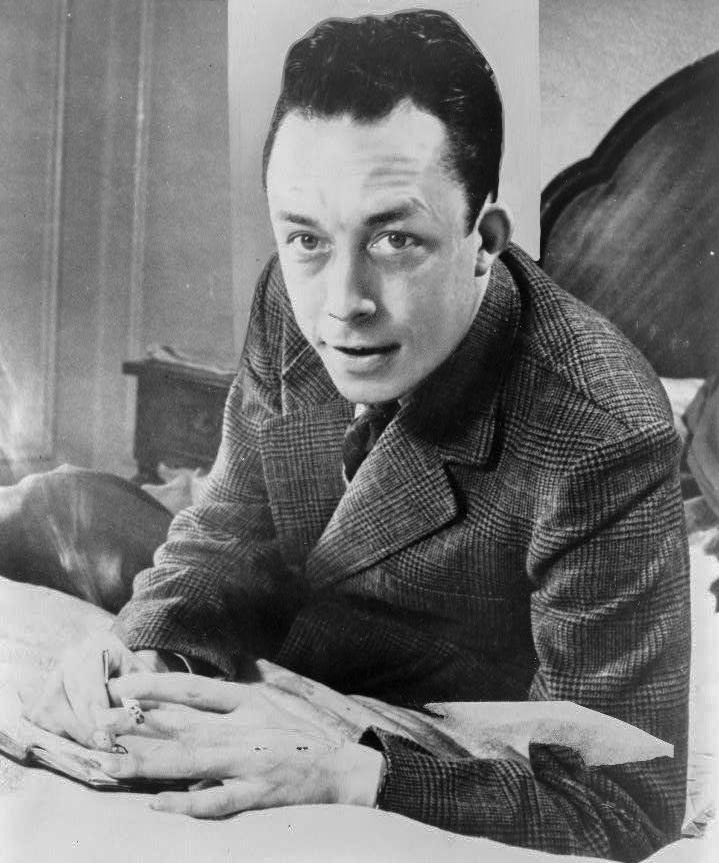
Albert Camus was born on November 7, 1913, in Mondovi, a small town in French colonial Algeria. His father, Lucien Camus, was killed in the early months of World War I at the Battle of the Marne, leaving Camus to be raised by his mother, Catherine Sintès, an illiterate cleaning woman of Spanish descent who was nearly deaf. Camus grew up in severe poverty in the working-class neighborhoods of Algiers, a formative experience that would deeply influence his ethical sensibilities and literary themes.
Despite financial hardship, Camus excelled academically, thanks to the encouragement of his elementary school teacher, Louis Germain. He later attended the University of Algiers, studying philosophy. Camus’s university career was interrupted by a bout of tuberculosis, an illness that would haunt him throughout his life and preclude a full academic career. Nevertheless, his engagement with philosophical questions intensified during this period, particularly through readings of classical and contemporary thinkers.
Early Career and Literary Beginnings
During the 1930s, Camus became involved with left-wing politics and the theater, both as an actor and a playwright. He joined the Communist Party in 1935, primarily out of anti-colonial conviction, but later broke with the party over its authoritarian tendencies and Stalinist orthodoxy, gravitating instead toward a liberal, humanist socialism. Camus’s early journalistic work for Alger Républicain revealed a deep commitment to social justice, exposing the exploitation and racism experienced by Algerian Arabs. His articles on poverty and colonial oppression attracted the ire of the French authorities and led to the paper’s closure.
His literary debut came with the essay L’Envers et l’Endroit (Betwixt and Between, 1937), followed by Noces (Nuptials, 1939), both meditations on the Mediterranean landscape and the sensual joys and tragedies of life. These early works introduced themes of alienation, revolt, and the search for meaning.
World War II, the Absurd, and The Stranger
With the outbreak of World War II, Camus relocated to France and worked for the resistance newspaper Combat under the Nazi occupation, contributing editorials that would later be collected as Actuelles. The war years proved decisive for Camus’s philosophical and literary output. In 1942, he published L’Étranger (The Stranger), a novel that epitomizes his theory of the absurd—the conflict between humanity’s search for inherent meaning and the indifferent universe.
That same year, Camus published Le Mythe de Sisyphe (The Myth of Sisyphus), a philosophical essay that articulates the absurd condition: the recognition that life is without ultimate meaning, and the subsequent need to confront this void without resorting to false hope or nihilism. Camus’s figure of Sisyphus, condemned to endlessly roll a boulder up a hill, is offered as an image of human resilience in the face of meaninglessness.
The Philosophy of Revolt and Political Engagement
After the war, Camus’s attention shifted from the absurd to the problem of revolt—how to resist injustice without embracing totalitarianism or the logic of murder. La Peste (The Plague, 1947) offered an allegorical narrative of resistance against evil, inspired by the occupation and the ethics of solidarity. In L’Homme révolté (The Rebel, 1951), Camus undertook a sweeping critique of revolutionary violence and ideological absolutism, tracing the descent of just revolt into terror, from the French Revolution through Stalinism and fascism.
This work brought Camus into direct conflict with Jean-Paul Sartre and the French Communist intellectuals. Camus’s humanist rejection of both nihilism and authoritarianism led him to be politically isolated, derided by some as apolitical or reactionary. Yet his defense of human rights, opposition to the death penalty, and advocacy for a non-violent form of socialism marked him as one of the most principled critics of mid-20th-century extremism.
Later Years and the Algerian War
The final decade of Camus’s life was marked by the crisis of the Algerian War for Independence (1954–1962). Camus’s identity as both French and Algerian left him anguished, torn between support for reform and calls for an end to colonialism, and personal loyalty to the pied-noir (European settler) community. He advocated a civil truce to spare civilian lives but was criticized by both French colonialists and Algerian nationalists.
Despite these political controversies, Camus continued to produce fiction, essays, and plays. La Chute (The Fall, 1956) is a searing existential confession, while L’Exil et le Royaume (Exile and the Kingdom, 1957) is a collection of short stories that return to Mediterranean themes. In 1957, Camus was awarded the Nobel Prize in Literature, recognized for illuminating “the problems of the human conscience in our time.”
Death and Legacy
Albert Camus died suddenly in a car accident on January 4, 1960, at the age of 46, cutting short a life of remarkable intellectual productivity. The posthumous publication of his unfinished novel Le Premier Homme (The First Man, 1994) revealed new dimensions of his identity and literary ambitions.
Camus remains a central figure in 20th-century philosophy and literature, frequently invoked as a spokesman for the philosophy of the absurd, for his ethical resistance to injustice, and for his insistence on the need for limits in both political and personal life. His works continue to resonate with readers for their lucidity, moral seriousness, and defense of human dignity in an indifferent world.
Selected Bibliography
Primary Works by Albert Camus
• Camus, Albert. L’Étranger [The Stranger]. Gallimard, 1942.
• Camus, Albert. Le Mythe de Sisyphe [The Myth of Sisyphus]. Gallimard, 1942.
• Camus, Albert. La Peste [The Plague]. Gallimard, 1947.
• Camus, Albert. L’Homme révolté [The Rebel]. Gallimard, 1951.
• Camus, Albert. La Chute [The Fall]. Gallimard, 1956.
• Camus, Albert. L’Exil et le Royaume [Exile and the Kingdom]. Gallimard, 1957.
• Camus, Albert. Le Premier Homme [The First Man]. Gallimard, 1994 (posthumous).
Selected Secondary Sources
• Aronson, Ronald. Camus and Sartre: The Story of a Friendship and the Quarrel that Ended It. University of Chicago Press, 2004.
• Foley, John. Albert Camus: From the Absurd to Revolt. Routledge, 2008.
• Lottman, Herbert R. Albert Camus: A Biography. George Braziller, 1979.
• Todd, Olivier. Albert Camus: A Life. Translated by Benjamin Ivry, Alfred A. Knopf, 1997.
• Sherman, David. Camus. Polity, 2009.
• Sprintzen, David. Camus: A Critical Examination. Temple University Press, 1988.
 Letters from Tomis
Leave a comment