My Socialist Hall of Fame
During this chaotic era of vile rhetoric and manipulative tactics from our so-called bourgeois leaders, I am invigorated by the opportunity to reflect on Socialists, Revolutionaries, Philosophers, Guerrilla Leaders, Partisans, and Critical Theory titans, champions, and martyrs who paved the way for us—my own audacious “Socialism’s Hall of Fame.” These are my heroes and fore-bearers. Not all are perfect, or even fully admirable, but all contributed in some way to our future–either as icons to emulate, or as warnings to avoid in the future.
Introduction
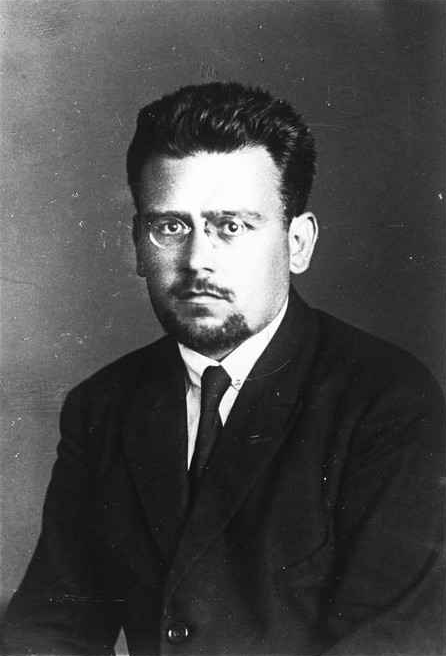
Amadeo Bordiga (1889–1970) stands as one of the most consequential yet controversial figures in the history of international communism. A founder of the Italian Communist Party and a pioneering theorist of left communism, Bordiga was a persistent critic of parliamentarism, bourgeois democracy, and later, Stalinism. His life and thought offer critical insights into the ideological fractures within Marxism in the 20th century. This biography traces his political trajectory, his theoretical contributions, and his enduring legacy in both Marxist and anti-Stalinist traditions.
Early Life and Political Formation
Amadeo Bordiga was born on June 13, 1889, in Resina (now Ercolano), near Naples, Italy. The son of a secular, middle-class family, he trained as an engineer at the University of Naples, where he was influenced by both scientific rationalism and revolutionary politics. His early exposure to the writings of Marx, Engels, and Kautsky, combined with the syndicalist and anti-clerical currents in southern Italy, shaped his opposition to reformism and his commitment to proletarian revolution.
By 1910, Bordiga had joined the Italian Socialist Party (PSI), rapidly aligning with its most intransigent left-wing elements. He founded the Karl Marx Circle in Naples in 1912 and wrote prolifically in journals such as Il Socialista and Avanguardia. From the beginning, Bordiga opposed the electoralism and gradualism of the PSI’s leadership and called for a strict adherence to Marxist principles.
World War I and the Crisis of Socialist Internationalism
Bordiga was a fierce opponent of World War I, criticizing both the “social patriots” who supported national war efforts and the center-left elements that wavered in their opposition. He was among the few Italian Marxists who, in the spirit of the Zimmerwald Left, maintained a consistent anti-imperialist stance. He regarded the war as an inter-imperialist conflict that must be transformed into a civil war by the working class.
During this period, Bordiga developed a central tenet of his later thought: the rejection of any tactical compromise with bourgeois institutions, including elections, alliances with reformist parties, or participation in coalition governments. His insistence on class autonomy and revolutionary purity would become hallmarks of left communism.
The Italian Communist Party and the Comintern (1921–1926)
Bordiga was instrumental in founding the Partito Comunista d’Italia (PCd’I) in January 1921 at the Livorno Congress, where the revolutionary left split from the PSI. The new party joined the Communist International, and Bordiga emerged as a central figure in the European communist movement, working closely with the Bolsheviks in the early years of the Comintern.
As the first secretary of the PCd’I, Bordiga emphasized a programmatic approach to revolution, focusing on building the party as a disciplined vanguard rather than a mass electoral organization. He championed the dictatorship of the proletariat as a transitional state to abolish classes and saw the role of the party as guiding this process without compromise.
However, his intransigence put him at odds with Lenin, particularly over the issue of participating in parliamentary elections and trade unions. Lenin criticized Bordiga in “Left-Wing” Communism: An Infantile Disorder (1920) but nonetheless respected his commitment to revolution.
After Lenin’s death, Bordiga became increasingly critical of the growing bureaucratization of the Comintern under Stalin. He opposed the “Bolshevization” of the communist parties, which subordinated them to Moscow’s political directives, and accused the Soviet Union of betraying the internationalist essence of Marxism.
In 1930, Bordiga was expelled from the leadership of the PCd’I and soon arrested by Mussolini’s regime. Though released after a brief imprisonment, he was politically marginalized for the remainder of the fascist period.
Later Years and Theoretical Contributions (1945–1970)
Following World War II and the fall of fascism, Bordiga briefly returned to political life but refused to rejoin the PCI, which had become a mass party under Palmiro Togliatti with a reformist orientation. Instead, he gravitated toward the International Communist Party (ICP), founded by his former comrades. Though he did not publicly lead the ICP, Bordiga was its principal theorist, publishing anonymously or under pseudonyms in its journal Il Programma Comunista.
In this period, Bordiga elaborated several significant theoretical contributions:
1. The Party-Program Concept: For Bordiga, the party was not a mass organization or electoral apparatus, but the organ of historical consciousness, the repository of invariant Marxist principles. He argued that the revolutionary party prefigures the future communist society by maintaining the correct program regardless of historical setbacks.
2. Critique of “Real Socialism”: Bordiga was among the earliest Marxists to denounce the USSR not as a workers’ state, but as a form of state capitalism. He contended that the social relations in the Soviet Union retained capitalist characteristics, particularly in the exploitation of labor and the existence of commodity production.
3. Anti-Historicist Marxism: Rejecting historicist readings of Marxism (as found in Gramsci or the Frankfurt School), Bordiga insisted on a scientific and determinist interpretation of Marxist theory. He viewed revolution not as a moral imperative or cultural project but as the inevitable result of objective contradictions within capitalism.
4. Communism as a Social Formation: Bordiga reasserted that communism was not merely the abolition of private property, but the end of commodity production, wage labor, and the state itself. He viewed the dictatorship of the proletariat as a transitional necessity to abolish all forms of class rule.
Legacy and Relevance
Bordiga died in Formia, Italy, in 1970, largely ignored by the official left. Yet his legacy persisted through the bordigist current, which continues to influence left communist organizations across Europe and Latin America. His uncompromising stance against both reformism and Stalinism has earned him renewed interest among scholars and militants seeking alternatives to the failures of 20th-century socialism.
While critics accuse Bordiga of sectarianism and political irrelevance, his work remains a vital touchstone for debates about party organization, revolutionary theory, and the nature of socialism. In an era marked by ecological catastrophe, imperialist war, and renewed class conflict, Bordiga’s insistence on the revolutionary rupture and the primacy of theory retains its provocative force.
Conclusion
Amadeo Bordiga’s life embodied the paradoxes of 20th-century communism: revolutionary zeal alongside sectarian rigidity, theoretical brilliance amid organizational marginality. His contribution to Marxist theory and his unyielding critique of Stalinism make him an indispensable figure in the history of the revolutionary left. For those seeking to reimagine communism in the 21st century, Bordiga offers a powerful—if austere—vision of what uncompromising proletarian revolution entails.
Selected Bibliography
Primary Works by Amadeo Bordiga
• Bordiga, Amadeo. Sul filo del tempo (Collected writings, multiple volumes). Florence: Il Programma Comunista, various years.
• Bordiga, Amadeo. Dialogue with Stalin. Translated and published by the International Communist Party.
• Bordiga, Amadeo. “Auschwitz, or the Great Alibi.” Il Programma Comunista, 1960.
• Bordiga, Amadeo. Property and Capital. Translated by the International Communist Party.
Secondary Sources
• Camatte, Jacques. Bordiga et la passion du communisme. Paris: Editions Spartacus, 1972.
• Damen, Onorato. Gramsci: Between Marxism and Idealism. London: Red Notes, 1979.
• Rees, Gareth. “Amadeo Bordiga and the Origins of Left Communism.” International Socialism 2:33 (1986): 47–76.
• Holmes, John Cleaver. The Thought of Amadeo Bordiga: Left Communism and the Italian Communist Party. PhD Dissertation, University of London, 1992.
• Gorman, John. “Bordiga and the Fate of Left Communism.” Historical Materialism 18.1 (2010): 65–96.
• International Communist Party. The Bordiga Method. Milan: Il Partito Comunista, 1996.
 Letters from Tomis
Leave a comment