Introduction
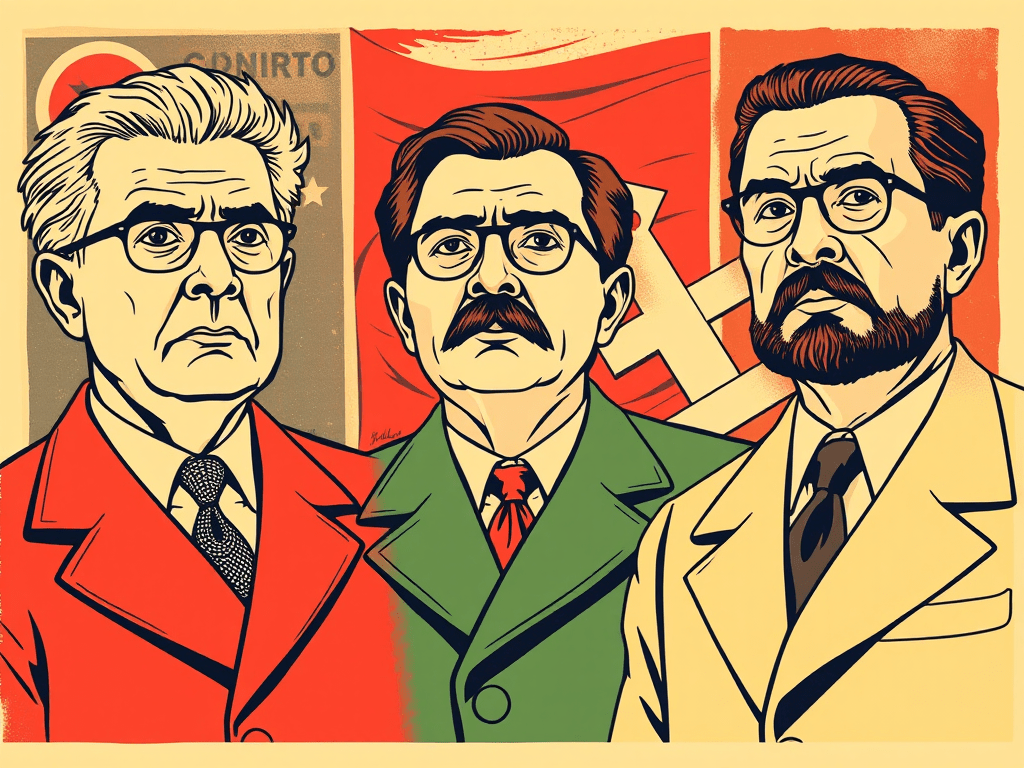
The Italian Communist Party (Partito Comunista Italiano, PCI) was one of the most influential communist parties in Western Europe, spanning from its foundation in 1921 to its self-dissolution in 1991. Founded by left-wing dissidents of the Socialist Party amid the turbulent post-World War I period, the PCI would grow into a mass party that played a major role in Italian politics and society. Over seventy years, it evolved from a revolutionary Leninist cadre into a reform-oriented, democratic socialist party, adapting its ideology in response to domestic challenges and international communist currents. Key figures such as Antonio Gramsci, Palmiro Togliatti, and Enrico Berlinguer shaped the party’s direction at crucial junctures – from Gramsci’s theoretical contributions on cultural hegemony, to Togliatti’s post-war strategic turn, to Berlinguer’s embrace of Eurocommunism. A central theme in this history is the tension between Stalinist and non-Stalinist currents within the PCI, which influenced internal debates and external policy at every stage. This essay traces the full timeline of the PCI’s development, examining its ideological transformations, its role in Italian political life, and the historiographical debates surrounding its legacy.
Foundation and Early Years (1921–1926)
The PCI was born in January 1921 in the Tuscan city of Livorno, as the Communist Party of Italy (Partito Comunista d’Italia, PCd’I). It emerged from a split in the Italian Socialist Party (PSI) when the socialist leadership refused to expel its reformist wing as demanded by the Communist International (Comintern). At the PSI’s Livorno congress, the communist faction led by Amadeo Bordiga, Antonio Gramsci, and Nicola Bombacci walked out to found the new Communist Party. This marked the Italian far-left’s commitment to the Bolshevik model and the revolutionary path espoused by Lenin’s Third International. In its infancy, the PCd’I was factionalized between hardline left communists like Bordiga – who opposed participation in elections and trade union compromises – and more moderate Marxists like Gramsci who favored a broad alliance of the working class. These early factional conflicts were soon overtaken by the imperatives of Comintern “Bolshevisation,” which enforced strict discipline and Stalinist orthodoxy on member parties. By 1924–1926, Moscow’s influence had marginalized Bordiga’s leadership: through clandestine maneuvers, Gramsci’s group (aligned with Stalin’s line) assumed control of the party, while Bordiga’s left wing was sidelined and eventually expelled (Bordiga himself was accused of Trotskyism and expelled in 1930).
The ascendant Gramsci-Togliatti faction brought the Italian party firmly under Comintern influence, but also laid groundwork for a distinctive approach. Antonio Gramsci, who became party secretary in 1924, was a Marxist thinker who emphasized the role of culture and ideology – his concept of “cultural hegemony” argued that the working class must establish intellectual and moral leadership in society before taking power. Gramsci’s ideas, later elaborated in his Prison Notebooks written during his incarceration, provided an alternative to the crude economic determinism of Stalinism. However, Gramsci’s leadership was cut short by repression: in November 1926, the Fascist regime of Benito Mussolini outlawed the Communist Party and arrested Gramsci and other leaders. Gramsci remained imprisoned until his death in 1937, becoming a martyr for Italian communists. Meanwhile, Palmiro Togliatti and others continued to lead the party from exile, maintaining a precarious existence under Comintern guidance through the late 1920s and 1930s.
Under Fascism and World War II (1926–1945)
Outlawed by Mussolini’s dictatorship, the PCI (still officially called PCd’I until 1943) operated underground for nearly two decades. Despite brutal repression – communists comprised a large majority of political prisoners under the Fascist regime – the party managed to survive and even expand its clandestine networks. Communist militants secretly distributed propaganda, organized workers, and kept alive an anti-fascist resistance spirit even as their leaders were in jail or exile. During the 1930s, Togliatti (alias “Ercoli”), who represented the party in Moscow, ensured the PCI remained loyal to Stalin’s line. This meant that the Italian communists, like their counterparts elsewhere, followed the twists of Soviet policy, from the Third Period ultra-leftism to the Popular Front against fascism after 1935. Notably, the Italian party participated in the Spanish Civil War (1936–39) by sending volunteers to fight Franco, and it denounced Italy’s aggressive war in Ethiopia in 1935. Such actions burnished the PCI’s anti-fascist credentials.
When World War II engulfed Italy and the Fascist regime started to crumble, the PCI emerged as a leading force in the Resistance (Resistenza). After Mussolini’s fall in 1943, Italian communists helped organize partisan guerrilla units in coordination with other anti-fascist parties. The party’s long experience in clandestine organization proved invaluable in the fight against Nazi occupation and the Italian Social Republic. Communist partisans played a major role in liberating northern Italian cities in 1945. During these years, the party also underwent a significant rebranding: in May 1943, at Stalin’s behest the Comintern was dissolved, and the exiled leadership of the PCd’I formally changed its name to Partito Comunista Italiano (PCI). This renaming symbolized a shift to a more national focus – acknowledging that the Italian communists would pursue socialism within an Italian context, even as they remained part of the international communist movement. By the war’s end, the PCI had earned widespread respect as a patriotic anti-fascist force, boosting its popularity among the Italian populace.
Postwar Politics and the Togliatti Era (1944–1960s)
In the immediate post-World War II years, Palmiro Togliatti returned to Italy from exile and guided the PCI into the political mainstream. Togliatti’s Svolta di Salerno (“Salerno Turn”) in 1944 was a strategic masterstroke: he renounced any immediate revolutionary seizure of power and agreed to join a broad national unity government with liberal, democratic, and even monarchist forces in order to rebuild Italy. This decision reflected both pragmatic necessity – Italy was war-torn and the Western Allies were present – and Stalin’s geopolitical calculations, as the USSR had effectively agreed that Italy would remain in the Western sphere. The PCI thus participated in the governments of 1944–47, with Togliatti even serving as Minister of Justice, where he oversaw a general amnesty helping national reconciliation. During this period, the party committed itself to a peaceful and national road to socialism: implementing social change through democratic means rather than armed revolution. This strategy, later dubbed the “Italian road to socialism,” became the leitmotif of PCI policy. It meant respecting the Italian Constitution and working within Italy’s parliamentary system, a stance that distinguished the PCI from more insurrectionary communist movements elsewhere.
However, the dawn of the Cold War soon constrained the PCI’s political prospects. In May 1947, under pressure from the United States amid rising East-West tensions, Prime Minister Alcide De Gasperi expelled the communists (and their socialist allies) from the governing coalition. From that point on, the PCI was shut out of national government, as the U.S. and conservative Italian forces were determined to prevent a communist rise to power. The pivotal 1948 general election saw the U.S.-backed Christian Democrats defeat the leftist Popular Front (an alliance of PCI and PSI), in part due to massive anti-communist campaigning by the Catholic Church and foreign influence. In the wake of this loss, the PCI settled into its role as the primary opposition party in Parliament, a position it would hold for decades (aside from occasional external support to center-left governments). Despite exclusion from central power, the PCI’s consistent success at the polls – usually securing around a quarter of the national vote – allowed it to wield significant influence on Italian politics and policy from the opposition. The party also entrenched itself at the local level: it won control of many municipalities and regions, especially in the “Red Belt” of central Italy (Emilia-Romagna, Tuscany, Umbria, Marche), where it governed effectively for years. This local governance, often marked by efficient administration and social reforms, showcased the PCI’s ability to exercise power responsibly even while excluded nationally.
By the early 1950s, the PCI had become a true mass party. It boasted hundreds of thousands of members organized into local sections, with dense networks of affiliated organizations – trade unions (notably the CGIL labor confederation), peasant cooperatives, youth and women’s leagues, cultural clubs, sports associations, and its own newspapers (the daily L’Unità). Such extensive social roots made the PCI more than just an electoral machine: it was a subculture and “parallel society” for millions of Italians, offering them not only political guidance but also community services and a sense of identity. The party officially adopted a reform-oriented, non-violent approach to change, rejecting armed struggle in contrast to the early revolutionary rhetoric. Nevertheless, the shadow of Stalinism was present in the PCI during these years. Internally, the party operated under democratic centralism – debates occurred within the leadership, but outwardly a united line was presented, and dissidents were expected to conform or leave. Togliatti remained a loyal ally of the Soviet Union in international affairs; the PCI joined the Cominform (Communist Information Bureau) in 1947, aligning with Stalin’s policies in the early Cold War. For example, during the Korean War and other East-West conflicts, the PCI toed the Moscow line in propaganda. This Stalinist influence was also evident in the personality cult around leaders and a sometimes uncritical stance toward the USSR’s domestic and foreign conduct (at least until the mid-1950s).
A turning point came in 1956 with Nikita Khrushchev’s “Secret Speech” denouncing Stalin’s crimes, followed by the Soviet invasion of Hungary later that year. These events sent shockwaves through communist parties worldwide, and Italy was no exception. Many Italian leftist intellectuals were horrified by the repression in Hungary; some resigned from the PCI in protest, and the party’s image among progressive circles was tarnished. Palmiro Togliatti, however, strove to navigate a middle course. While remaining in the Soviet camp publicly (the PCI’s initial reaction to Hungary was equivocal, stressing the danger of counterrevolution), Togliatti also took steps to distance the party from Stalinist orthodoxy. He advanced the concept of “polycentrism” – the idea that each national communist party could follow its own path suited to its country’s conditions, rather than taking orders from a single center in Moscow. In practice, this was an effort to dissociate the PCI partially from the USSR’s hegemony without openly breaking unity. Togliatti’s proposal, published in 1956, signaled that the PCI would pursue an “Italian road to socialism” distinct from Soviet models. This move helped the PCI retain some of its credibility among the Italian public by showing independence. Nonetheless, it also created internal strains. Hardliners like Pietro Secchia (who had been a leader in the armed Resistance and leaned toward a more orthodox pro-Soviet stance) were uneasy with de-Stalinization, whereas others like Pietro Ingrao (a leader of a more democratic and intellectual wing) pushed for further openness and renewal in Marxist theory. After Togliatti’s death in 1964, these latent tensions nearly erupted: the party almost split into “Russian” vs. “Italian” wings, as leaders differed over how far to continue the autonomous line Togliatti had begun. Ultimately, under the interim leadership of Luigi Longo (1964–1972), the PCI maintained unity by balancing its factions – showing loyalty to the Soviet Union internationally while evolving toward more democratic socialism domestically. This balancing act set the stage for the PCI’s dramatic transformations in the decades to follow.
The Road to Eurocommunism: Berlinguer’s Leadership (1970s)
By the late 1960s and early 1970s, Italian society was roiled by social conflicts and a new wave of activism. Worker strikes and student protests (the Sessantotto movement of 1968 and the hot autumn of 1969) shook the status quo, and radical left-wing groups outside the PCI (such as Lotta Continua and Potere Operaio) gained traction. Against this backdrop, the PCI continued to champion a peaceful, incremental path to socialism, but now under a new generation of leaders. In 1972, Enrico Berlinguer became General Secretary, ushering in what would be the party’s most innovative and internationally watched phase. Berlinguer, who had come of age in the Resistance and risen through the party ranks, was a committed Marxist but also a realist about Italy’s geopolitical constraints. He is best known for formulating Eurocommunism – a trend in the 1970s where Western European communist parties (notably in Italy, France, and Spain) asserted their independence from Moscow and their commitment to democratic pluralism. Under Berlinguer, the PCI formally removed the doctrine of “dictatorship of the proletariat” and Marxism-Leninism from its party statutes, recasting its ideology in favor of democratic socialism. The party still identified as communist, but it explicitly rejected the repressive and undemocratic practices associated with Soviet-style regimes, seeking instead a socialism compatible with political freedom and national traditions.
Berlinguer’s most famous political initiative was the “Historic Compromise” (Compromesso Storico) proposed in 1973. This strategy called for a broad governing alliance between the PCI and its longtime rival, the Christian Democracy (DC) – essentially a cross-class coalition of communists and Catholics to stabilize Italy. The backdrop for this idea was Italy’s turmoil: economic crises, terrorist violence (from the far-left Red Brigades and far-right neofascists), and fears of a Chile-style coup (after General Pinochet’s 1973 coup, Berlinguer worried Italy’s democracy could be similarly at risk). Berlinguer argued that to defend democracy and advance progressive reforms, the PCI should be willing to collaborate with the moderate Catholic DC in a power-sharing arrangement. This was a bold break with the traditional Marxist idea of never partnering with bourgeois parties. While the proposal was met with skepticism from both the DC’s right wing and the PCI’s leftist base, circumstances pushed it forward. In the 1976 elections the PCI achieved its best result ever – 34.4% of the vote, becoming nearly as large as the DC. Although the PCI did not enter government outright, a form of the historic compromise played out from 1976 to 1979: the PCI supported (or abstained from opposing) several DC-led minority governments in Parliament, in exchange for consultative influence on policy. During these years, Italy was effectively governed with communist consent, and Berlinguer was even given a formal advisory role to the prime minister. This coalition short of full coalition showed the PCI’s willingness to act responsibly and distance itself from any revolutionary intent, but it also strained the party’s rank-and-file morale. Many communist militants were unhappy propping up a government still dominated by the Christian Democrats, and the arrangement yielded limited substantive change before it unraveled.
Internationally, Berlinguer’s PCI stood at the forefront of Eurocommunism, garnering attention and respect. In 1977, Berlinguer, along with Spain’s Santiago Carrillo and France’s Georges Marchais, held a conference in Madrid to declare the principles of Eurocommunism – affirming each party’s autonomy from the Soviet Communist Party and commitment to multi-party democracy and human rights. The PCI’s critique of the USSR became increasingly frank: the party condemned the 1968 Warsaw Pact invasion of Czechoslovakia (the PCI had already voiced dissent at the time of the invasion, a rarity among communist parties) and in the early 1980s it also criticized the Soviet invasion of Afghanistan. In a dramatic move, Berlinguer stated in a 1976 interview that he felt “safer under NATO’s umbrella,” signaling that a PCI in government would not pull Italy out of the Western alliance. This was a shocking admission for a communist leader, but it was meant to reassure Italians and foreign partners that the PCI had no intention of aligning Italy with the Soviet bloc. By implicitly accepting Italy’s NATO membership and advocating “socialism in liberty,” Berlinguer positioned the PCI as a reformist, patriotic force – a stark contrast to Stalinist parties. These stances endeared him to many Italians beyond the party’s traditional base, especially younger voters who saw in the PCI a principled alternative to the corruption of the ruling parties.
Despite these advances, the Historic Compromise strategy ultimately collapsed. The watershed moment was the 1978 kidnapping and murder of Aldo Moro, the Christian Democratic leader who had been negotiating a possible power-sharing with the PCI, by the Red Brigades terrorists. Moro’s death extinguished the prospect of a full PCI-DC governmental alliance. By 1979, the Christian Democrats moved rightward and ended the accommodation with communists. The PCI returned to opposition, and the climate of the late 1970s – with terrorism and economic stagflation – gave way to a more conservative turn in the 1980s. Nonetheless, under Berlinguer’s leadership the PCI had achieved unprecedented legitimacy. In 1981, after the Polish communist government’s suppression of the Solidarity movement, Berlinguer famously declared the “propulsive force of the October Revolution” exhausted, effectively acknowledging that the Soviet revolutionary model had run out of steam. Berlinguer’s charisma and integrity (he spoke out strongly against corruption, championing a “moral issue” in Italian politics) made him an iconic figure of the Italian left until his sudden death in 1984. By then, the PCI had fully transformed into a de facto eurocommunist, democratic socialist party – in ideology if not yet in name.
Throughout the 1960s and 1970s, the tension between Stalinist and reformist currents within the PCI played out in subtle ways. The party maintained internal discipline; open factionalism was not permitted. Yet it was understood that there were diverse tendencies. For example, Pietro Ingrao represented a left-wing current pushing for more radical economic changes and internal party democracy, while Giorgio Amendola and later Giorgio Napolitano led a more moderate wing (sometimes called “miglioristi,” or “reformists”) favoring pragmatic accommodation with capitalism and the West. Hardliners like Armando Cossutta continued to express sympathies with the Soviet Union’s positions. However, even the PCI’s hardliners were mild compared to Eastern Bloc communists – they accepted Italy’s pluralism and did not advocate a one-party dictatorship. Indeed, one remarkable aspect of the PCI was that, despite containing these disparate views – from “Stalinist” elements to more democratic socialist ones – the party stayed united and allowed a degree of pluralism informally. As historian David Broder notes, leaders like Secchia (on the orthodox side) and Ingrao (on the liberalizing side) had no formal factions, but the mere existence of such internal diversity made the PCI quite distinct from other communist parties where dissent was silenced. This limited pluralism, sometimes dubbed “Italian-style” communism, would become a model that inspired reform communists elsewhere.
Decline and Dissolution (1980s–1991)
In the 1980s, the PCI faced new challenges that ultimately led to its demise. The party’s forward momentum stalled after Berlinguer’s passing in 1984. His successors – Alessandro Natta (1984–88) and then Achille Occhetto (1988–91) – inherited a party that was highly respected but also stagnating electorally and confronting a radically changing world. Domestically, the PCI was rivaled on the left by a resurgent Italian Socialist Party (PSI) under Bettino Craxi, who in the 1980s adopted a modernizing, anti-communist social-democratic platform that appealed to some left-leaning voters and made the PSI a junior partner in government. The PCI’s vote share, while still substantial, began a gradual decline from its 1970s peak. The Italian economy was changing as well: deindustrialization and a shift to tertiary sectors eroded the traditional working-class base of the party. Moreover, the late 1970s had seen a severe crackdown on violent left-wing extremism and a general conservative drift, which thinned the broader milieu of revolutionary activism that had once fed the PCI’s ranks. By the late 1980s, many of the PCI’s venerable leaders from the Resistance generation were retiring or passing away (for instance, historic figures like Giancarlo Pajetta, Pietro Secchia, and others), and a new generation had to decide the party’s future.
Internationally, the winds of change were blowing. Mikhail Gorbachev’s ascent in the Soviet Union in 1985 and his reforms (glasnost and perestroika) initially were welcomed by the PCI as confirmation of what the Italians had long argued – that socialism must embrace democracy. Indeed, Berlinguer in his final years had built a cordial relationship with Gorbachev, hoping that Eastern Bloc regimes could evolve in a democratic direction. However, the reform process in the East quickly escalated beyond what anyone anticipated. By 1989, communist governments were collapsing across Eastern Europe, and the Berlin Wall fell, symbolically ending the Cold War divide. These events had a profound impact on the PCI. On one hand, the discrediting of authoritarian communist regimes vindicated the PCI’s democratic socialist stance; on the other hand, the very premise of a communist party began to seem obsolete in a Europe rapidly moving beyond the Cold War ideological contest. The Soviet Union itself was on the verge of dissolution (which occurred in 1991). For the PCI’s leadership under Occhetto, this raised the question: could the party survive if it clung to the communist name and identity, or was it necessary to transform completely?
Achille Occhetto answered that question with the dramatic “Bolognina turn” (Svolta della Bolognina) announced in November 1989, just after the fall of the Berlin Wall. Occhetto proposed that the PCI dissolve and refound itself as a new, broader left-wing party, shedding the symbols of communism which he felt were now hindrances. After intense internal debate throughout 1990, a congress was held in early 1991 where a majority of delegates voted to disband the PCI. Thus, in February 1991 the Italian Communist Party, at 70 years old, voted itself out of existence. The bulk of its membership and leadership formed a new party called the Democratic Party of the Left (Partito Democratico della Sinistra, PDS), explicitly social-democratic in orientation. The PDS joined the Socialist International and embraced a reformist center-left identity, symbolized by replacing the old hammer-and-sickle emblem with a red rose. However, a significant minority of PCI members refused to accept this dissolution. These dissidents, led by hardliners like Armando Cossutta and others who wanted to preserve the communist tradition, split off to create the Communist Refoundation Party (Partito della Rifondazione Comunista, PRC). The PRC aimed to continue the Marxist-Leninist legacy in a new form, albeit never achieving the scale of the old PCI.
The dissolution of the PCI was a watershed moment in European politics: the largest communist party in the West voluntarily disbanded, acknowledging that its historical cycle had come to an end. Contemporary observers were astonished that a party with such deep roots and loyal following would dissolve without a fight. Why did it happen? Historians offer several explanations. One view is that by the late 1980s the PCI had essentially become a social-democratic party in practice, so a formal break with communism was a logical step to gain wider legitimacy and coalition potential in post-Cold War Italy. Occhetto and the majority believed that clinging to the communist identity would isolate the left, whereas a renewed party could potentially lead the country. Another perspective highlights the exhaustion of the PCI’s internal synthesis: for decades, the party had coherently united reformists, revolutionaries, and loyal Soviet-aligned cadres in one organization. By 1991, that unity unraveled – the reformist wing broke away (via the PDS) from the more orthodox wing (PRC), meaning the internal balancing act could no longer hold. From this angle, the PCI dissolved when its internal tendencies, once held in creative tension, finally pulled apart. There is also the argument of generational change and the loss of the PCI’s social base: industrial workers and trade unionists, once the backbone of the party, had diminished as a force, and the younger generation was less attached to communist identity, making the transformation easier and perhaps inevitable. In short, the end of the Cold War removed the external rationale for the PCI’s existence, while internal and societal changes eroded the foundations that had sustained it.
Legacy and Historiographical Perspectives
The legacy of the PCI is a subject of ongoing debate among scholars and in Italian public discourse. On one hand, the PCI is remembered as a pillar of Italian democracy and a champion of social justice; on the other, its ties to the Soviet Union and its Marxist-Leninist origins attract criticism. Recent historiography tends to contextualize the PCI within both national and international frameworks. Historians such as Silvio Pons emphasize a transnational perspective: viewing the PCI’s trajectory as part of the global history of communism, including its connections to Moscow and influence in the broader communist world. This approach highlights how the PCI, though never in power nationally, was an integral node in a worldwide network of communist movements – an aspect sometimes overlooked in purely domestic histories.
Domestically, the PCI’s impact on Italian society and politics was profound. The party helped institutionalize the Italian Republic after World War II, by firmly committing the working class to the democratic process rather than revolutionary destabilization. Many historians credit Togliatti’s strategy with helping to “constitutionalize” the left, thereby safeguarding Italy from civil conflict in the late 1940s. Moreover, PCI-led local administrations, especially in central Italy, are often praised for their good governance and modernization efforts – sometimes referred to as “red regions” success stories. Culturally, the PCI fostered a rich intellectual life: it sponsored publishing houses, think-tanks (like the Gramsci Institute), and journals that engaged broader debates on literature, philosophy, and art. The influence of Gramsci’s thought, disseminated posthumously by PCI intellectuals, extended far beyond Italy; terms like “hegemony” and the importance of civil society in social change became staples in Western Marxist and social science discourse. In this sense, the PCI’s legacy includes significant theoretical contributions to leftist thought that continue to be studied worldwide.
At the same time, critical perspectives on the PCI’s legacy point to its undemocratic tendencies and foreign allegiances during parts of its history. Until the 1970s, the PCI accepted funding from Moscow and generally followed Soviet foreign policy cues (for example, opposing NATO, supporting the USSR’s international positions) – behavior that opponents say compromised Italy’s sovereignty. Archival revelations in the 1990s (such as the Mitrokhin Archive) confirmed that the Soviet Union provided clandestine financial support to the PCI for decades, feeding a narrative among critics that the PCI was a “foreign agent” in the Cold War. Additionally, within the party, democratic centralism meant that dissent was often suppressed; notable intellectuals and activists were expelled when they deviated from the line (e.g. the Manifesto group in 1969, who were ousted after criticizing the Soviet invasion of Czechoslovakia). Some historians argue the PCI was too slow to break with Stalinism – noting that it took until the late 1970s for the PCI to fully renounce the Soviet model, long after revelations of Stalin’s terror and the brutal crushing of the Hungarian and Czech uprisings. This critique suggests the PCI’s leadership prioritized party unity and loyalty over moral consistency during critical moments (like 1956 and 1968). The counterargument from other scholars is that the PCI’s gradual evolution was necessary to maintain credibility with its base and avoid schism; a too-sudden rejection of the USSR might have shattered the party earlier, as happened with smaller communist parties.
The end of the PCI has itself been a topic of historiographical debate. Some commentators view Occhetto’s 1991 dissolution as a courageous, forward-looking reform that allowed the Italian left to re-align with the new era (indeed, successors of the PCI would eventually enter government in the 1990s and 2000s, something the PCI never did). Others see it as a tragic self-liquidation: the disappearance of a storied party that had embodied the hopes of generations. As one analysis puts it, the PCI’s dissolution came when the balance between its internal tendencies – revolutionary, reformist, and communist-identitarian – finally broke, with the reformists taking charge and abandoning the old banner. The result, critics claim, was the loss of a distinctive political culture; the successor parties, in embracing social democracy or centrist politics, allegedly jettisoned the deep working-class connections and ideals that made the PCI unique. In the decades since, the Italian left has been fragmented and has never regained the strength or popular trust that the PCI once enjoyed, leading some to question if dismantling the PCI was an error in hindsight.
In contemporary Italy, the PCI’s memory is somewhat polarizing. Many former communists and left-leaning citizens hold a nostalgic pride for the PCI’s achievements – its role in the Resistance, its integrity compared to the corrupt ruling parties (especially during the tangentopoli bribery scandals that exploded just after the PCI’s exit), and figures like Berlinguer who are regarded as honest and principled statesmen. In 2021, various events and publications marked the centenary of the PCI’s founding, reflecting on its historical role. Conversely, anti-communist narratives tend to lump the PCI with other communist parties as totalitarian threats, despite its Italian democratic evolution. The symbols of the PCI (the hammer and sickle flag) and its history are sometimes controversially invoked in current politics, indicating that the historical assessment of the PCI remains intertwined with ideological viewpoints.
Conclusion
From its birth in the fervor of 1921 to its voluntary dissolution in 1991, the Italian Communist Party traversed a remarkable political and ideological journey. In its early years, the PCI was a revolutionary sect facing fascist persecution, with leaders like Gramsci formulating ideas that would resonate far into the future. During the postwar decades under Togliatti, it transformed into a mass party committed to Italy’s democratic framework while internally grappling with the legacy of Stalinism. In the 1970s, under Berlinguer’s guidance, the PCI became a vanguard of democratic communism in the West, attempting to chart a “third way” between Soviet authoritarianism and capitalist conservatism. Ultimately, the end of the Cold War removed the bipolar context in which the PCI had thrived, leading the party to reinvent itself and close the communist chapter of its history.
The distinctions between Stalinist and non-Stalinist currents within the PCI were central to its evolution: at various times the party managed to contain dogmatists and reformers, revolutionaries and parliamentarians, creating a unique synthesis that allowed it to adapt and survive. That delicate balance, as historians observe, was both the PCI’s strength and, in the end, a factor in its dissolution when consensus could no longer be maintained. The legacy of the PCI is thus twofold. Substantively, it left Italy with enduring social reforms, a rooted democratic left tradition, and an intellectual heritage (exemplified by Gramsci’s theories and the model of Eurocommunism) that continues to inform political thought. Morally and politically, it demonstrated a possible evolution from Leninist revolutionism to democratic socialism, highlighting the potential and pitfalls for communist movements operating in liberal democracies. As recent scholarship suggests, understanding the PCI’s history provides insight not only into Italian politics but also into the broader narrative of 20th-century communism – illustrating how ideology, international pressures, and national context combined to shape one of the most successful communist parties outside the Eastern Bloc. The PCI’s story remains a subject of rich academic inquiry and political reflection, serving as a case study in how a radical movement can become an agent of democracy, and what becomes of it when the world that nourished it fades away.
 Letters from Tomis
Leave a comment