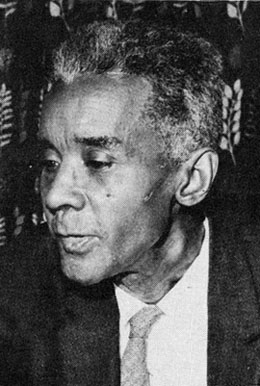
My Socialist Hall of Fame
During this chaotic era of vile rhetoric and manipulative tactics from our so-called bourgeois leaders, I am invigorated by the opportunity to reflect on Socialists, Revolutionaries, Philosophers, Guerrilla Leaders, Partisans, and Critical Theory titans, champions, and martyrs who paved the way for us—my own audacious “Socialism’s Hall of Fame.” These are my heroes and fore-bearers. Not all are perfect, or even fully admirable, but all contributed in some way to our future–either as icons to emulate, or as warnings to avoid in the future.
Cyril Lionel Robert James (1901–1989) was a Trinidadian Marxist historian, journalist, socialist theorist, and cultural critic whose intellectual contributions spanned politics, philosophy, literature, and cricket. Best known for his seminal work The Black Jacobins (1938), James profoundly influenced post-colonial theory, Marxist historiography, and cultural studies. Throughout his prolific career, he remained a critical voice in revolutionary politics, pan-Africanism, and anti-colonial struggles, advocating tirelessly for socialist democracy and black liberation.
Early Life and Education
Born on January 4, 1901, in Tunapuna, Trinidad, James grew up in a middle-class family that valued education and intellectual discourse. He attended Queen’s Royal College in Port of Spain, where he received a classical education that deeply informed his later intellectual pursuits. His early literary influences ranged from Shakespeare and Thackeray to classical Greek literature, which provided foundational insights into power, freedom, and tragedy—themes he would repeatedly revisit in his scholarship.
Move to England and Early Political Activities
In 1932, James emigrated to Britain, where he quickly became engaged in radical political circles. His exposure to Marxism deepened through his involvement with Leon Trotsky’s Fourth International and the Independent Labour Party (ILP). While living in London, he authored World Revolution (1937), a critical analysis of the Comintern’s failures, which established him as a Marxist theorist of significant repute.
His magnum opus, The Black Jacobins: Toussaint L’Ouverture and the San Domingo Revolution (1938), combined meticulous historical scholarship with Marxist dialectics to analyze the Haitian Revolution (1791–1804). This work situated slave revolts as central revolutionary events, demonstrating how enslaved peoples not only resisted oppression but also reshaped global history. The Black Jacobins became a cornerstone of post-colonial literature, inspiring future generations of historians and revolutionaries.
American Years and Revolutionary Theory
James relocated to the United States in 1938, immersing himself in socialist and anti-colonial activism. He collaborated closely with Raya Dunayevskaya and Grace Lee Boggs, developing a distinctive Marxist-humanist philosophy that rejected orthodox Stalinist interpretations of Marxism. He was instrumental in forming the Johnson-Forest Tendency (named after pseudonyms Johnson—James himself—and Forest—Dunayevskaya), a dissident Marxist grouping within the Trotskyist Socialist Workers Party. This tendency emphasized the revolutionary potential of workers’ self-activity and popular culture, later influencing autonomist Marxist thought and new left movements.
His major theoretical work from this period, Notes on Dialectics: Hegel, Marx, Lenin (1948), integrated a rigorous engagement with Hegelian dialectics, positing an innovative Marxist epistemology that underscored the agency and self-awareness of oppressed peoples.
Cultural Criticism and Cricket Writing
Apart from politics and history, James was deeply invested in cultural analysis. His seminal cricket memoir, Beyond a Boundary (1963), explored cricket as an avenue to interrogate issues of race, class, and colonialism. Often cited as one of the greatest sports books ever written, Beyond a Boundary blends personal narrative, Marxist critique, and social history, illustrating James’s exceptional range as a writer and theorist.
Return to Trinidad and Later Life
Returning to Trinidad in 1958, James briefly became involved in local politics, notably participating in the independence movement and contributing to the intellectual culture of the newly independent Caribbean nations. Although his involvement in formal politics was short-lived, he remained a significant public intellectual, advocating for pan-African solidarity and democratic socialism.
James spent his final decades traveling, lecturing, and writing extensively on revolutionary theory, literature, and cultural criticism, further solidifying his legacy as a towering figure in Marxist thought and Caribbean intellectual history. He passed away on May 31, 1989, in London, leaving behind a profound intellectual legacy that continues to resonate in contemporary discussions of colonialism, racism, revolutionary politics, and Marxism.
Conclusion and Legacy
C.L.R. James’s work bridges the divide between theoretical Marxism and concrete historical practice, highlighting the transformative role of subaltern groups in history. His advocacy for democratic socialism and radical democracy, alongside his incisive cultural analyses, established James as a uniquely versatile and enduring thinker whose contributions continue to inform Marxist theory, post-colonial studies, cultural criticism, and liberation movements worldwide.
James’s legacy, both as a scholar and as a revolutionary thinker, continues to influence contemporary radical scholarship and political praxis, solidifying his place as one of the most critical Marxist intellectuals of the 20th century.
Selected Bibliography
Major Works by C.L.R. James
• James, C.L.R. World Revolution 1917–1936: The Rise and Fall of the Communist International. London: Martin Secker and Warburg, 1937.
• James, C.L.R. The Black Jacobins: Toussaint L’Ouverture and the San Domingo Revolution. New York: Random House, 1938.
• James, C.L.R., Raya Dunayevskaya, and Grace Lee Boggs. State Capitalism and World Revolution. Detroit: Facing Reality Publishing Committee, 1950.
• James, C.L.R. Notes on Dialectics: Hegel, Marx, Lenin. Detroit: Johnson-Forest Tendency, 1948.
• James, C.L.R. Beyond a Boundary. London: Hutchinson, 1963.
Key Secondary Sources and Further Reading
• Buhle, Paul. C.L.R. James: The Artist as Revolutionary. London: Verso Books, 1989.
• Rosengarten, Frank. Urbane Revolutionary: C.L.R. James and the Struggle for a New Society. Jackson: University Press of Mississippi, 2008.
• Worcester, Kent. C.L.R. James: A Political Biography. Albany: State University of New York Press, 1996.
• Robinson, Cedric J. Black Marxism: The Making of the Black Radical Tradition. Chapel Hill: University of North Carolina Press, 1983.
• Scott, David. Conscripts of Modernity: The Tragedy of Colonial Enlightenment. Durham: Duke University Press, 2004.
• Grimshaw, Anna. C.L.R. James Reader. Oxford: Blackwell, 1992.
 Letters from Tomis
Leave a comment