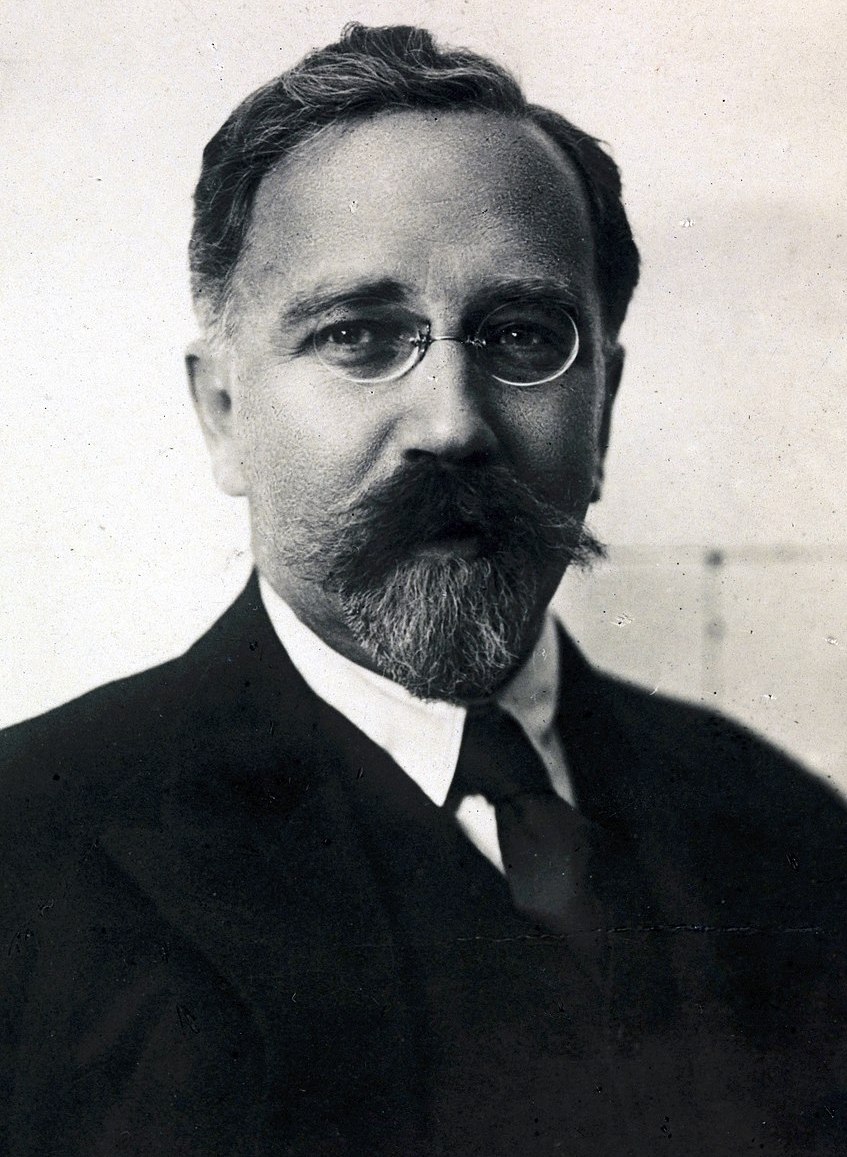
My Socialist Hall of Fame
During this chaotic era of vile rhetoric and manipulative tactics from our so-called bourgeois leaders, I am invigorated by the opportunity to reflect on Socialists, Revolutionaries, Philosophers, Guerrilla Leaders, Partisans, and Critical Theory titans, champions, and martyrs who paved the way for us—my own audacious “Socialism’s Hall of Fame.” These are my heroes and fore-bearers. Not all are perfect, or even fully admirable, but all contributed in some way to our future–either as icons to emulate, or as warnings to avoid in the future.
Biographical Overview
Lev Kamenev was a prominent Bolshevik revolutionary, Marxist theorist, and early Soviet political leader. Born into a middle-class Jewish family, Kamenev became involved in revolutionary politics in the early 1900s and joined the Russian Social Democratic Labour Party (RSDLP) in 1901, aligning with its Bolshevik faction under Lenin after the 1903 split.
Kamenev’s early revolutionary activity included work as a party organizer, editor, and propagandist. He collaborated closely with Lenin and played a critical role in Bolshevik journalism and party leadership, particularly as editor of Pravda and later Izvestia. He was arrested and exiled multiple times for revolutionary activity under the Tsarist regime.
During the October Revolution of 1917, Kamenev served briefly as head of the Petrograd Soviet and was one of the few leading Bolsheviks to oppose the timing of the insurrection. Along with Grigory Zinoviev, Kamenev believed the uprising was premature—a disagreement that Lenin sharply denounced. Despite this, Kamenev remained a significant figure in the nascent Soviet government, eventually becoming Chairman of the Moscow Soviet and a member of the Politburo.
Political Role and Theoretical Contributions
Kamenev’s theoretical contributions, though less original than those of Lenin or Trotsky, were rooted in his commitment to classical Marxism and Leninist orthodoxy—until his later collaboration with Stalin. He advocated for the New Economic Policy (NEP) in the early 1920s and played an important role in shaping Bolshevik economic and cultural policies during the transitional years of the Soviet regime.
From 1923 onward, Kamenev became increasingly critical of Stalin’s consolidation of power. Alongside Grigory Zinoviev and later Leon Trotsky, he formed the United Opposition, which opposed the bureaucratization of the Soviet state and the betrayal of international revolutionary aims in favor of Stalin’s doctrine of “socialism in one country.” Despite their efforts, the Opposition was defeated, and Kamenev was removed from power and expelled from the Communist Party.
Unlike Trotsky, Kamenev capitulated under pressure, recanting his opposition and accepting the Party line in hopes of political rehabilitation. However, his earlier criticisms made him a target during Stalin’s Great Purge. In the first of the infamous Moscow Trials (1936), Kamenev was accused of plotting against Stalin and conspiring with Trotskyists and foreign agents. Under duress and likely torture, Kamenev confessed to fabricated charges and was executed alongside Zinoviev.
Historical Significance
Kamenev’s life illustrates the tragedy of the early Bolshevik generation: committed revolutionaries who helped build the Soviet state only to be destroyed by the regime they helped create. He represents a critical transitional figure—respected for his administrative skill and party loyalty, yet ultimately overwhelmed by the brutal logic of Stalinist consolidation.
Historiographically, Kamenev’s role is often overshadowed by his more charismatic peers. Yet his experience reflects the complexity of post-revolutionary power dynamics and the fatal consequences of factionalism under an emerging one-party dictatorship.
Selected Bibliography
Primary Sources:
• Kamenev, Lev. Speeches and Articles. Moscow: Progress Publishers, 1976.
• Kamenev, Lev. Lenin: A Political Portrait. Moscow: Progress Publishers, 1972.
• The Case of the Trotskyite-Zinovievite Terrorist Centre (Moscow Trial Transcript). Moscow: People’s Commissariat of Justice, 1936.
Secondary Sources:
• Service, Robert. Trotsky: A Biography. Cambridge, MA: Harvard University Press, 2009.
• Deutscher, Isaac. The Prophet Unarmed: Trotsky 1921–1929. Oxford: Oxford University Press, 1959.
• Rogovin, Vadim. 1937: Stalin’s Year of Terror. Mehring Books, 1998.
• Conquest, Robert. The Great Terror: A Reassessment. Oxford: Oxford University Press, 1990.
• Tucker, Robert C. Stalin as Revolutionary, 1879–1929: A Study in History and Personality. New York: Norton, 1973.
• Daniels, Robert V. The Conscience of the Revolution: Communist Opposition in Soviet Russia. Harvard University Press, 1960.
• Getty, J. Arch. Origins of the Great Purges: The Soviet Communist Party Reconsidered, 1933–1938. Cambridge University Press, 1985.
 Letters from Tomis
Leave a comment