Socialist Hall of Fame
During this chaotic era of vile rhetoric and manipulative tactics from our so-called bourgeois leaders, I am invigorated by the opportunity to reflect on Socialists, Revolutionaries, Philosophers, Guerrilla Leaders, Partisans, and Critical Theory titans, champions, and martyrs who paved the way for us—my own audacious “Socialism’s Hall of Fame.” These are my heroes and fore-bearers. Not all are perfect, or even fully admirable, but all contributed in some way to our future–either as icons to emulate, or as warnings to avoid in the future.
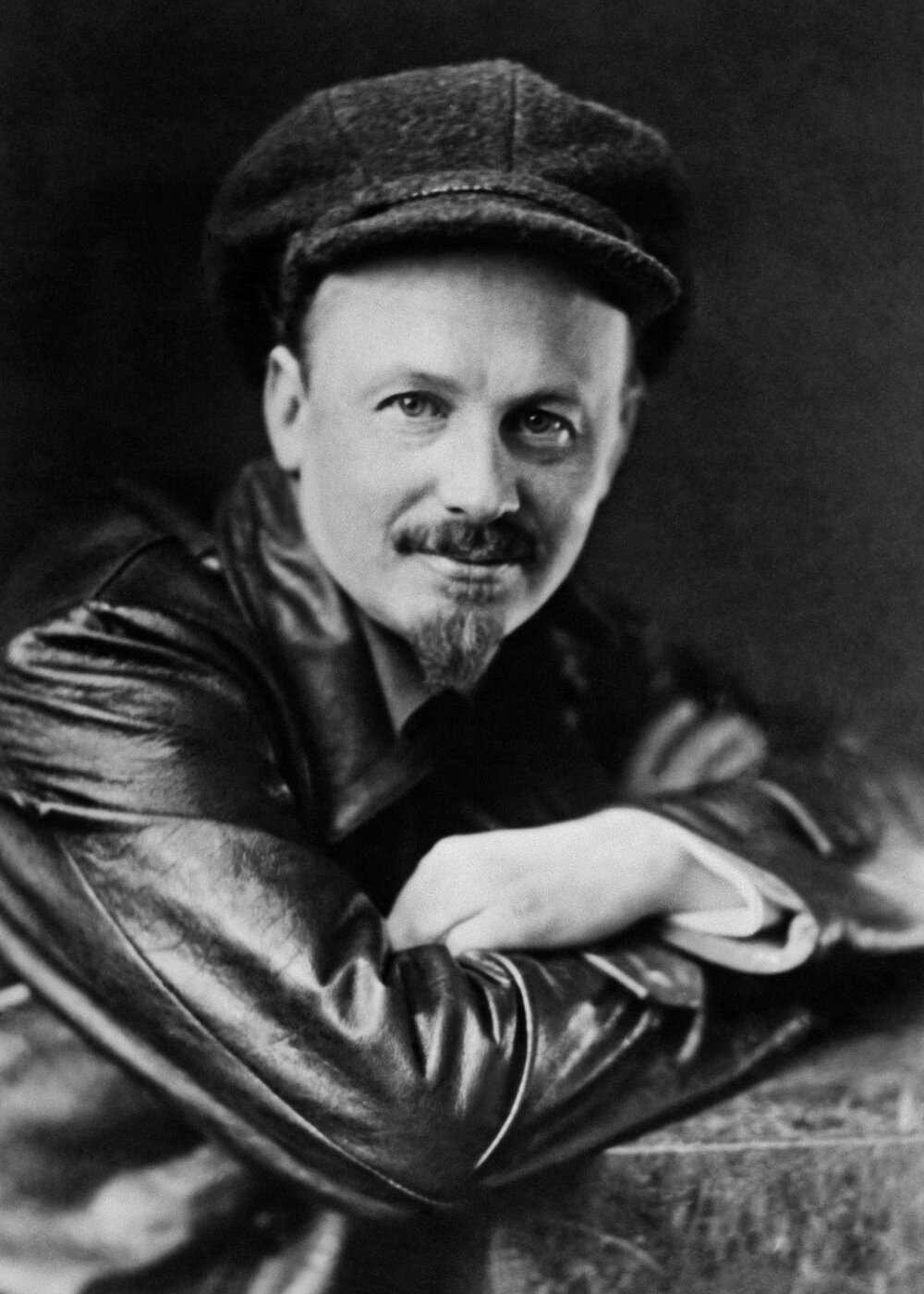
Nikolai Ivanovich Bukharin (1888–1938) was a prominent Bolshevik revolutionary, Marxist theorist, and Soviet politician. Born in Moscow to a family of teachers, Bukharin became involved in revolutionary activities at a young age and joined the Russian Social Democratic Labour Party (RSDLP) in 1906, aligning with the Bolshevik faction.
Revolutionary and Theorist
During the early 1910s, Bukharin played a significant role in the international Marxist movement, spending time in exile and collaborating with leading Marxists such as Lenin and Rosa Luxemburg. He contributed to various revolutionary journals and became known for his theoretical writings on economics, imperialism, and the state.
Bukharin returned to Russia in 1917 and emerged as one of the most influential figures within the Bolshevik leadership during and after the October Revolution. A key member of the party’s left wing, he initially opposed the Treaty of Brest-Litovsk, arguing against conceding territory to Germany. However, his position evolved, and by the mid-1920s, Bukharin became a chief proponent of the New Economic Policy (NEP), advocating for a mixed economy that allowed some degree of private enterprise to rebuild the Soviet economy after the Civil War.
Role in the Soviet Government
In the 1920s, Bukharin rose to become one of the most prominent leaders of the Communist Party. He served as editor of Pravda, was a member of the Politburo, and played a significant role in shaping Soviet economic policy. His slogan “Enrich yourselves!” was directed at peasants to encourage agricultural productivity under the NEP.
Bukharin became an ally of Joseph Stalin during the early stages of the power struggle against Leon Trotsky and the Left Opposition. However, by the late 1920s, Stalin shifted toward forced collectivization and rapid industrialization, leading Bukharin to fall out of favor as he continued to support the NEP and a more gradual approach to socialism.
Downfall and Execution
By 1929, Bukharin was stripped of his key positions, and despite making partial concessions, he remained politically marginalized. During the Great Purge, Bukharin was arrested in 1937 and subjected to one of the most infamous show trials. Accused of treason, espionage, and counter-revolutionary activities, Bukharin denied the charges but ultimately confessed under duress.
He was executed in March 1938. Decades later, during the Khrushchev Thaw and again in the Gorbachev era, Bukharin was posthumously rehabilitated, with Soviet authorities acknowledging the falsity of the charges against him.
Legacy
Bukharin is remembered as one of the Soviet Union’s most capable and tragic intellectuals. His writings on Marxism, state capitalism, and the transition to socialism continue to be studied by historians and political theorists. His fate is emblematic of the internal contradictions and brutal purges of Stalinist Russia.
Bibliography
1. Bukharin, Nikolai. The ABC of Communism. Penguin Books, 1982 (originally published in 1920).
2. Bukharin, Nikolai. Imperialism and World Economy. Merlin Press, 1972 (originally published in 1915).
3. Cohen, Stephen F. Bukharin and the Bolshevik Revolution: A Political Biography, 1888-1938. Oxford University Press, 1980.
4. Deutscher, Isaac. The Prophet Unarmed: Trotsky 1921-1929. Oxford University Press, 1959.
 Letters from Tomis
Leave a comment