My Socialist Hall of Fame
During this chaotic era of vile rhetoric and manipulative tactics from our so-called bourgeois leaders, I am invigorated by the opportunity to reflect on Socialists, Revolutionaries, Philosophers, Guerrilla Leaders, Partisans, and Critical Theory titans, champions, and martyrs who paved the way for us—my own audacious “Socialism’s Hall of Fame.” These are my heroes and fore-bearers. Not all are perfect, or even fully admirable, but all contributed in some way to our future–either as icons to emulate, or as warnings to avoid in the future.
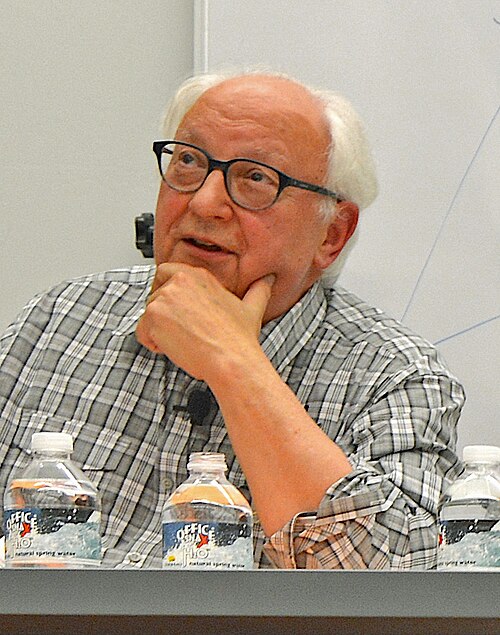
Étienne Balibar stands among the most influential Marxist philosophers and political theorists of the late twentieth and early twenty first centuries. His work has shaped debates in political philosophy, historical materialism, citizenship studies, nationalism, race theory, and democratic theory. Emerging from the intellectual milieu of postwar French Marxism, Balibar became internationally known through his collaboration with Louis Althusser and his subsequent efforts to rethink Marxist theory in response to changing historical conditions. His intellectual trajectory reflects a sustained attempt to reconcile Marxism’s revolutionary aspirations with the complexities of modern democratic societies, global capitalism, migration, and identity.
Early Life and Education
Étienne Balibar was born on April 23, 1942, in Avallon, France, during the German occupation of the country. He came of age in a period marked by reconstruction, decolonization, and the political tensions of the Cold War. These experiences helped shape the generation of French intellectuals who sought new theoretical tools for understanding both capitalism and the changing forms of political power.
Balibar entered the prestigious École Normale Supérieure in Paris, one of France’s leading institutions for the training of intellectuals and scholars. There he studied philosophy under Louis Althusser, whose reinterpretation of Marx profoundly influenced French intellectual life during the 1960s. Althusser’s structuralist reading of Marx challenged both Soviet orthodoxy and humanist interpretations of Marxism. Balibar quickly became one of Althusser’s most talented students and collaborators.
Collaboration with Louis Althusser
Balibar first achieved prominence through his contribution to Reading Capital (Lire le Capital), published in 1965. This collective work, written alongside Althusser, Pierre Macherey, Roger Establet, and Jacques Rancière, sought to establish Marx’s Capital as a rigorous scientific analysis of capitalist society.
Balibar’s contribution focused on the concepts of historical materialism and modes of production. He argued that Marx’s theory represented a radical break from earlier philosophies of history. Rather than viewing history as the unfolding of human essence or universal reason, Balibar emphasized the structured relationships between economic, political, and ideological practices.
His essays in Reading Capital became foundational texts for what came to be known as Althusserian Marxism. They advanced a conception of social formations as complex structures characterized by multiple determinations rather than simple economic reductionism. This work exerted enormous influence throughout Europe, Latin America, and parts of the English speaking world.
Political Engagement and the Communist Movement
Like many French intellectuals of his generation, Balibar was deeply involved in communist politics. He joined the French Communist Party in the 1960s and remained an active member for several decades. His relationship with the party, however, was often marked by tension.
The events of May 1968 proved particularly significant. Student uprisings and mass worker strikes challenged established political institutions and exposed divisions within the French left. While Althusserian Marxism was often criticized for political abstraction, Balibar increasingly sought to connect theoretical analysis with practical political questions.
By the late twentieth century, he became more critical of bureaucratic tendencies within communist organizations and increasingly interested in democratic forms of political struggle. His eventual departure from the Communist Party reflected broader crises within the international communist movement following the collapse of the Soviet Union.
Reconsidering Marxism
A defining feature of Balibar’s intellectual career has been his willingness to revise and expand Marxist theory. Rather than abandoning Marxism after the decline of traditional communist parties, he sought to reconstruct it.
His works The Philosophy of Marx and Masses, Classes, Ideas illustrate this project. Balibar argued that Marx’s writings contain productive tensions rather than a closed system of doctrines. He emphasized the importance of treating Marxism as a critical and evolving tradition rather than a fixed orthodoxy.
Particularly important was his analysis of citizenship and political subjectivity. Balibar challenged simplistic distinctions between economic and political life, arguing that capitalist societies continually produce new forms of exclusion and inequality. He maintained that struggles over citizenship, migration, and political rights are inseparable from broader class relations.
Race, Nation, and Citizenship
Balibar’s most influential contributions emerged from his studies of nationalism, racism, and citizenship. In collaboration with Immanuel Wallerstein, he published Race, Nation, Class: Ambiguous Identities in 1988.
This work examined how modern capitalist societies generate racial and national identities. Balibar introduced the concept of “neo racism,” referring to forms of exclusion that rely less on biological claims than on assertions of cultural incompatibility. Such forms of racism, he argued, often present themselves as defenses of national identity or cultural difference while continuing to justify discrimination and exclusion.
His analysis anticipated many contemporary debates surrounding immigration, multiculturalism, and right wing nationalism. Balibar demonstrated that racism cannot be understood solely as a remnant of premodern prejudice. Instead, it is continually reproduced through modern political and social structures.
Equally significant was his concept of “equaliberty,” a term combining equality and liberty. Balibar argued that these principles should not be viewed as competing values but as mutually dependent foundations of democratic politics. Genuine freedom requires equality, while meaningful equality requires freedom.
European Citizenship and Global Politics
As European integration advanced during the late twentieth century, Balibar became a leading theorist of European citizenship. He examined the contradictions of a political project that sought to transcend national boundaries while often reproducing exclusionary practices toward migrants and noncitizens.
Balibar viewed citizenship not as a static legal status but as an ongoing process of political struggle. Democratic rights, he argued, are won and expanded through collective action rather than simply granted by states. This perspective allowed him to analyze contemporary movements for migrant rights, social justice, and democratic participation.
His work increasingly addressed globalization, transnational politics, and the challenges posed by neoliberal capitalism. Throughout these analyses, Balibar remained committed to the idea that democracy must be continuously democratized through political struggle from below.
Intellectual Legacy
Balibar’s influence extends across philosophy, political science, sociology, history, and cultural studies. His work has shaped scholarship on Marxism, citizenship, nationalism, race, migration, and democratic theory.
Unlike many theorists associated with structuralism, Balibar developed a body of work that remained responsive to historical change and political practice. He preserved core insights from Marxist analysis while incorporating lessons from feminist theory, postcolonial studies, democratic theory, and contemporary social movements.
His conceptions of equaliberty, transnational citizenship, and structural racism continue to inform debates about democracy and social justice in the twenty first century. For revolutionary Marxists and democratic theorists alike, Balibar remains a crucial figure in efforts to understand how capitalist societies generate both domination and possibilities for emancipation.
Bibliography
Works by Étienne Balibar
Balibar, Étienne. The Philosophy of Marx. Translated by Chris Turner, Verso, 1995.
Balibar, Étienne. Masses, Classes, Ideas: Studies on Politics and Philosophy Before and After Marx. Routledge, 1994.
Balibar, Étienne. Politics and the Other Scene. Verso, 2002.
Balibar, Étienne. We, the People of Europe? Reflections on Transnational Citizenship. Princeton University Press, 2004.
Balibar, Étienne. Equaliberty: Political Essays. Duke University Press, 2014.
Balibar, Étienne, and Immanuel Wallerstein. Race, Nation, Class: Ambiguous Identities. Verso, 1991.
Althusser, Louis, and Étienne Balibar. Reading Capital. Translated by Ben Brewster, Verso, 2009.
Selected Secondary Sources
Callinicos, Alex. Making History: Agency, Structure, and Change in Social Theory. Brill, 2004.
Elliott, Gregory. Althusser: The Detour of Theory. Brill, 2006.
Montag, Warren. Althusser and His Contemporaries: Philosophy’s Perpetual War. Duke University Press, 2013.
Wolff, Richard D., and Stephen Resnick. Knowledge and Class: A Marxian Critique of Political Economy. University of Chicago Press, 1987.
Yoshiyuki, Sato, and Gavin Walker, editors. The Philosophy of Étienne Balibar. Edinburgh University Press, 2020.


Leave a Reply