My Socialist Hall of Fame
During this chaotic era of vile rhetoric and manipulative tactics from our so-called bourgeois leaders, I am invigorated by the opportunity to reflect on Socialists, Revolutionaries, Philosophers, Guerrilla Leaders, Partisans, and Critical Theory titans, champions, and martyrs who paved the way for us—my own audacious “Socialism’s Hall of Fame.” These are my heroes and fore-bearers. Not all are perfect, or even fully admirable, but all contributed in some way to our future–either as icons to emulate, or as warnings to avoid in the future.
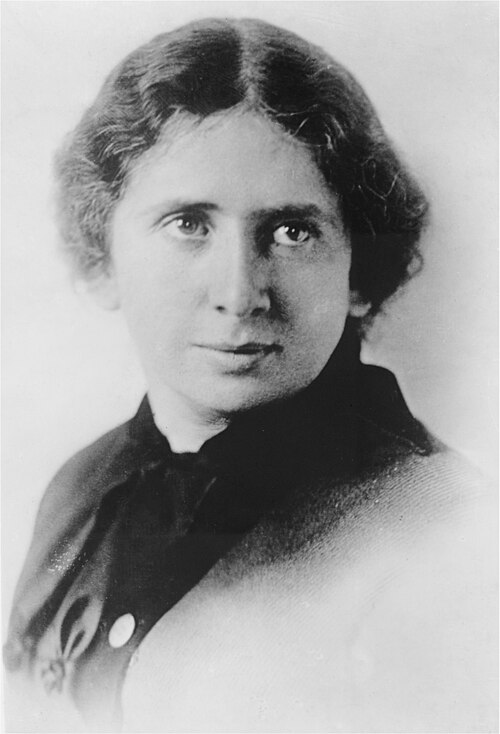
Rose Schneiderman stands among the most influential labor organizers and feminist reformers of the twentieth century United States. A socialist, suffragist, and trade union activist, she emerged from the garment industry of New York City to become one of the leading public voices for working women during the Progressive Era and New Deal. Her political career linked immigrant labor radicalism with institutional reform, and her influence extended from union halls on the Lower East Side to the inner circles of Franklin and Eleanor Roosevelt. Schneiderman’s life illustrates the convergence of class consciousness, gender politics, and state reform in modern American history.
Born Rachel Schneiderman on April 6, 1882, in Sawin, Russian Poland, then part of the Russian Empire, she immigrated to the United States with her Jewish family in 1890. The Schneidermans settled in New York City’s Lower East Side, where overcrowding, poverty, and precarious employment shaped the experience of many Eastern European Jewish immigrants. The death of her father several years after their arrival plunged the family into severe financial instability. Schneiderman left school early to support her mother and siblings, first working as a department store sales clerk and later in the cap making trade. These formative experiences exposed her to the exploitative labor conditions faced by industrial workers, especially women who endured long hours, dangerous environments, and meager pay while remaining politically marginalized within both organized labor and broader society.
By the opening years of the twentieth century, Schneiderman had become active in the United Cloth Hat and Cap Makers’ Union. Her organizational talents and extraordinary speaking ability quickly distinguished her from many contemporaries. Unlike some middle class reformers who framed labor issues in paternalistic terms, Schneiderman articulated a distinctly working class feminism grounded in economic struggle. She argued that political rights meant little without industrial justice. Her speeches emphasized the relationship between unsafe working conditions, wage exploitation, and women’s broader social inequality.
Schneiderman first gained national prominence during the 1909 garment workers’ uprising known as the “Uprising of the Twenty Thousand.” This strike, largely led by immigrant women garment workers, represented one of the largest labor actions involving women in American history up to that time. Schneiderman played a major role in organizing workers and publicizing their demands. She became associated with the Women’s Trade Union League, an organization that attempted to bridge alliances between working women and wealthier progressive reformers. Although the League often reflected tensions between elite reformers and rank and file labor activists, Schneiderman skillfully used the organization as a platform to advance labor militancy and women’s political participation.
The 1911 Triangle Shirtwaist Factory fire profoundly shaped Schneiderman’s political identity and public reputation. The disaster killed 146 workers, most of them young immigrant women trapped inside locked factory floors. Shortly after the fire, Schneiderman delivered one of the most famous labor speeches of the Progressive Era at a memorial meeting held in the Metropolitan Opera House. Condemning both industrial capitalism and the failures of superficial philanthropy, she declared that working people could not rely solely upon the sympathy of the wealthy for protection. The speech transformed her into a national symbol of labor resistance and intensified public pressure for workplace reform legislation.
Schneiderman’s politics combined socialism, unionism, and feminism in ways that challenged prevailing assumptions within each movement. She joined the Socialist Party and advocated universal suffrage not merely as a matter of democratic principle but as a strategic necessity for labor reform. She believed working women required political power to secure legislation regulating wages, hours, and factory safety. During the woman suffrage campaigns of the 1910s, Schneiderman insisted that labor concerns remain central to feminist politics. In contrast to some suffrage leaders who prioritized respectability and middle class reform, Schneiderman emphasized the experiences of immigrant and industrial women.
Her relationship with Eleanor Roosevelt became particularly significant during the interwar period. The two women developed a close political friendship grounded in shared commitments to labor rights and social reform, although they came from profoundly different social backgrounds. Roosevelt admired Schneiderman’s intellect and practical political insight, while Schneiderman recognized Roosevelt’s capacity to influence national policy. Through this relationship, Schneiderman gained indirect access to the highest levels of Democratic Party politics during the New Deal era.
In 1926 Schneiderman became president of the New York branch of the Women’s Trade Union League, a position she held for decades. During the Great Depression she strongly supported Franklin Roosevelt’s labor policies and served on the National Recovery Administration’s Labor Advisory Board. She also became secretary of labor for the state of New York under Governor Herbert Lehman. In these roles, Schneiderman helped shape labor standards concerning minimum wages, workplace protections, and women’s employment conditions.
Unlike some labor leaders who opposed protective legislation for women on the grounds that it reinforced gender distinctions, Schneiderman viewed such measures as necessary responses to unequal economic realities. Historians have debated this position extensively. Critics later argued that protective legislation sometimes limited women’s employment opportunities, while supporters contend that reformers like Schneiderman operated within conditions where unregulated industrial labor posed immediate threats to workers’ health and survival. Schneiderman herself viewed labor reform pragmatically, prioritizing tangible improvements in workers’ lives over abstract ideological purity.
Her activism also reflected the broader tensions within American labor politics. Schneiderman frequently criticized the male dominated leadership of organized labor for neglecting women workers. At the same time, she remained skeptical of reform movements detached from working class institutions. This dual critique gave her politics unusual complexity. She rejected both conservative union exclusivity and elite liberal paternalism, insisting instead upon the political agency of working women themselves.
Throughout her later years Schneiderman remained active in labor advocacy, social welfare campaigns, and Democratic Party politics. Although the decline of socialist influence within mainstream American politics after the Second World War altered the ideological environment in which she had emerged, many of the reforms she championed became institutionalized within federal and state labor policy. Her career therefore represents a transition from radical immigrant labor activism to the construction of modern social democratic governance in the United States.
Rose Schneiderman died on August 11, 1972, in New York City. By the time of her death, the industrial world that had shaped her activism had changed dramatically. Yet her influence endured in labor law, feminist organizing, occupational safety standards, and the broader political language of social justice. Modern scholars increasingly recognize Schneiderman as a foundational figure in the history of intersectional labor politics, long before that terminology existed. Her life demonstrates how immigrant workers, women activists, and socialist organizers contributed fundamentally to the transformation of American democracy during the twentieth century.
Bibliography
Orleck, Annelise. Common Sense and a Little Fire: Women and Working Class Politics in the United States, 1900–1965. 2nd ed., University of North Carolina Press, 1995.
Orleck, Annelise. Rose Schneiderman and the Jewish Labor Movement. Routledge, 2017.
Schneiderman, Rose. All for One. Paul S. Eriksson, 1967.
Tax, Meredith. The Rising of the Women: Feminist Solidarity and Class Conflict, 1880–1917. Monthly Review Press, 1980.
Von Drehle, David. Triangle: The Fire That Changed America. Atlantic Monthly Press, 2003.
Waldinger, Robert David. “Another Look at the International Ladies’ Garment Workers’ Union.” Labor History, vol. 19, no. 1, 1978, pp. 89–102.
Weissman, Susan. Victor Berger and the Promise of Constructive Socialism, 1910–1920. Greenwood Press, 1991.


Leave a comment