My Socialist Hall of Fame
During this chaotic era of vile rhetoric and manipulative tactics from our so-called bourgeois leaders, I am invigorated by the opportunity to reflect on Socialists, Revolutionaries, Philosophers, Guerrilla Leaders, Partisans, and Critical Theory titans, champions, and martyrs who paved the way for us—my own audacious “Socialism’s Hall of Fame.” These are my heroes and fore-bearers. Not all are perfect, or even fully admirable, but all contributed in some way to our future–either as icons to emulate, or as warnings to avoid in the future.
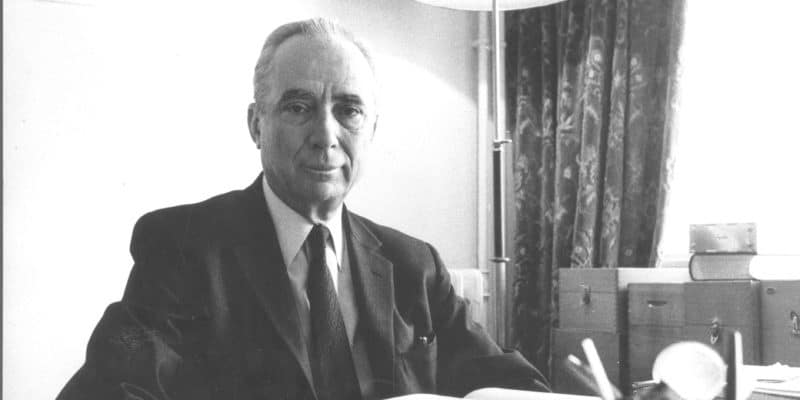
Arghiri Emmanuel (1911–2001) was a Greek-born, later French-based, political economist whose work became central to debates on global inequality, dependency theory, and the structure of international trade in the late twentieth century. Best known for his formulation of the theory of unequal exchange, Emmanuel offered a provocative reinterpretation of Marxian value theory in the context of global capitalism, arguing that wage differentials between nations, rather than productivity gaps alone, structured the persistent transfer of value from the Global South to the Global North.
Born in Patras, Greece, Emmanuel came of age during a period marked by political instability, economic dislocation, and the aftershocks of imperial decline. His early life was shaped by both commercial experience and political engagement. Before entering academic life, he was involved in business activities in the Belgian Congo, a formative period that exposed him directly to colonial economic hierarchies and labor exploitation. These experiences would later inform his theoretical preoccupations with international inequality.
Emmanuel’s intellectual trajectory cannot be understood apart from his political commitments. Initially aligned with Trotskyist currents, he later moved toward a heterodox Marxism that resisted strict orthodoxy. His relocation to Paris placed him at the center of postwar European debates on development, imperialism, and the restructuring of capitalism. It was in this milieu, alongside thinkers associated with dependency theory and world-systems analysis, that Emmanuel developed his most influential ideas.
His major work, Unequal Exchange: A Study of the Imperialism of Trade, first published in French in 1969, marked a decisive intervention in Marxist political economy. In this text, Emmanuel challenged prevailing explanations of international trade rooted in comparative advantage or technological disparity. Drawing on and revising Karl Marx’s labor theory of value, he argued that the global system of exchange was distorted by unequal wage levels across nations. These wage differentials, maintained by restrictions on labor mobility and reinforced by state structures, allowed capital in advanced economies to appropriate surplus value generated in lower-wage regions without equivalent compensation.
Emmanuel’s thesis diverged from orthodox Marxist interpretations in several key respects. While classical Marxism emphasized productivity and exploitation within the capitalist mode of production, Emmanuel foregrounded the international dimension, suggesting that exploitation operated between nations as well as within them. In doing so, he reoriented debates on imperialism, aligning partially with but also challenging contemporaries such as Samir Amin and Andre Gunder Frank. Unlike some dependency theorists who emphasized structural underdevelopment or historical incorporation into global capitalism, Emmanuel insisted on the centrality of wage disparities as the mechanism of unequal exchange.
This position generated considerable controversy. Critics argued that Emmanuel overstated the autonomy of wages from productivity and neglected the role of capital accumulation and technological change. Others contended that his framework risked privileging workers in developed countries as beneficiaries of global exploitation, thereby complicating traditional Marxist notions of proletarian solidarity. Yet even critics acknowledged the force of his intervention: Emmanuel compelled scholars to confront the moral and analytical implications of global wage hierarchies.
Throughout his career, Emmanuel remained committed to a rigorous, if unorthodox, application of Marxian categories to contemporary capitalism. His later works expanded on themes of international value transfer, trade imbalances, and the political economy of development. While he never occupied the same institutional prominence as some of his contemporaries, his influence persisted in debates on globalization, particularly in discussions of North–South relations and the ethics of international trade.
Emmanuel died in 2001, leaving behind a body of work that continues to unsettle comfortable assumptions about global markets. His theory of unequal exchange remains a touchstone for scholars seeking to understand how inequality is reproduced on a world scale, not as an accident of development, but as a structural feature of the system itself.
Selected Bibliography
Emmanuel, Arghiri. L’échange inégal: Essai sur les antagonismes dans les rapports économiques internationaux. Paris: François Maspero, 1969.
Emmanuel, Arghiri. Unequal Exchange: A Study of the Imperialism of Trade. Translated by Brian Pearce. New York: Monthly Review Press, 1972.
Emmanuel, Arghiri. Profit and Crises. London: New Left Books, 1982.
Emmanuel, Arghiri. “White-Settler Colonialism and the Myth of Investment Imperialism.” New Left Review 73 (1972): 35–57.
Amin, Samir. Unequal Development: An Essay on the Social Formations of Peripheral Capitalism. New York: Monthly Review Press, 1976.
Frank, Andre Gunder. Capitalism and Underdevelopment in Latin America. New York: Monthly Review Press, 1967.
 Letters from Tomis
Leave a comment