Book Review
Hegel, Georg Wilhelm Friedrich. Elements of the Philosophy of Right. Translated by H. B. Nisbet, Cambridge University Press, 1991.
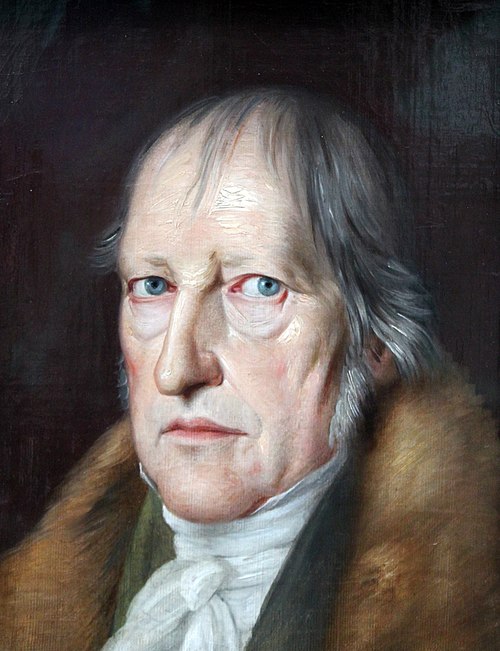
G. W. F. Georg Wilhelm Friedrich Hegel’s Elements of the Philosophy of Right (1821) remains one of the most formidable attempts to reconcile freedom with social order in modern philosophy. From a revolutionary communist perspective grounded in the tradition of Karl Marx and Friedrich Engels, the text appears less as a culmination of freedom than as a polished defense of historically specific class relations. It is a work that moves with confidence through the architecture of ethical life, yet carries within it the quiet assumptions of a society divided by property, hierarchy, and state power.
Hegel’s central claim is that freedom becomes actual not in abstract individual will but in its embodiment within institutions: the family, civil society, and the state. His dialectical method traces how subjective freedom matures into objective ethical life, or Sittlichkeit. The state, in this framework, is not a coercive apparatus imposed from above but the rational realization of collective freedom. It is here, however, that the revolutionary critique sharpens. For Marx, especially in his Critique of Hegel’s Philosophy of Right, Hegel mystifies the state by treating it as the subject of history rather than the product of material social relations. The state becomes a kind of ghost that walks as a man, claiming universality while standing on the shoulders of particular class interests.
Civil society in Hegel’s account is the sphere of need, labor, and exchange. He recognizes its contradictions, including poverty and alienation, yet ultimately contains them within a system that presumes their resolution through corporative structures and the mediating function of the state. A revolutionary communist reading finds this containment deeply ideological. The antagonisms of civil society are not incidental but structural. They arise from private property and the division of labor, which Hegel treats as given rather than historically contingent. In this sense, Hegel diagnoses the symptoms of capitalism’s early formation without grasping their systemic roots. His proposed remedies resemble bandages placed over fractures that demand transformation.
Property, for Hegel, is the first embodiment of freedom, the externalization of the will in the world. This claim reveals the class horizon of his philosophy. To equate freedom with property is to universalize the experience of the propertied class while marginalizing those whose labor sustains that property. Marx overturns this premise by exposing how property relations are themselves products of historical struggle. What appears in Hegel as the realization of freedom appears in Marx as the institutionalization of exploitation. The worker’s relation to property is not one of self realization but of estrangement.
The state occupies the highest place in Hegel’s system, presented as the unity of universal and particular interests. Its rationality is guaranteed by its structure, including constitutional monarchy, a bureaucracy of educated officials, and representation through estates. From a revolutionary communist standpoint, this vision obscures the coercive function of the state as an instrument of class domination. The Communist Manifesto famously describes the modern state as a committee for managing the common affairs of the bourgeoisie. Hegel’s state, for all its philosophical grandeur, aligns with this function by stabilizing existing property relations and legitimizing inequality under the banner of rational necessity.
Yet the critique is not purely negative. Hegel’s dialectical method remains indispensable. His insistence that social forms are historically mediated and internally contradictory provides the very tools later used to dismantle his conclusions. Marx’s materialist inversion of Hegel preserves the dynamic movement of contradiction while relocating its ground in economic life. In this sense, Hegel is both adversary and ancestor. His work stands like a grand edifice whose foundations must be excavated in order to build something new.
A revolutionary communist reading ultimately judges Philosophy of Right as a transitional text. It captures the emergence of bourgeois society with remarkable clarity, yet halts at the threshold of its critique. Hegel sees the fractures in the pavement but calls them part of the design. Marx steps into those cracks and finds the fault lines of history. The result is a shift from reconciliation to transformation, from the justification of the present to the possibility of its overthrow.
In the dim light of that philosophical inheritance, Hegel’s work endures as both monument and warning. It reminds us how easily reason can be enlisted in the service of power, how the language of freedom can mask the persistence of domination. At the same time, it offers a method that refuses stillness, a restless logic that insists every structure carries within it the seeds of its undoing.
 Letters from Tomis
Leave a comment