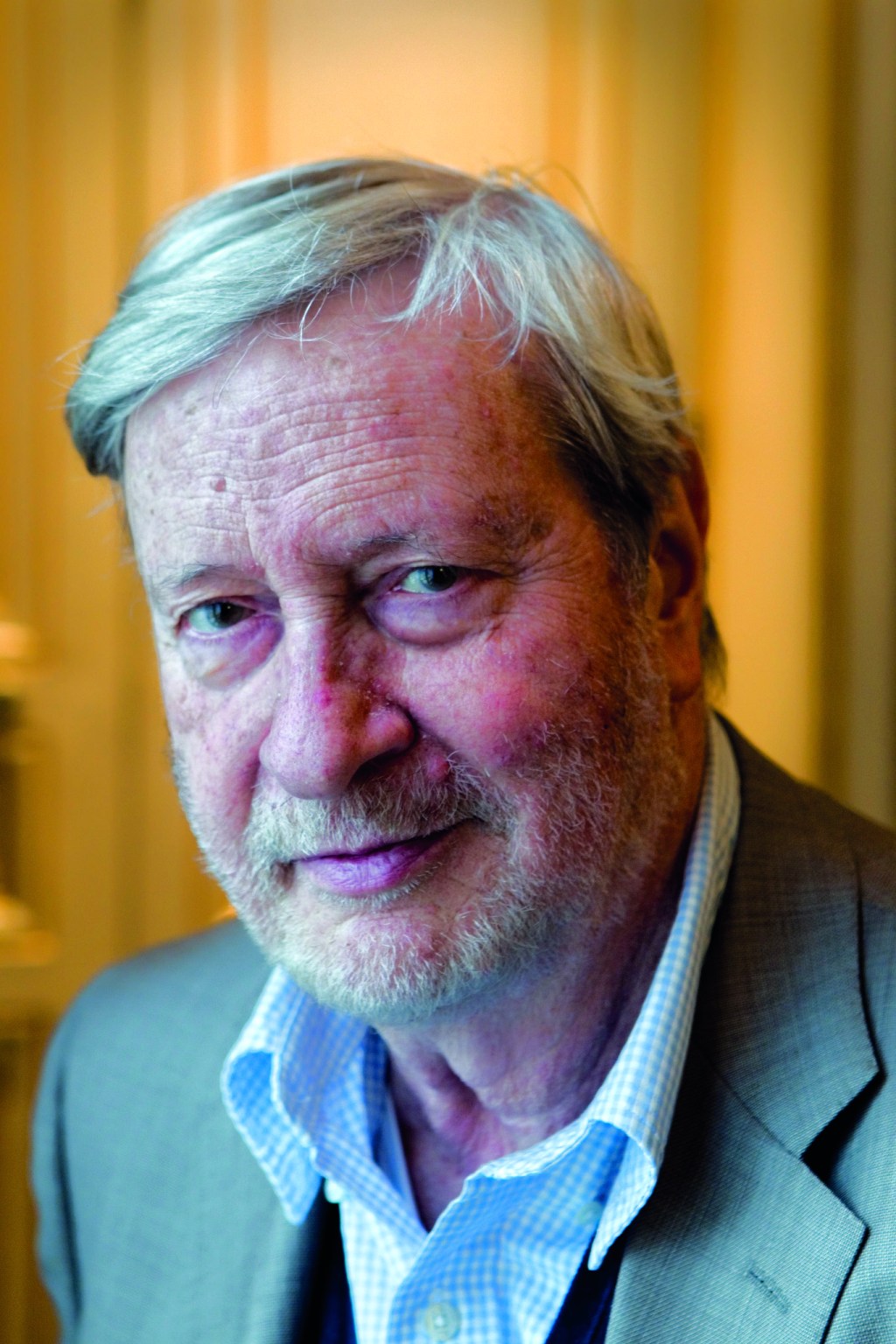
My Socialist Hall of Fame
During this chaotic era of vile rhetoric and manipulative tactics from our so-called bourgeois leaders, I am invigorated by the opportunity to reflect on Socialists, Revolutionaries, Philosophers, Guerrilla Leaders, Partisans, and Critical Theory titans, champions, and martyrs who paved the way for us—my own audacious “Socialism’s Hall of Fame.” These are my heroes and fore-bearers. Not all are perfect, or even fully admirable, but all contributed in some way to our future–either as icons to emulate, or as warnings to avoid in the future.
Gianni Vattimo (1936–2023) stands as one of the most influential Italian philosophers of the late twentieth and early twenty-first centuries, best known for his formulation of pensiero debole or “weak thought,” a hermeneutic and post-metaphysical approach that reinterprets the legacy of continental philosophy in light of nihilism, secularization, and the dissolution of strong ontological structures.
Early Life and Intellectual Formation
Gianni Vattimo was born on January 4, 1936, in Turin, Italy, a city whose industrial modernity and intellectual vibrancy shaped his early development. He studied philosophy at the University of Turin under the guidance of Luigi Pareyson, a major interpreter of existentialism and hermeneutics. Pareyson’s emphasis on interpretation as a formative act rather than a passive reception would leave a lasting imprint on Vattimo’s philosophical method.
During his formative years, Vattimo also spent time in Heidelberg, where he encountered the work of Hans-Georg Gadamer. Gadamer’s philosophical hermeneutics, especially as articulated in Truth and Method, profoundly influenced Vattimo’s understanding of interpretation as historically situated and linguistically mediated. At the same time, Vattimo engaged deeply with Friedrich Nietzsche and Martin Heidegger, whose critiques of metaphysics and emphasis on the “end of philosophy” would become central to his later work.
Weak Thought and the End of Metaphysics
Vattimo’s most significant contribution to philosophy is his development of weak thought, a term he popularized in the 1980s. Drawing on Nietzsche’s proclamation of the “death of God” and Heidegger’s critique of metaphysics, Vattimo argued that Western philosophy had entered a phase characterized by the erosion of absolute foundations and the weakening of strong ontological claims.
Rather than lament this condition, Vattimo embraced it as an opportunity for emancipation. In works such as The End of Modernity (1985), he contended that the dissolution of metaphysical certainty opens space for pluralism, dialogue, and a non-authoritarian conception of truth. Truth, in this framework, is no longer correspondence with a stable reality but emerges through interpretive communities shaped by history and language.
Vattimo’s interpretation of nihilism diverges from both pessimistic and purely celebratory accounts. For him, nihilism is the historical destiny of the West, yet it also carries an ethical promise: the weakening of rigid structures of authority enables more democratic and inclusive forms of life. His thought thus aligns with a postmodern sensibility while retaining a normative commitment to emancipation.
Hermeneutics, Christianity, and Secularization
One of the most distinctive aspects of Vattimo’s philosophy is his reappropriation of Christianity. In contrast to traditional theological frameworks, Vattimo interpreted Christianity through the lens of secularization, arguing that the Christian message itself initiates the weakening of metaphysical authority.
In Belief (1996) and later writings, he advanced the notion of a “weak Christianity,” grounded not in dogma but in the ethical imperative of charity (caritas). He read the Incarnation as a process of divine self-emptying that parallels the philosophical weakening of being. This interpretation aligns with his broader hermeneutic project, in which religious traditions are understood as historically evolving narratives rather than repositories of immutable truths.
Vattimo’s engagement with religion also reflects his dialogue with thinkers such as Jacques Derrida and Richard Rorty, both of whom explored the intersections of language, contingency, and belief. However, Vattimo maintained a more explicit commitment to the cultural and ethical legacy of Christianity than many of his contemporaries.
Political Engagement and Public Intellectualism
Beyond his academic work, Vattimo was an active political figure. He served as a member of the European Parliament from 1999 to 2004 and again from 2009 to 2014, aligning himself with leftist and anti-globalization movements. His political thought reflects a synthesis of hermeneutics and Marxist critique, emphasizing the role of interpretation in shaping social realities while advocating for greater equality and social justice.
Vattimo’s political positions were often controversial. He supported various radical causes and expressed sympathy for movements critical of Western hegemony. These stances, while polarizing, were consistent with his philosophical commitment to weakening dominant structures of power and promoting alternative voices.
Later Work and Legacy
In his later years, Vattimo continued to develop his philosophical project, engaging with contemporary debates on globalization, media, and technology. He argued that mass media, rather than simply reinforcing dominant ideologies, contribute to the pluralization of perspectives and the erosion of centralized authority.
Vattimo’s legacy lies in his ability to synthesize hermeneutics, poststructuralism, and political theory into a coherent philosophical vision. His concept of weak thought remains a significant contribution to debates on postmodernity, secularization, and the future of philosophy. While critics have questioned the practical implications of his relativism, his work continues to inspire discussions on the ethical and political possibilities of a post-metaphysical world.
Bibliography (Selected Works)
Primary Texts by Gianni Vattimo
Vattimo, Gianni. The End of Modernity: Nihilism and Hermeneutics in Postmodern Culture. Johns Hopkins University Press, 1988.
Vattimo, Gianni. The Transparent Society. Johns Hopkins University Press, 1992.
Vattimo, Gianni. Belief. Stanford University Press, 1999.
Vattimo, Gianni, and Santiago Zabala. Hermeneutic Communism: From Heidegger to Marx. Columbia University Press, 2011.
Vattimo, Gianni. A Farewell to Truth. Columbia University Press, 2011.
Selected Secondary Sources
Zabala, Santiago, ed. Weakening Philosophy: Essays in Honour of Gianni Vattimo. McGill-Queen’s University Press, 2007.
Guarino, Thomas G. Vattimo and Theology. T&T Clark, 2009.
Caputo, John D. and Santiago Zabala. The Insistence of God: A Theology of Perhaps. Indiana University Press, 2013.
Ward, Graham. The Politics of Discipleship: Becoming Postmaterial Citizens. Baker Academic, 2009.


Leave a Reply