Mark Fisher: Exploring Capitalist Realism and Its Impact
My Socialist Hall of Fame
During this chaotic era of vile rhetoric and manipulative tactics from our so-called bourgeois leaders, I am invigorated by the opportunity to reflect on Socialists, Revolutionaries, Philosophers, Guerrilla Leaders, Partisans, and Critical Theory titans, champions, and martyrs who paved the way for us—my own audacious “Socialism’s Hall of Fame.” These are my heroes and fore-bearers. Not all are perfect, or even fully admirable, but all contributed in some way to our future–either as icons to emulate, or as warnings to avoid in the future.
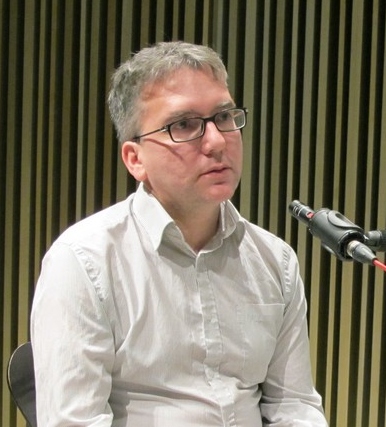
Mark Fisher (1968–2017) was a British cultural theorist, critic, and political writer whose work exerted a profound influence on contemporary Marxist cultural analysis, particularly in relation to neoliberal ideology, mental health, popular culture, and the politics of realism. Writing across blogs, essays, lectures, and books, Fisher developed a distinctive critical voice that fused Marxism, psychoanalysis, postmodern theory, and popular cultural criticism, articulating the affective and ideological conditions of late capitalism with unusual clarity and urgency.
Fisher was born in Leicester, England, and studied English and Philosophy at the University of Hull before completing postgraduate work at the University of Warwick in the 1990s. At Warwick he became associated with the Cybernetic Culture Research Unit (CCRU), an experimental collective that combined continental philosophy, cyberpunk aesthetics, and speculative theory. Although Fisher later distanced himself from the CCRU’s more accelerationist tendencies, the group’s engagement with Deleuze, Guattari, and post-structuralist thought shaped his early intellectual formation, particularly his sensitivity to temporality, desire, and cultural production.
Fisher is best known for his formulation of capitalist realism, a concept that names the pervasive ideological atmosphere in which capitalism is experienced not as one political-economic system among others, but as the only imaginable mode of social organization. In Capitalist Realism: Is There No Alternative? (2009), Fisher argues that neoliberal capitalism has succeeded not merely through economic dominance but through the colonization of consciousness, producing a widespread sense of political impotence and fatalism. Drawing on Marx, Althusser, Žižek, and Foucault, Fisher describes capitalist realism as an ideological enclosure that forecloses collective imagination while presenting systemic failures—precarity, bureaucracy, mental illness—as individual pathologies.
A central innovation of Fisher’s work lies in his analysis of mental health as a political and economic issue rather than a purely medical or personal one. He insisted that the rise in depression, anxiety, and stress disorders must be understood in relation to neoliberal labor conditions, audit culture, and the erosion of social solidarity. This intervention challenged both conservative moralism and liberal therapeutic discourse, situating psychic suffering within material relations of exploitation and alienation. In this respect, Fisher’s work revitalized a Marxist critique of subjectivity for the twenty-first century.
Fisher was also a penetrating critic of popular culture, treating music, film, television, and literature as diagnostic sites where ideological tensions surface. His essays on post-punk, jungle, hauntology, and science fiction argue that culture registers political possibility before it becomes explicit theory. In Ghosts of My Life (2014), Fisher develops the concept of hauntology to describe the spectral persistence of lost futures—collective possibilities promised by earlier political and cultural moments but foreclosed by neoliberalism. For Fisher, contemporary culture is haunted not by the past itself, but by futures that never arrived.
Politically, Fisher was aligned with anti-capitalist and socialist movements, though he remained skeptical of nostalgia and doctrinaire orthodoxy. He sought forms of left politics capable of restoring collective confidence and reactivating the capacity to imagine systemic alternatives. His later work, including unfinished projects on acid communism, aimed to recover suppressed traditions of joy, solidarity, and experimentation within socialist history, countering the pervasive association of the left with austerity and moralism.
Fisher’s influence extended well beyond academia. Through his blog k-punk, his teaching career, and his accessible yet rigorous prose style, he reached activists, artists, and readers alienated by both academic jargon and mainstream political commentary. His death in 2017 prompted widespread recognition of his work’s importance, particularly as neoliberal crises deepened and questions of mental health, precarity, and political imagination became increasingly urgent.
Mark Fisher’s legacy lies in his insistence that ideology is lived affectively, that culture is a battleground of class struggle, and that capitalism’s most insidious power lies in its ability to present itself as inevitable. His work continues to shape contemporary Marxist theory, cultural studies, and political organizing by reopening the question he posed so starkly: how to make alternatives thinkable again.
Bibliography
Fisher, Mark. Capitalist Realism: Is There No Alternative? Zero Books, 2009.
—. Ghosts of My Life: Writings on Depression, Hauntology and Lost Futures. Zero Books, 2014.
—. The Weird and the Eerie. Repeater Books, 2016.
—. k-punk: The Collected and Unpublished Writings of Mark Fisher (2004–2016). Edited by Darren Ambrose, Repeater Books, 2018.
—. Postcapitalist Desire: The Final Lectures. Edited by Matt Colquhoun, Repeater Books, 2021.


Leave a Reply