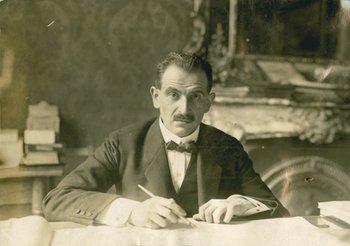
My Socialist Hall of Fame
During this chaotic era of vile rhetoric and manipulative tactics from our so-called bourgeois leaders, I am invigorated by the opportunity to reflect on Socialists, Revolutionaries, Philosophers, Guerrilla Leaders, Partisans, and Critical Theory titans, champions, and martyrs who paved the way for us—my own audacious “Socialism’s Hall of Fame.” These are my heroes and fore-bearers. Not all are perfect, or even fully admirable, but all contributed in some way to our future–either as icons to emulate, or as warnings to avoid in the future.
Otto Bauer stands among the most significant Marxist theorists and political strategists of the European socialist movement in the early twentieth century. A leading intellectual of Austro-Marxism, Bauer attempted to fuse revolutionary Marxist analysis with democratic-parliamentary practice in the multiethnic, crisis-ridden landscape of the late Habsburg Empire and interwar Austria. His career—spanning the final decades of imperial rule, the upheaval of World War I, the short-lived revolutionary wave that followed it, and the eventual triumph of fascist reaction—illustrates both the promise and the fatal limits of reformist Marxism in an era defined by imperial collapse and counterrevolutionary violence. Bauer’s writings on nationalism, the state, and socialist strategy remain a critical archive for understanding the theoretical tensions between revolution and democracy, internationalism and nationhood, and party discipline and mass action.
Early Life and Formation (1881–1907)
Otto Bauer was born on September 5, 1881, in Vienna, the capital of the Austro-Hungarian Empire. He grew up in a Jewish bourgeois household (his father was a textile manufacturer), benefiting from the cultural wealth of fin-de-siècle Vienna while witnessing the sharpening contradictions of imperial capitalism: rapid industrialization, class polarization, and virulent political antisemitism. Bauer’s early education coincided with the rise of the mass socialist movement, spearheaded by the Social Democratic Workers’ Party of Austria (SDAPÖ), which sought to organize the working class within the empire’s constitutional framework.
Bauer studied law at the University of Vienna, but his political education occurred largely outside the academy—in socialist circles shaped by Marxism, Hegelian philosophy, and the immediate pressures of organizing a multilingual proletariat across imperial borders. During these years Bauer became closely associated with a cohort of Marxist intellectuals—including Max Adler, Rudolf Hilferding, and Karl Renner—who sought to rejuvenate Marxist theory for the conditions of a modern, multinational state. This group would eventually be labeled Austro-Marxists, a term capturing both their analytical rigor and their effort to differentiate themselves from both orthodox Second International gradualism and Bolshevik revolutionary praxis.
Bauer emerged quickly as a formidable theorist. Even before assuming formal leadership roles, he developed a distinctive intellectual style: dense, systematic, and synthetic, attempting to integrate political economy, sociology, and historical materialism into a coherent socialist strategy. The question that would define his early theory was also the central political problem of the Habsburg state: nationalism.
The Question of Nationalities and Austro-Marxism (1907)
In 1907, Bauer published the work that established him as a major Marxist thinker: Die Nationalitätenfrage und die Sozialdemokratie (The Question of Nationalities and Social Democracy). Written in the context of intense national friction within Austria-Hungary, the book advanced a theory of nationhood that sought to reconcile Marxist internationalism with national cultural development. Bauer conceptualized the nation not as a timeless ethnic essence but as a historically constituted “community of character” shaped through shared destiny, language, and cultural institutions.
Most importantly, Bauer proposed a model of national-cultural autonomy. Rather than advocating territorial partition along national lines (which risked endless fragmentation), Bauer suggested that national groups could be organized politically through autonomous cultural bodies within a unified state. This approach was meant to prevent nationalism from dividing the working class while acknowledging that cultural oppression could not simply be wished away by class politics.
From a Marxist standpoint, Bauer’s framework was both innovative and contradictory. It offered a structural account of nationalism as socially produced—anticipating later Marxist work on the nation as modern ideological form—but it also risked granting nationalism an autonomy that could undermine class struggle. Critics—especially Lenin—would later attack Austro-Marxist national-cultural autonomy as a concession to bourgeois nationalism. Yet Bauer’s analysis remains one of the earliest serious Marxist confrontations with the multinational realities of modern empires.
World War I: Militarization, Captivity, and Radicalization (1914–1918)
The outbreak of World War I confronted European socialism with its defining crisis. Like many Social Democratic leaders, Bauer initially supported Austria-Hungary’s war effort—a position consistent with the collapse of the Second International into national “defensism.” This support remains one of the enduring stains on Austro-Marxism’s revolutionary credibility. Bauer entered the Austro-Hungarian army as an officer and was sent to the Eastern Front.
In 1914, he was captured by Russian forces and spent several years as a prisoner of war in Siberia. Paradoxically, captivity became intellectually productive. Bauer continued to study, write, and reflect on the nature of war, imperialism, and state power. While not converted to Bolshevism, he emerged from the experience more sharply aware of the radical possibilities opened by imperial collapse and mass upheaval.
The Russian Revolution of 1917 profoundly shaped Bauer’s thinking. He admired the Bolsheviks’ determination and organizational strength but remained skeptical of their authoritarian methods and the feasibility of dictatorship as a socialist transition. Bauer would become one of the most articulate exponents of a third position: revolutionary ambition pursued through democratic institutions and mass organizations rather than vanguard seizure of power.
Leadership of Austrian Social Democracy and the First Republic (1918–1927)
With the collapse of the Habsburg Empire in 1918, Austria entered a revolutionary situation. Councils appeared, workers mobilized, soldiers mutinied, and the monarchy fell. Bauer returned to Vienna and immediately assumed a central role in the SDAPÖ, becoming one of its principal theorists and strategists. He served briefly as Foreign Minister in 1918–1919, during Austria’s fragile transition to republican rule.
Bauer’s strategy in these years has often been described as “integrative socialism”: the attempt to build socialism through democratic reforms while maintaining readiness for revolutionary rupture if necessary. This dual orientation shaped the SDAPÖ’s project in “Red Vienna,” where municipal socialism became internationally famous. Under socialist leadership Vienna expanded housing, education, public health, and cultural programs in a sweeping attempt to materialize working-class power through state institutions.
Yet Bauer’s reformism was haunted by the counterrevolutionary threat. Austria’s bourgeoisie, Catholic conservatives, and paramilitary formations increasingly mobilized to crush socialist influence. The SDAPÖ responded by organizing its own paramilitary defense force, the Republikanischer Schutzbund. This period thus contained an unresolved contradiction: socialist legality coexisted with preparations for civil conflict.
Bauer’s intellectual work continued in parallel. His writings attempted to theorize the state as a terrain of struggle rather than merely an instrument of class domination. He insisted that the democratic republic represented a gain for the working class and that parliamentary institutions could serve as scaffolding for socialist transformation. His opponents, however, argued that this underestimated the bourgeois state’s ultimate coercive function.
Crisis, Defeat, and the Limits of “Democratic Road” Socialism (1927–1934)
The tension between socialist municipal reform and capitalist state power reached a critical point in the late 1920s and early 1930s. In 1927 the July Revolt erupted after a controversial court verdict involving right-wing violence; police killed dozens of demonstrators in Vienna. This massacre signaled that the state would not hesitate to use lethal force against workers and that bourgeois legality could be weaponized against socialist mass politics.
The Great Depression intensified Austria’s class conflict. Unemployment soared, and conservative forces gained momentum. Bauer and the SDAPÖ hesitated between confrontation and compromise—a strategic dilemma that would culminate in catastrophe. By 1933–1934 Engelbert Dollfuss established an authoritarian corporate state, suppressing parliament and targeting socialist institutions.
In February 1934, open conflict erupted: the Austrian Civil War. The Schutzbund fought against government forces but was rapidly defeated. The socialist movement was outlawed, its leaders arrested, executed, or driven into exile. Bauer fled Austria, first to Czechoslovakia and later to other European countries, continuing to write and organize in exile.
For many Marxists, the defeat of 1934 confirmed the bankruptcy of Bauer’s “third way.” The SDAPÖ had built extraordinary worker institutions—housing systems, educational structures, cultural organizations—but had failed to seize state power decisively when the moment demanded it. Bauer’s tragedy, in this reading, was the tragedy of social democracy itself: the belief that capitalist class power could be overcome gradually without civil war, even as the bourgeoisie prepared for authoritarian resolution.
Exile, Anti-Fascism, and Death (1934–1938)
In exile Bauer continued to argue for socialist unity against fascism and remained an important voice in the international socialist movement. He attempted to interpret fascism as a class project: a counterrevolutionary solution to capitalist crisis that mobilized petty-bourgeois desperation and nationalist resentment against organized labor.
Bauer died on July 4, 1938, in Paris, only months after the Nazi annexation (Anschluss) of Austria. His death symbolically closed the Austro-Marxist chapter: the crushing of Austrian socialism, the eclipse of Red Vienna, and the catastrophic triumph of fascism across Central Europe.
Intellectual Legacy
Bauer’s legacy remains sharply contested. To admirers, he represents an exceptionally learned Marxist who took democracy seriously—not as a bourgeois illusion but as a field of struggle whose conquest could expand workers’ power. His nationalities theory remains foundational for Marxist and socialist discussion of nationalism in multinational states. His work provides crucial insights into the social composition of nations and the political dynamics of empire, cultural oppression, and class organization.
To critics—especially revolutionaries—Bauer embodies the strategic failure of reformist Marxism: he mistook the bourgeois state’s flexibility for weakness and assumed that a ruling class would accept dispossession if confronted gradually. The defeat of Austrian socialism is thus read as the historical verdict on Bauer’s political line.
Yet Bauer should not be reduced to a morality tale. His thought emerged from the unique contradictions of Austria: a multinational empire collapsing into small-state vulnerability, a massive socialist movement confronting militarized reaction, and a working class that built institutions of collective life under constant threat. Bauer’s work offers not only theoretical arguments but also a record of socialist aspiration under conditions of imperial ruins and fascist advance.
Ultimately, Otto Bauer remains indispensable: to the history of Marxism, to theories of nationalism, and to debates about whether socialism can be achieved through democratic means in capitalist states—or whether, in moments of crisis, democracy itself becomes a battlefield that cannot be won without rupture.
Selected Bibliography
Works by Otto Bauer
• Bauer, Otto. Die Nationalitätenfrage und die Sozialdemokratie. Ignaz Brand, 1907.
• ———. Der Weg zum Sozialismus [The Road to Socialism]. Verlag der Wiener Volksbuchhandlung, 1919.
• ———. Zwischen zwei Weltkriegen? [Between Two World Wars?]. Verlag der Wiener Volksbuchhandlung, 1936.
• ———. Kapitalismus und Sozialismus nach dem Weltkrieg [Capitalism and Socialism After the World War]. Verlag der Wiener Volksbuchhandlung, 1931.
Biographies and Secondary Scholarship
• Bottomore, Tom, and Patrick Goode, editors. Austro-Marxism. Clarendon Press, 1978.
• Hanisch, Ernst. Der große Illusionist: Otto Bauer (1881–1938). Böhlau, 2011.
• Leser, Norbert. Zwischen Reformismus und Bolschewismus: Der Austromarxismus als Theorie und Praxis. Europa Verlag, 1968.
• Saage, Richard. Otto Bauer: Theorie und Praxis eines Austromarxisten. Suhrkamp, 1973.
• Seton-Watson, Hugh. Nations and States: An Enquiry into the Origins of Nations and the Politics of Nationalism. Methuen, 1977.
• Waldenberg, Marek. Il pensiero politico di Otto Bauer [The Political Thought of Otto Bauer]. Feltrinelli, 1976.


Leave a comment